
Le conflit qui oppose depuis des décennies la Turquie au Parti des travailleurs du Kurdistan (PKK) est entré dans une phase historique de mise en œuvre, à la suite de l’annonce par le groupe de sa dissolution, de la mise en place d’un nouveau cadre juridique pour le désarmement et la réintégration, ainsi que de l’émergence du rôle d’Abdullah Öcalan dans la supervision du processus. Cette transition reste toutefois confrontée à d’importants défis en matière de vérification, de politique intérieure et d’évolution du contexte régional.
La Turquie et le PKK : origines, processus actuel et avenir
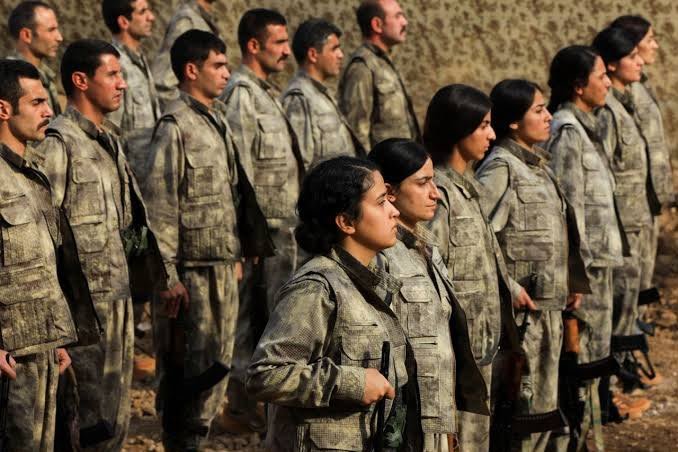
Turkey’s decades-long conflict with the Kurdistan Workers’ Party (PKK) has entered a historic implementation phase. In May 2025, the PKK announced its dissolution following a call from its imprisoned leader, Abdullah Ocalan. By August 2026, Turkey’s parliament passed a landmark legal framework for disarmament and reintegration. Most recently, a senior Turkish official confirmed that Ocalan will be assigned a formal role as a “technical coordinator” to oversee the group’s dissolution—a symbolic but significant step in ending a conflict that has killed over 40,000 people since 1984.
La Turquie et le PKK : origines, processus actuel et avenir
1. Introduction
Few conflicts have shaped modern Turkey as profoundly as its struggle with the PKK. What began as a Marxist-Leninist insurgency seeking an independent Kurdistan has evolved through multiple phases—armed struggle, ceasefires, failed negotiations, and now an unprecedented peace process. This study examines the conflict’s roots, the current disarmament framework, and the trajectory ahead.
2. Historical Roots of the Conflict
2.1 Origins of the PKK
The PKK was founded on November 27, 1978, by Abdullah Ocalan and a group of Kurdish activists in Turkey’s predominantly Kurdish southeast. The organization emerged from the political turbulence of 1970s Turkey, where Kurdish identity was systematically repressed—Kurdish language was banned, traditional clothing prohibited, and Kurds were officially categorized as “Mountain Turks” until 1991.
Ocalan, born in 1949 in Sanliurfa Province, built the PKK as a Marxist-Leninist movement dedicated to establishing an independent Kurdish state. After the 1980 military coup, many PKK cadres fled abroad, establishing training camps in Syria’s Bekaa Valley and northern Iraq.
2.2 Armed Insurgency Begins
On August 15, 1984, the PKK launched its armed insurgency against the Turkish state. The conflict was concentrated in Turkey’s Kurdish-majority southeast, particularly the mountainous regions along the Iraqi and Iranian borders. Over the decades, fighting displaced hundreds of thousands, devastated the regional economy, and created deep political and social divisions.
2.3 Ocalan’s Capture and Ideological Shift
In February 1999, Turkish intelligence agents—with reported CIA assistance—captured Ocalan in Nairobi, Kenya. He was sentenced to death, a sentence commuted to life imprisonment when Turkey abolished capital punishment in 2004.
Behind bars, Ocalan’s ideology underwent a dramatic transformation. He abandoned the goal of an independent state and embraced “democratic confederalism”—a vision of borderless, community-based democracy emphasizing ecology and gender equality. He argued that Kurdish rights could be achieved through democratic politics within Turkey rather than armed secession.
3. The 2025–2026 Peace Breakthrough
3.1 The Bahceli Initiative
The current peace process began unexpectedly in October 2024, when Devlet Bahceli—leader of the nationalist MHP and a long-time hardliner on Kurdish militancy—suggested that Ocalan could address parliament if he called on the PKK to disarm. This surprising overture from a nationalist ally of President Erdogan signaled a major shift in Turkey’s political calculus.
3.2 Ocalan’s Historic Call
On February 27, 2025, Ocalan issued a historic call from his prison on Imrali Island, urging the PKK to “lay down arms and dissolve itself.” The PKK declared a ceasefire the next day and formally announced its dissolution at a congress in northern Iraq in May 2025. Two months later, dozens of militants symbolically burned their weapons in a ceremony in northern Iraq.
3.3 The Framework Law
On August 10, 2026, Turkey’s parliament passed a landmark 12-article legal framework by a vote of 468 to 88, with support from Erdogan’s ruling AKP, the nationalist MHP, and the pro-Kurdish DEM Party. The law introduces conditional amnesty for PKK members not involved in serious crimes, suspending sentences and postponing trials for 5–10 years. Those convicted of intentional killings or serving life sentences before 2005—including Ocalan—are excluded.
4. Ocalan’s New Role: Technical Coordinator
On September 16, 2026, Turkish Presidential Chief Advisor Mehmet Ucum announced that Ocalan would serve on a newly formed “Disarmament and Strategic Coordination Subcommittee” to oversee the PKK’s dissolution.
Ucum emphasized that this role does not mean Ocalan will be released or granted special privileges: “Whoever established the organization and made them use weapons is the one who will dissolve it.” He described the arrangement as providing Ocalan a “comfortable working environment” to fulfill his role effectively, not as a concession.
This decision represents a pragmatic compromise. The government needed Ocalan’s unique authority to ensure compliance from PKK cadres, while maintaining that he remains a convicted terrorist serving a life sentence. As Ucum stated, “Routine processes are solved through non-routine methods.”
5. Implementation Challenges
5.1 Verification Process
The law’s provisions only activate after Turkish security institutions—coordinated by the National Intelligence Organization (MIT)—verify that the PKK and all affiliated structures have ended their activities and surrendered all weapons. The verification is scheduled for completion within two months, with the National Security Council expected to announce findings at its October 2026 meeting.
Turkey’s MIT is coordinating with authorities in Baghdad and the Kurdistan Regional Government for a monitored weapons-handover process in northern Iraq, where PKK hideouts remain.
5.2 Sequencing Disputes
The process has faced tensions over sequencing. Ankara insists the PKK must fully disarm before legal protections are implemented, while the PKK argues that disarming without legal guarantees would leave members exposed. The August 2026 law addressed this by establishing a verification-first mechanism—protections only come after disarmament is confirmed.
5.3 Residual Demands
The PKK has described the legislation as only “a first step” and called for broader democratic reforms, including expanded Kurdish language rights, changes to anti-terrorism laws, and Ocalan’s release. These demands remain unresolved and could complicate long-term stability.
6. Regional and International Dimensions
6.1 Syria and the YPG
Turkey has long argued that the Syrian Kurdish People’s Protection Units (YPG)—the backbone of the U.S.-allied Syrian Democratic Forces (SDF)—is an offshoot of the PKK. The PKK’s dissolution could weaken this linkage, potentially altering Turkey’s approach to northern Syria. However, the YPG remains a distinct organization, and Ankara’s security concerns about Kurdish autonomy along its southern border persist.
6.2 Iraq’s Role
The PKK’s withdrawal from Turkey into northern Iraq has made Baghdad and Erbil essential partners in the verification process. Turkey’s intelligence coordination with Iraqi authorities represents a rare example of functional regional security cooperation.
7. Trajectory and Risks
Optimistic Scenario
If verification succeeds and the National Security Council confirms disarmament in October 2026, the amnesty mechanism activates. Thousands of PKK members could reintegrate over a six-month application window. Turkey’s longest war ends, freeing resources for economic development and potentially improving Kurdish political representation.
Pessimistic Scenario
Verification stalls over disputes about weapon inventories or lingering PKK structures. Hardliners on both sides exploit delays. The 2015 collapse of the previous peace process—followed by some of the deadliest fighting in years—looms as a cautionary precedent.
Key Risks
- Incomplete disarmament leaving residual armed capacity
- Political spoilers seeking to derail the process
- Regional instability, particularly in Syria and Iraq, distracting from implementation
- Unresolved Kurdish demands for broader rights beyond disarmament
8. Conclusion
Turkey’s peace process with the PKK has reached its most advanced stage ever. Ocalan’s new role as technical coordinator—a man serving a life sentence now tasked with dismantling the organization he founded—encapsulates the extraordinary pragmatism driving this process. The framework law provides a legal architecture for reintegration, and the verification mechanism establishes clear benchmarks.
Yet implementation remains fragile. The 2015 collapse showed how quickly momentum can reverse. The coming months—particularly the National Security Council’s October meeting—will determine whether this historic opportunity is realized or becomes another failed attempt to end one of the world’s longest-running conflicts.
References
- Jailed PKK leader Ocalan assigned to formal role, Turkish official says, Xinhua/China.org.cn, September 17, 2026.
- Turkey (Türkiye), the PKK, and U.S. Involvement: Chronology, Congressional Research Service, January 2025.
- الزعيم الكردي عبدالله أوجلان من النزاع المسلح حتى السلام, SWI swissinfo.ch, May 2025.
- Kurdish PKK will disarm and disband, International Affairs, May 2025.
- Turkey’s Kurdish peace process moves to implementation, Al-Monitor, August 24, 2026.
- Türkiye prepares next phase of PKK disarmament, Xinhua/Hurriyet Daily News, August 31, 2026.
- Turkish parliament passes landmark law to advance PKK peace process, Reuters, August 10, 2026.
- “Living Freedom”: The Evolution of the Kurdish Conflict in Turkey, Brill, 2024.
- Who Is the P.K.K. Leader Abdullah Ocalan?, The New York Times, February 27, 2025.
- The Ideological Transformation of the PKK, Brill, 2024.
- Explainer: What’s at stake in Turkey’s bid to end conflict with PKK, Al-Monitor/Reuters, May 2026.
- باخجلي يقترح منح أوجلان لقب “منسق عملية السلام”, Kurdistan24, May 2026.
- Turkish parliament passes landmark legal framework, CGTN/Xinhua, August 10, 2026.
- Turkey’s parliament opens debate on a pardon-like bill, The Canadian Press, August 9, 2026.
- A Spatial Perspective on Political Group Formation in Turkey, Brill, 2024.
- بعد دعوته التاريخية.. من هو عبدالله أوجلان, Al Khaleej, February 27, 2025.
- What is in Turkey’s proposed Kurdish peace process framework law?, Bianet, July 2026.
- Erdoğan’ın başdanışmanı Uçum’dan Öcalan açıklaması, T24, September 16, 2026.
- Turkish parliament passes landmark legal framework, Guangming Online/Xinhua, August 10, 2026.
- Turkiye MPs back law to reintegrate Kurdish militants, China Daily, August 11, 2026.

Abonnez-vous à notre newsletter
Restez informé(e) de nos actualités et offres
Thank you for subscribing to the newsletter.
Oops. Something went wrong. Please try again later.