
مقدمة
For much of the modern international system, global influence was primarily associated with military power, economic size, diplomatic alliances, and political institutions. Today, however, the boundaries between power and culture are becoming increasingly blurred.
A song can reach millions of people without passing through an embassy. A film can shape perceptions of an entire country more effectively than a government campaign. A fashion designer can introduce a national identity to audiences who know little about the country itself. A football team can create emotional connections across borders. A museum exhibition can reopen conversations about history and identity. A diaspora community can become an informal diplomatic network.
This transformation is particularly significant for Africa.
African states often face structural limitations in military, financial, and institutional power when compared with the world’s largest powers. Yet the continent possesses something that is increasingly difficult to quantify but impossible to ignore: extraordinary cultural visibility.
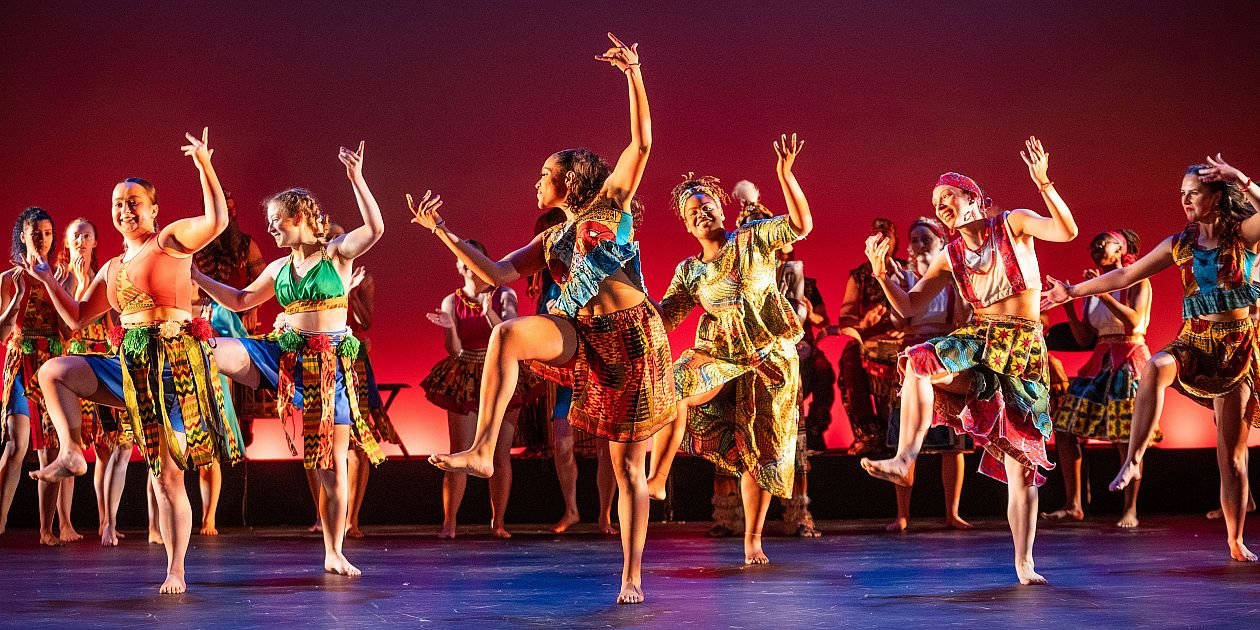
African music, cinema, fashion, literature, cuisine, sport, heritage, languages, art, and digital creativity have become increasingly visible across global markets.
The challenge is that Africa’s cultural influence is often greater than the diplomatic strategies designed to use it.
A recent Chatham House analysis argued that Africa’s cultural renaissance is thriving but fragmented, and that African governments frequently fail to fully connect cultural influence with economic and diplomatic strategy. The report highlighted the potential of a more coordinated, digital-first approach that embraces Africa’s diaspora and treats culture as an instrument of global influence rather than simply entertainment.
This raises a fundamental question:
Can African countries transform cultural popularity into durable geopolitical influence?
The answer is increasingly yes—but only if culture is treated as a strategic asset rather than a secondary element of foreign policy.
1. What Is Cultural Diplomacy?
Cultural diplomacy can broadly be understood as the use of cultural exchange, artistic expression, language, education, heritage, media, and people-to-people relations to build mutual understanding and advance international relationships.
UNESCO describes cultural diplomacy through the exchange of ideas, information, art, language, and other cultural elements among nations and peoples in order to foster mutual understanding. It can serve objectives ranging from alliance-building and economic development to peace and security.
This concept is closely related to soft power, but the two terms are not identical.
Soft power refers to the ability to attract and persuade rather than coerce.
Cultural diplomacy refers more specifically to the deliberate use of cultural interaction in international relations.
For African governments, this distinction is important.
A Nigerian artist becoming globally famous represents cultural influence.
A Nigerian embassy organizing a film festival around Nigerian cinema is cultural diplomacy.
A foreign government deciding to deepen relations with Nigeria partly because Nigerian culture has created familiarity and affinity represents the conversion of cultural influence into diplomatic leverage.
The strategic objective is therefore not merely to become famous.
It is to become relevant, attractive, trusted, and influential.
2. Africa Already Possesses Enormous Cultural Power
The most important characteristic of African cultural influence is that much of it developed organically.
African music did not become global because governments ordered international audiences to listen to it.
Nollywood did not become influential because Nigerian embassies forced foreign cinemas to screen Nigerian films.
African fashion did not spread because of a centralized continental campaign.
Much of the growth came from artists, entrepreneurs, independent producers, diaspora communities, digital platforms, and young audiences.
That makes African cultural power particularly interesting.
It is not entirely state-produced.
It is socially generated power.
This is an advantage because organic cultural movements are often more authentic and emotionally persuasive than official propaganda.
But it is also a weakness.
When the government does not create mechanisms to support, protect, document, export, and commercialize cultural production, much of the economic and diplomatic value created by artists is captured elsewhere.
The continent may therefore generate enormous cultural attention while receiving a relatively small proportion of the economic value created by that attention.
3. Culture Has Become an Economic Sector
Culture is no longer only a question of identity.
It is also an increasingly important component of international trade.
UNCTAD estimates that global exports of creative services reached $1.4 trillion in 2022, while creative-goods exports reached approximately $713 billion. Creative services accounted for 19% of global services exports, up from 12% a decade earlier.
More recent UNCTAD data show that creative-services exports continued to grow in 2024, reaching approximately 20% of global services trade, while creative goods represented around 3% of merchandise trade.
The implications for Africa are considerable.
Creative industries can generate:
- employment;
- السياحة؛;
- exports;
- investment;
- technology transfer;
- international partnerships;
- city branding;
- and diplomatic visibility.
A successful film industry can attract visitors.
A music industry can create international business relationships.
Fashion can build a national brand.
A museum can become a tourism and diplomatic destination.
A global sports event can transform perceptions of an entire country.
The cultural economy therefore creates a bridge between soft power and hard economic interests.
4. Music: Africa’s Fastest Cultural Ambassador
Perhaps nowhere is Africa’s cultural influence more visible than in music.
Afrobeats, amapiano, African hip-hop, highlife, mbalax, kuduro, gospel, traditional music, and numerous hybrid genres have crossed national and continental boundaries.
The global popularity of African music illustrates something fundamental about modern diplomacy:
people can become interested in a country before they become interested in its politics.
A listener may first discover Nigeria through music.
A traveller may first discover Ghana through its festivals.
A fashion consumer may first encounter South Africa through amapiano culture.
A film viewer may first encounter African society through Nollywood.
The discovery of culture can therefore become the beginning of a much broader relationship with a country.
According to IFPI’s 2026 Global Music Report, recorded-music revenues in Sub-Saharan Africa grew 15.2% in 2025, reaching approximately $120 million. South Africa remained the region’s largest recorded-music market, accounting for 78.1% of regional revenues.
The previous year had been even stronger, with Sub-Saharan Africa recording 22.6% growth in 2024 and surpassing $100 million in recorded-music revenues for the first time.
The figures remain small compared with North American or European markets.
But the strategic importance of African music is much larger than the size of the recorded-music market alone.
Music travels.
Music creates emotional memory.
And emotional memory can become a foundation for long-term international familiarity.
5. Nigeria: Afrobeats and Nollywood as National Assets
Nigeria offers perhaps the clearest example of culture becoming an instrument of international influence.
The country has two enormous cultural exports:
Nollywood and Afrobeats.
Nollywood has developed into one of the world’s largest film industries by volume, producing roughly 2,500 films annually according to UNESCO’s research on African cinema. Digital technologies and online distribution have enabled African filmmakers to reach audiences far beyond traditional cinema networks.
At the same time, Nigerian music has become a global cultural force.
Spotify reported in February 2026 that since its Nigerian launch in 2021, listening in the country had increased by an average of more than 163% year over year, while Nigerian users created more than 25 million playlists and spent more than 1.4 billion hours listening in 2025 alone.
These trends reveal how the Nigerian cultural ecosystem works.
A music track creates global attention.
A film reinforces the visibility of Nigerian identity.
Fashion and food extend the experience.
Diaspora communities maintain it.
Digital platforms multiply it.
Tourism can eventually monetize it.
The result is a cultural ecosystem capable of influencing perceptions of Nigeria far beyond traditional diplomatic channels.
The Nigerian government is increasingly recognizing this potential. In 2025, its Ministry of Information highlighted “Destination 2030: Nigeria Everywhere,” efforts to strengthen the country’s global brand, diaspora initiatives such as Motherland 2025, and international promotion of Nigerian cinema and creative industries as instruments of cultural diplomacy and soft power.
This represents an important shift from seeing entertainment as an industry to seeing it as a component of foreign policy.
6. The Challenge of Nollywood: Visibility Without Full Value Capture
Nollywood demonstrates both the strength and weakness of Africa’s cultural influence.
Its global visibility is substantial.
Its storytelling power is significant.
But the industry still faces structural problems including underinvestment, piracy, insufficient infrastructure, distribution weaknesses, and limited access to international financing.
UNESCO has estimated that Africa’s film and audiovisual industries generate around $5 billion annually, compared with a potential of around $20 billion, demonstrating how much economic value remains unrealized.
This creates a critical lesson for cultural diplomacy:
attention is not the same thing as economic power.
A country can be globally visible while remaining economically weak in the cultural industries generating that visibility.
The strategic objective therefore should be to move from:
cultural consumption → cultural production → cultural exports → intellectual property ownership → global investment → diplomatic influence.
The country that owns the intellectual property captures more of the value.
The country that merely provides the creative labour may receive much less.
7. South Africa: Culture, History, and Moral Authority
South Africa possesses a different model of cultural influence.
Its global image has been shaped not only by music, cinema, fashion, and sport, but also by its history.
Nelson Mandela became more than a political leader.
He became a global symbol.
The struggle against apartheid was supported and transmitted internationally through music, literature, theatre, photography, journalism, and political activism.
This created what might be described as moral soft power.
South Africa’s cultural diplomacy therefore operates at several levels:
- contemporary creative industries;
- historic symbolism;
- reconciliation;
- heritage;
- sport;
- music;
- and continental leadership.
South Africa explicitly placed culture at the centre of its 2025 G20 Presidency. Its government argued that culture could function as an economic driver, a source of soft power, a mechanism for dialogue, and a pathway toward peace. It also began developing a Cultural Diplomacy Policy Framework grounded in Ubuntu, international law, and the African Union’s cultural framework.
This is strategically significant.
It demonstrates that cultural diplomacy can move from the cultural ministry into the centre of national foreign policy.
8. Amapiano and the Globalization of Contemporary South African Identity
South Africa’s cultural influence is also being reshaped by contemporary music.
Amapiano has become one of the most visible examples of how a locally rooted cultural form can move into global popular culture.
The significance is not simply that South African musicians are achieving international success.
The deeper significance is that South Africa is exporting a cultural vocabulary.
The music carries language, fashion, dance, social identity, urban aesthetics, and lifestyle.
The South African government has increasingly integrated this cultural momentum into broader economic and international strategy. In 2025, its Department of Sport, Arts and Culture announced measures to expand access to international markets and highlighted the international success of amapiano as evidence of the country’s cultural competitiveness.
The government also established 17 Cultural and Creative Industry Clusters designed to professionalize and coordinate sectors ranging from music and film to fashion, publishing, visual arts, theatre, dance, and digital creativity.
This is an example of the state attempting to catch up with a cultural movement that originally grew organically.
9. Ghana: Diaspora Diplomacy as Cultural Strategy
Ghana has developed another distinctive model based on the relationship between culture, history, tourism, and the African diaspora.
The “Year of Return” transformed historical memory surrounding the transatlantic slave trade into a platform for tourism, cultural reconnection, and international engagement.
The strategy subsequently evolved into initiatives such as “Beyond the Return” and the “Black Star Experience.”
In August 2026, Ghana’s Ministry of Foreign Affairs reaffirmed that these initiatives are intended to strengthen diaspora engagement, reconnect younger generations with African heritage, and encourage the diaspora to contribute to Africa’s development. The ministry also highlighted cultural platforms such as Toronto’s Sankofa Square, where African culture is promoted through fashion, music, dance, cuisine, and other creative forms.
This approach demonstrates that a country’s diaspora can serve as something much more important than a remittance source.
It can become a global cultural network.
The diaspora can introduce national culture to new audiences, facilitate investment, support tourism, create academic connections, and influence political discourse in the countries where diaspora communities live.
In this sense, Ghana has turned history into diplomacy.
10. Egypt: Ancient Civilization as Contemporary Soft Power
Egypt represents perhaps the continent’s most established model of civilization-based soft power.
Its cultural diplomacy combines:
- archaeology;
- ancient Egyptian heritage;
- Arabic literature;
- cinema;
- music;
- education;
- religious institutions;
- museums;
- academic exchanges;
- and tourism.
The Egyptian Foreign Ministry explicitly describes its cultural sector as an important instrument for strengthening Egyptian soft power and coordinates with embassies and national institutions to organize cultural events, film festivals, educational cooperation, exhibitions, and heritage promotion.
The ministry also treats the recovery of Egyptian antiquities abroad as part of its cultural diplomacy strategy, while coordinating international promotion of Egyptian museums and archaeological heritage.
This is a particularly important model because Egypt demonstrates that cultural diplomacy does not have to depend on contemporary pop culture alone.
Historical civilization can be continuously reinterpreted as contemporary diplomatic capital.
The challenge for Egypt—and for other historically rich African states—is ensuring that heritage does not become simply a tourism product, but remains connected to education, cultural exchange, academic diplomacy, and international dialogue.
11. Ethiopia: Heritage, Coffee, and National Identity
Ethiopia illustrates another form of cultural diplomacy based on intangible heritage.
Coffee is not merely an economic commodity.
It is also an element of Ethiopian identity.
In February 2025, UNESCO supported an Ethiopian initiative preparing a nomination dossier for the country’s traditional coffee ceremony for possible inscription on the UNESCO Representative List of the Intangible Cultural Heritage of Humanity. The workshop brought together government representatives, academics, community elders, youth, cultural experts, media professionals, and others.
The significance is broader than UNESCO recognition.
A cultural practice can become:
heritage → international visibility → tourism → storytelling → national branding → diplomatic engagement.
This illustrates why cultural diplomacy increasingly includes food, rituals, traditional knowledge, crafts, and everyday practices.
The strongest cultural diplomacy may sometimes begin not in museums, but around a table.
12. Fashion: When Identity Becomes a Global Brand
African fashion has become increasingly influential because it combines cultural identity with contemporary design.
African designers use traditional textiles, symbols, colours, craftsmanship, and indigenous references while presenting them through global fashion systems.
Fashion is particularly powerful diplomatically because it is highly visual.
A song needs to be heard.
A film needs to be watched.
Fashion can be recognized immediately.
It can become a visible representation of national identity in international cities.
The strategic opportunity lies in transforming fashion from a symbolic sector into a global industry through:
- intellectual-property protection;
- textile manufacturing;
- design schools;
- export financing;
- fashion weeks;
- international partnerships;
- e-commerce;
- and diaspora networks.
South Africa has increasingly emphasized fashion and design within its creative-industry policy, while Nigeria has promoted fashion as part of its broader creative economy.
The continent’s challenge is to ensure that African designers retain ownership of their brands and intellectual property rather than becoming subcontractors within global fashion systems.
13. Food Diplomacy: A Neglected Instrument
African cuisine has enormous diplomatic potential.
Food is one of the easiest forms of cultural exchange because it is experiential.
People may disagree about politics.
They rarely need a political agreement to enjoy a meal.
African states can use gastronomy through:
- international food festivals;
- embassy events;
- culinary exchanges;
- tourism campaigns;
- chef partnerships;
- food media;
- diaspora restaurants;
- agricultural branding;
- and protected geographical products.
Cuisine can also connect culture to trade.
Coffee, cocoa, tea, spices, fruit, wine, grains, and traditional foods can move from being agricultural exports to becoming national cultural products.
This is particularly valuable for Africa because much of the continent’s agricultural economy remains based on exporting commodities without maximizing their cultural branding or value addition.
Food diplomacy can therefore combine identity, tourism, and trade.
14. Sport as a Cultural Bridge
Sport sits at the boundary between culture and diplomacy.
Football, athletics, rugby, basketball, and other sports allow countries to project identity and build emotional relationships with global audiences.
Sport can produce national symbols that transcend political disagreements.
A successful athlete can introduce a country to millions of people.
A major sporting event can transform a city’s international image.
South Africa’s hosting of the 2010 FIFA World Cup remains a major example of how sport can support international positioning.
But the strategic value of sport extends beyond hosting mega-events.
African countries can use sporting academies, youth exchanges, international tournaments, coaching programmes, and athlete diplomacy to establish long-term relationships.
Sport also offers something cultural diplomacy often lacks:
a shared language that does not require translation.
15. Literature: The Power of African Stories
Literature is a slower form of soft power than music or social media, but it can be deeper.
African writers have shaped global debates about colonialism, identity, race, migration, gender, political power, modernity, and globalization.
Literature can change how foreign audiences understand a society.
A country whose writers are widely translated gains intellectual visibility.
Universities begin teaching its authors.
Publishers invest in new writers.
Festivals invite its intellectuals.
Academic networks expand.
The country becomes part of global conversations.
This is particularly important because effective soft power is not always entertainment.
Sometimes it is intellectual credibility.
16. Heritage Is Becoming a Strategic Diplomatic Asset
Africa possesses an extraordinary concentration of cultural heritage.
Historical cities.
Archaeological sites.
Traditional knowledge.
Languages.
Religious traditions.
Architecture.
Music.
Oral histories.
Crafts.
Museums.
Sacred sites.
But preserving heritage and using heritage strategically are not the same thing.
The African Union has explicitly recognized culture as a pillar of Agenda 2063. Aspiration 5 calls for a strong African cultural identity, common heritage, shared values, and ethics, while identifying cultural renaissance, heritage, and creative arts as contributors to Africa’s development and transformation.
The African Union has also supported the Great Museum of Africa as a flagship initiative intended to showcase Africa’s cultural heritage and the continent’s historical influence on the world.
In February 2026, the African Union again called for stronger promotion of Africa’s cultural and creative industries and supported advancing the continental role of the Great Museum of Africa.
This indicates that cultural diplomacy is increasingly being conceived not simply as a national instrument but as a continental strategy.
17. Pan-African Cultural Diplomacy
One of Africa’s unique opportunities is that the continent possesses a shared historical and cultural narrative despite extraordinary internal diversity.
This does not mean that Africa has one culture.
It means that African cultures share historical connections that can support a broader diplomatic identity.
Pan-Africanism can therefore become a cultural tool.
The African Union’s Agenda 2063 explicitly connects cultural renaissance with Pan-African identity, common heritage, languages, and creative industries.
A stronger continental cultural strategy could include:
- African film festivals;
- continental music charts;
- African literary networks;
- fashion and design platforms;
- joint museum programmes;
- university exchanges;
- African-language digital platforms;
- creative-industry investment funds;
- and international cultural centres.
Instead of competing separately for global attention, African countries could build a larger African cultural market and diplomatic ecosystem.
18. The Digital Revolution Has Changed Cultural Diplomacy
The old model of cultural diplomacy depended heavily on embassies, cultural institutes, exhibitions, official delegations, and government-sponsored exchanges.
The digital era has changed everything.
Today:
A song can become diplomatic content.
A TikTok dance can become a global cultural export.
A Netflix film can reshape perceptions of a country.
A YouTube creator can reach a foreign audience without government involvement.
Instagram can turn fashion into international branding.
Podcasts can create intellectual diplomacy.
Gaming can export cultural narratives.
Artificial intelligence can accelerate the production and translation of African cultural content.
UNCTAD identifies digitalization and AI as major forces transforming creative production and distribution. The 2024 report noted that AI is already being used to generate scripts, films, music, images, animation, captions, and other forms of creative content.
This means cultural diplomacy is becoming increasingly decentralized.
The foreign ministry is no longer the only diplomatic actor.
Artists, influencers, musicians, filmmakers, entrepreneurs, athletes, designers, academics, and diaspora communities have all become potential diplomatic actors.
19. The Rise of the Independent Cultural Diplomat
The most influential African cultural ambassadors may not carry diplomatic passports.
They may be musicians.
Filmmakers.
Footballers.
Designers.
Chefs.
Authors.
YouTubers.
Photographers.
Entrepreneurs.
These individuals can reach audiences that governments cannot.
They also possess something governments often lack:
credibility based on authenticity.
A government advertisement may tell a foreign audience that a country is creative.
A successful artist demonstrates it.
A tourism campaign may say that a city is fashionable.
A globally recognized designer can prove it.
A political speech may call for greater understanding between peoples.
A film can make audiences emotionally experience another society.
This is why governments should not attempt to control cultural diplomacy too tightly.
The role of the state should increasingly be to build ecosystems in which independent cultural actors can succeed internationally.
20. Diaspora as a Global Diplomatic Network
Africa’s diaspora represents one of its most underused geopolitical assets.
Millions of people of African origin live in Europe, North America, Latin America, the Caribbean, the Middle East, and elsewhere.
These communities can serve as:
- cultural ambassadors;
- investors;
- tourism promoters;
- academic connectors;
- business intermediaries;
- political advocates;
- media producers;
- and bridges between societies.
Ghana’s diaspora initiatives demonstrate the possibilities of this approach, with the government explicitly linking cultural identity, heritage, tourism, and diaspora engagement.
The strategic objective should not be to turn diaspora communities into political instruments.
It should be to create two-way cultural networks.
The diaspora should be able to bring resources, ideas, and opportunities back to Africa while also carrying African cultural products into global markets.
21. Cultural Diplomacy Can Support Tourism
Tourism is one of the clearest economic consequences of cultural influence.
People travel to see places they have already become curious about.
Culture creates that curiosity.
A movie can make a city famous.
A music festival can attract visitors.
A historical site can become a global destination.
Cuisine can motivate travel.
Fashion can inspire shopping tourism.
Sport can create travel demand.
This means a strong cultural brand can reduce the cost of attracting tourists because the destination already exists in people’s imagination.
The challenge for African states is to connect cultural storytelling with tourism infrastructure.
Without transport, safety, accommodation, digital booking, museums, public spaces, and professional tourism services, cultural visibility may not translate into economic benefit.
22. Culture Can Attract Investment
Soft power also has an economic dimension that is frequently overlooked.
People and companies prefer to invest in places they understand and trust.
A strong national brand can reduce uncertainty.
Brand Finance’s 2026 Global Soft Power Index emphasizes that soft power is increasingly connected to economic recommendation, including investment, trade, talent, education, and tourism. The index surveyed more than 150,000 respondents across over 100 countries and measures the soft power perceptions of all 193 UN member states.
The African examples are instructive.
South Africa ranked 43rd globally in the 2026 Global Soft Power Index, while Nigeria rose to 71st. Kenya ranked 88th, Tanzania 94th, Ghana 95th, and Mauritius 96th. Brand Finance also noted South Africa’s strong future-growth potential despite its overall fall in the ranking.
These rankings should not be treated as definitive measurements of cultural power.
But they demonstrate that global perceptions can be measured and that cultural influence exists within a broader ecosystem of reputation, familiarity, influence, governance, business attractiveness, and identity.
23. The Problem of Fragmentation
Africa’s cultural strength is enormous.
Its coordination is comparatively weak.
This may be the most important strategic problem.
Nigeria promotes Nigerian culture.
South Africa promotes South African culture.
Ghana promotes Ghanaian heritage.
Egypt promotes Egyptian civilization.
Morocco promotes Moroccan cultural identity.
Ethiopia promotes its heritage.
Senegal promotes its music and arts.
These national strategies are valuable.
But Africa also needs mechanisms capable of presenting the continent collectively without erasing national diversity.
Chatham House’s recent analysis of Africa’s rising influence specifically identified fragmentation as a major obstacle to transforming cultural visibility into systematic global power and suggested stronger coordination, diaspora engagement, and digital-first strategies.
This does not require a single African cultural identity.
It requires an African cultural platform.
The difference is crucial.
24. Cultural Diplomacy Is Also a Battle Over Narrative
Global influence is not only about exporting culture.
It is about controlling the story told about that culture.
For decades, African countries were often represented internationally through narratives centered on:
- poverty;
- conflict;
- corruption;
- famine;
- disease;
- political instability;
- and humanitarian crisis.
These realities cannot simply be denied.
But they do not represent the entirety of African societies.
Cultural industries provide alternative narratives.
A Nigerian film can show complexity beyond stereotypes.
South African music can communicate modernity.
Ghanaian cultural tourism can reconnect global audiences with African history.
Ethiopian heritage can present civilization rather than crisis.
African literature can present intellectual depth.
Fashion can present innovation.
Culture therefore becomes a narrative counterweight to crisis-based representations.
25. Cultural Diplomacy Is Not Propaganda
There is an important danger.
If governments try to use culture purely as propaganda, they may damage the very authenticity that makes cultural diplomacy effective.
Audiences can distinguish increasingly between spontaneous culture and political messaging.
The most powerful cultural exports generally have room for:
- criticism;
- creativity;
- contradiction;
- social realism;
- experimentation;
- and independent expression.
A government should therefore resist the temptation to turn every successful artist into an official spokesperson.
The better strategy is to create an environment in which artists can succeed internationally while retaining independence.
Authenticity is itself a form of diplomatic capital.
26. Intellectual Property Is the Hidden Geopolitical Issue
One of the biggest challenges for African cultural diplomacy is intellectual-property ownership.
A song can become globally famous while generating limited income for its creators.
A film can become internationally popular while piracy drains its potential revenue.
A fashion tradition can inspire global designs without adequate protection or compensation for its original creators.
Traditional cultural knowledge can be commercialized outside Africa without returning meaningful economic benefits to the communities that developed it.
This is why cultural diplomacy must increasingly become intellectual-property diplomacy.
Countries need to improve:
- copyright enforcement;
- collective rights management;
- royalty systems;
- licensing;
- trademark protection;
- digital distribution;
- international legal representation;
- and creator education.
Without these mechanisms, Africa may export culture while importing the profits generated by that culture.
27. AI Will Transform African Cultural Diplomacy
Artificial intelligence is likely to become one of the defining factors in the next phase of cultural influence.
AI can dramatically reduce the barriers to:
- translation;
- dubbing;
- subtitling;
- music production;
- animation;
- digital restoration;
- archival work;
- historical education;
- virtual museums;
- cultural tourism;
- and global distribution.
A Kenyan documentary can be translated instantly into multiple languages.
A Nigerian film can reach audiences through AI-assisted dubbing.
An Ethiopian heritage archive can be digitized.
African literature can become more accessible internationally.
But AI also creates risks.
Cultural appropriation can become easier.
Deepfakes can distort historical figures.
Traditional knowledge can be copied without consent.
Artists may lose control over their work.
African countries therefore need policies capable of ensuring that digitalization strengthens rather than exploits cultural production.
UNESCO’s 2026 cultural-policy reporting places digital transformation and artificial intelligence among the major issues reshaping cultural and creative sectors worldwide.
28. Culture and Peacebuilding
Culture can also serve security objectives.
UNESCO’s current work on intercultural dialogue emphasizes that cultural and dialogic engagement can strengthen trust, reduce polarization, and support peacebuilding. Its 2026 programme includes cultural heritage, arts, digital spaces, education, and leadership as elements of conflict prevention and social cohesion.
For Africa, this has particular importance.
The same cultural tools that generate global influence can also reduce tensions within societies:
- music can bring communities together;
- literature can create shared narratives;
- museums can preserve collective memory;
- festivals can connect communities;
- traditional mediation can support local reconciliation.
Cultural diplomacy should therefore not be understood purely as an outward-facing foreign-policy instrument.
It also has an internal function:
A society with a stronger sense of cultural confidence may have greater capacity to engage the outside world without fear of cultural erosion.
29. From National Branding to African Branding
The next stage of African cultural diplomacy may require moving beyond traditional nation branding.
Instead of simply asking:
“How can Nigeria improve Nigeria’s image?”
Governments could also ask:
“How can African cultural success increase the visibility and market value of the continent as a whole?”
The global rise of one African cultural product can benefit others.
A foreign consumer discovering Nigerian music may subsequently become interested in Ghanaian festivals, South African fashion, Ethiopian food, Egyptian archaeology, Moroccan design, or Senegalese art.
This is the logic of a continental cultural multiplier.
Africa’s cultural diversity can therefore become an advantage rather than a problem.
30. The Role of African Cities
Cultural diplomacy is increasingly urban.
Lagos.
Johannesburg.
Cape Town.
Accra.
Cairo.
Addis Ababa.
Nairobi.
Dakar.
Casablanca.
Marrakesh.
These cities function as cultural platforms.
They host festivals, film industries, music scenes, fashion weeks, galleries, universities, restaurants, design studios, technology companies, and creative communities.
A city’s global cultural reputation can become a national diplomatic asset.
This suggests that cultural diplomacy should not be run exclusively from national capitals and foreign ministries.
African governments should also invest in creative cities.
Urban cultural infrastructure can become foreign-policy infrastructure.
31. Universities as Cultural Diplomacy Platforms
Education is another powerful but underused tool.
Scholarships, student exchanges, language programmes, research partnerships, African studies centres, and international academic conferences can build long-term relationships that survive political changes.
A student who spends four years studying in Accra or Cairo may become a future diplomat.
A researcher who works in Addis Ababa may develop professional networks with African institutions.
A foreign academic specializing in African history may shape public discourse in another country for decades.
Educational exchanges are therefore slow-moving forms of diplomacy.
Their impact is rarely immediate.
But they can be exceptionally durable.
32. Language as Power
Language is among the deepest forms of cultural influence.
Africa’s linguistic diversity is enormous.
Arabic, English, French, Portuguese, Swahili, Hausa, Amharic, Yoruba, Zulu, Xhosa, Somali, Wolof, and hundreds of other languages constitute an extraordinary cultural resource.
The African Union itself has emphasized the importance of African languages within the continent’s cultural renaissance and Agenda 2063 framework. Its long-term plans include the wider use of African languages in education and the strengthening of cultural identity.
The digital era creates a major opportunity here.
Translation and AI can bring African-language content to global audiences without forcing creators to abandon their native languages.
This could lead to a new phase in which linguistic diversity becomes globally accessible rather than internationally invisible.
33. The Difference Between Visibility and Influence
Not every successful cultural product produces geopolitical influence.
This distinction is critical.
A song can be globally popular without improving perceptions of the country that produced it.
A film can generate millions of views without creating tourism or investment.
A fashion brand can become famous without changing diplomatic relationships.
To convert visibility into influence, countries need institutions that connect cultural popularity to broader national objectives.
For example:
Music → concerts → tourism → business networks → city branding → investment.
Or:
Film → international festival → co-production → distribution → tourism → cultural exchange.
Or:
Heritage → museum → education → tourism → academic partnerships → diplomatic engagement.
Cultural diplomacy succeeds when these chains are deliberately constructed.
34. What African Governments Should Do
African countries do not need to copy the cultural strategies of the United States, France, South Korea, or China.
Africa has a different cultural ecosystem.
But several strategic priorities are increasingly clear.
First, cultural ministries and foreign ministries need much closer coordination.
Second, governments should create dedicated cultural-diplomacy strategies rather than treating cultural events as occasional embassy activities.
Third, creative industries require access to finance, technology, international markets, and intellectual-property protection.
Fourth, African countries should invest in digital distribution rather than relying entirely on foreign gatekeepers.
Fifth, diaspora communities should be treated as partners in cultural exchange and economic development.
Sixth, countries should create more regional and continental platforms for African creative industries.
Seventh, governments need better cultural data.
A country cannot manage an industry effectively if it does not know how much it produces, exports, employs, or earns.
UNCTAD has emphasized the importance of improving the measurement of creative industries so governments can understand their economic contribution and design better policies.
35. What a Continental African Cultural Strategy Could Look Like
A truly ambitious strategy could establish an integrated African cultural diplomacy ecosystem around six pillars:
The African Creative Market
A larger integrated market for music, film, fashion, publishing, gaming, design, and other cultural industries.
African Cultural Centres Abroad
A network of African cultural houses in major global cities, operating as platforms for art, education, investment, tourism, and dialogue.
A Continental Digital Platform
An African-owned ecosystem for films, music, books, archives, documentaries, and educational content.
The African Diaspora Network
A structured network connecting artists, entrepreneurs, academics, investors, and cultural institutions.
Cultural Trade Missions
Government-supported creative-industry delegations linking artists and entrepreneurs with international markets.
The African Heritage Network
A coordinated system connecting museums, archaeological sites, archives, festivals, universities, and heritage organizations.
Such an architecture would transform culture from a collection of national activities into a continental strategic resource.
36. Three Futures for African Cultural Diplomacy
Scenario One: Cultural Export Without Strategic Coordination
African music, films, fashion, food, and literature continue becoming globally popular.
However, foreign platforms capture much of the value.
African states gain visibility but limited economic or political leverage.
This is the easiest future—and perhaps the least advantageous.
Scenario Two: National Cultural Powerhouses
A handful of countries—particularly Nigeria, South Africa, Egypt, Ghana, Morocco, Ethiopia, Kenya, and others—develop sophisticated cultural-diplomacy strategies.
They connect creative industries to tourism, investment, foreign policy, education, and national branding.
This would produce several strong African cultural powers.
Scenario Three: A Continental Cultural Renaissance
African countries combine their national strengths into a broader continental system.
Music crosses borders more easily.
African films circulate within an integrated market.
Universities cooperate.
Museums exchange collections.
Creative entrepreneurs access continental finance.
The diaspora becomes a structured global network.
African culture gains greater control over its intellectual property.
This could transform the continent from a collection of successful cultural exporters into a global cultural power centre.
خاتمة
Africa does not need to invent soft power.
It already possesses it.
The continent’s music is global.
Its films reach international audiences.
Its fashion is increasingly influential.
Its athletes are global stars.
Its literature shapes intellectual debates.
Its cuisine is spreading.
Its historical heritage attracts millions.
Its diaspora spans continents.
Its young digital population is generating new forms of cultural production every day.
The central problem is not a lack of culture.
It is the lack of strategic coordination between culture, diplomacy, technology, commerce, tourism, education, and foreign policy.
The African Union recognized this challenge more than a decade ago by placing cultural renaissance at the heart of Agenda 2063. Its framework explicitly identifies culture, heritage, creative arts, and African identity as instruments of continental development and global influence.
The developments of recent years suggest that a new phase is beginning.
Nigeria is increasingly linking Nollywood, Afrobeats, tourism, and diaspora engagement to national soft power.
South Africa has explicitly moved culture closer to the centre of foreign-policy and global diplomacy through its G20 agenda.
Ghana has demonstrated how historical memory and diaspora engagement can become instruments of international outreach.
Egypt continues to use civilization, heritage, education, cinema, and museums as components of a sophisticated cultural diplomacy strategy.
Ethiopia is showing how intangible heritage can be transformed into global cultural recognition.
Across the continent, digital technologies are making it possible for African creators to bypass traditional cultural gatekeepers and reach global audiences directly.
But there is a strategic warning.
Cultural popularity does not automatically produce geopolitical influence.
A song going viral does not necessarily change foreign policy.
A film becoming internationally successful does not automatically create investment.
A fashion trend does not automatically produce industrial development.
For culture to become real diplomatic power, countries need to build institutions capable of converting attention into relationships, creativity into intellectual property, popularity into markets, and heritage into long-term international partnerships.
The ultimate goal should not be to make Africa look attractive to the world.
It should be to give Africans greater control over how Africa is represented, consumed, understood, and valued by the world.
That is the real strategic meaning of cultural diplomacy.
In the twenty-first century, influence will not belong only to the countries with the largest armies or economies.
It will increasingly belong to those capable of shaping how people imagine the world—and where they want to belong within it.
For Africa, that may be one of the continent’s greatest sources of power.