
A fashion exhibition in Nairobi has become a window into Africa’s cultural revival and the growing competition for soft power on the continent. As global powers deepen cultural partnerships with African nations, the challenge is whether Africa can turn its rich creative heritage into lasting economic value while retaining control over its own cultural narrative.
Influences diverses : comment une exposition de mode à Nairobi révèle la renaissance culturelle de l'Afrique et la nouvelle géopolitique du soft power
Introduction: A Catwalk in Nairobi
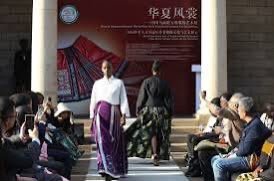
On September 10, 2026, the National Museums of Kenya in Nairobi hosted an event that was, on its surface, a celebration of textile and design. The China-Africa Costume Culture and Art Exhibition featured traditional Chinese garments — including the Mamianqun, or “horse-face skirt” — alongside a fashion show blending Chinese and African elements. Yet beneath the sequins and silk lies a far more consequential story: the intersection of Africa’s cultural revival with a intensifying global competition for influence on the continent.
The Event: Fashion as Diplomatic Language
The exhibition, held under the framework of the 2026 China-Africa Year of People-to-People Exchanges, was not a spontaneous cultural gesture. It was part of a meticulously planned initiative encompassing nearly 600 events across five domains: youth, culture, livelihoods, ideas, and talent development. Kenyan officials framed the event in terms of identity and heritage. Hanna Wendot Cheptumo, Kenya’s Cabinet Secretary for Gender, Culture and Children Services, noted that “costumes are more than clothing, as they express identity, history, beliefs, social values and creativity”.
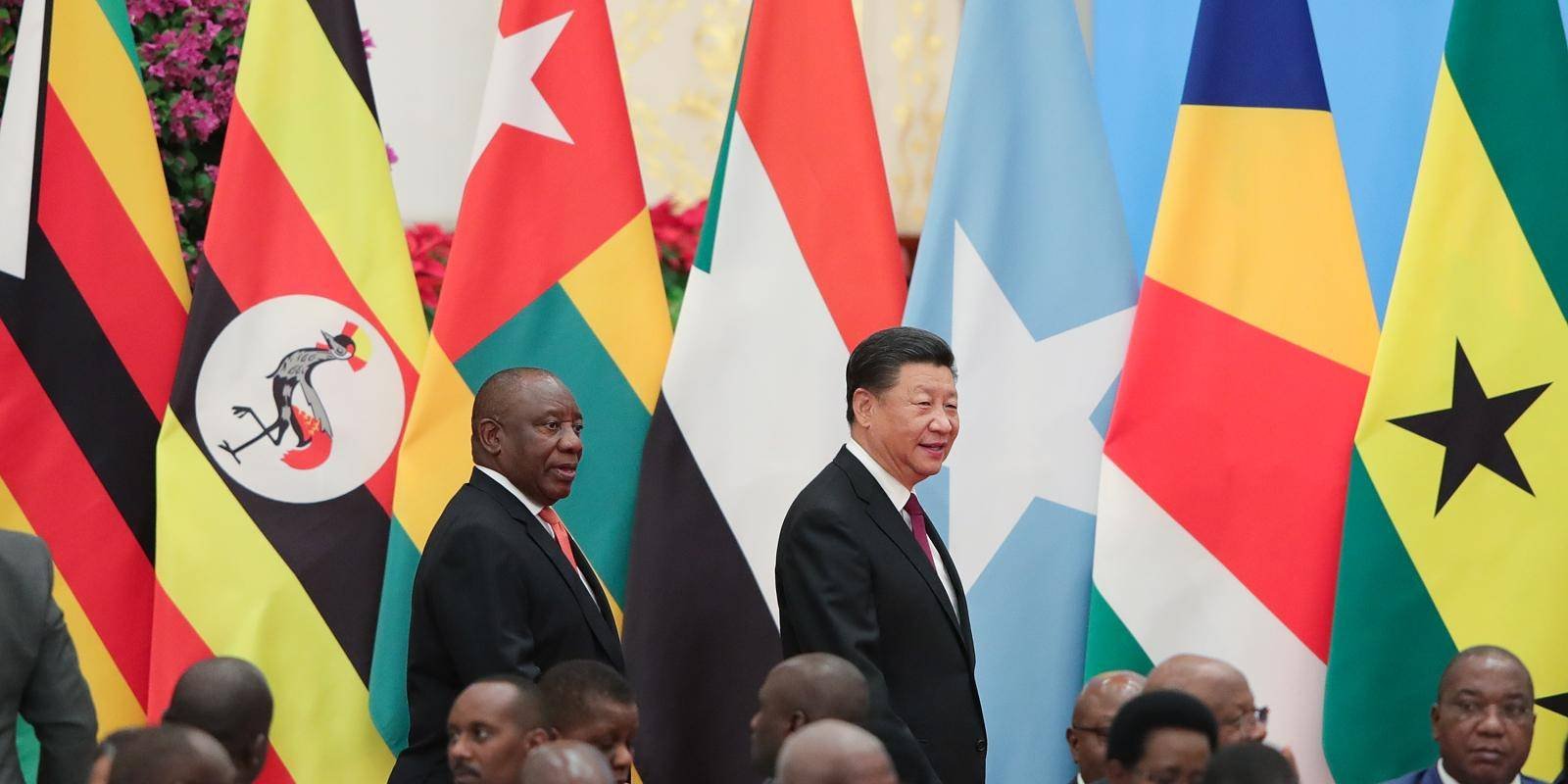
The Chinese charge d’affaires, Zhang Zhizhong, invoked both a Chinese proverb — “Virtue is not left to stand alone, and he who practices it will have neighbors” — and an African proverb — “If you want to go fast, go alone; if you want to go far, go together” — to frame the partnership as a meeting of equals. For Kenya, the event was an opportunity to position its young creative workforce within global value chains. Noah Otiende Ochieng, Secretary for Creative Economy, emphasized that partnerships can “turn creativity into opportunities, enterprises and sustainable livelihoods” for a population increasingly active in fashion, music, film, and digital content.
Africa's Cultural Revival: Opportunities and Momentum
The Nairobi exhibition is a window into a broader continental awakening. Africa’s fashion industry alone is valued at approximately 50 billion by 2030 if investment and infrastructure keep pace. Global demand for African couture and textiles has risen by over 40 percent, yet the continent still imports more apparel than it exports — roughly $23.1 billion in imports against $15.5 billion in exports — revealing a massive gap between cultural richness and economic capture.
This gap is increasingly being addressed through structured initiatives. Nigeria’s “Afroliganza” vision seeks to build a values-driven fashion economy rooted in African heritage and positioned for global impact. The International Finance Corporation has recognized the creative economy as a strategic sector for employment and entrepreneurship, particularly for young people and women. ICCROM’s multi-year programme, supported by Italy, is training a new generation of African artisans through hands-on models that expand technical skills and open sustainable economic opportunities.
The demographic imperative is undeniable. Africa has the world’s youngest population, and cultural heritage offers a pathway to dignified livelihoods where formal employment remains scarce. As one UNDP analysis observed, “Afrobeats is a prime example of a movement creating both cultural and economic value” — a model that can be replicated across fashion, design, and visual arts.
The Geopolitics of Culture: Competing Influences
The Nairobi exhibition did not occur in a vacuum. It unfolded against the backdrop of an intensifying soft power competition in Africa, with China as the most visible — though not the only — player.
China’s approach represents a strategic evolution. Beijing has moved beyond its traditional focus on infrastructure and high-level financing to embrace what analysts describe as a “charm offensive” centered on culture and public diplomacy. The 2026 China-Africa Year of People-to-People Exchanges includes not only fashion exhibitions but also film weeks, tourism promotions, AI competitions, and scholarships for African students. China has funded satellite television receivers in approximately 10,000 African villages and built major cultural landmarks, including the Central Africa Cultural and Art Center in Kinshasa — one of the region’s largest cultural facilities. As one scholar noted, these interactions have forged “durable soft power links” that “transcend trade and politics”.
Other global powers are pursuing parallel strategies. France has strengthened its engagement with Africa’s creative sector amid evolving Franco-African relations. South Korea’s cultural influence — the “Korean Wave” — is increasingly being reimagined as a collaborative model for Africa, with calls to build shared cultural production rather than one-way export. Italy, through ICCROM, has invested €6 million in a three-year programme to equip African artisans with heritage conservation skills.
For African nations, this competition presents both opportunity and risk. The opportunity lies in leveraging multiple partnerships to build domestic creative industries, access markets, and develop skills. The risk lies in becoming a passive recipient of external cultural agendas rather than an active shaper of its own cultural future. As one analysis of China’s strategy noted, Beijing’s activities “aim to deepen China’s influence on the continent” — a goal that is explicit and unambiguous.
Challenges: From Potential to Power
Despite the momentum, Africa’s cultural economy faces structural constraints that no single exhibition can resolve.
Financing and infrastructure remain critical bottlenecks. The gap between Africa’s cultural output and its economic capture reflects underinvestment in production facilities, logistics, and market access. The United Nations Economic Commission for Africa has emphasized the need for a “collective production and logistics model” to strengthen the continent’s fashion value chain.
Skills development is another constraint. While Africa’s youth population is its greatest asset, many young Africans continue to face barriers to education, skills development, and formal employment. The ICCROM programme explicitly responds to this challenge by developing creative skills while expanding access to formal employment and entrepreneurship.
Policy coherence is fragmented. National initiatives like Nigeria’s Afroliganza exist alongside continental frameworks, but coordination remains weak. The African Union’s Agenda 2063 provides an aspirational framework, yet implementation varies widely across member states.
Geopolitical dependence is a subtler risk. As external powers invest in Africa’s cultural sector, there is a danger that local priorities become subordinate to donor agendas. The most sustainable cultural revival will be one that is led by African institutions, rooted in African heritage, and positioned for global impact — on African terms.
Conclusion: A Continent Finds Its Voice
The China-Africa Costume Culture and Art Exhibition in Nairobi was more than a fashion show. It was a signal — of Africa’s cultural confidence, of its integration into global creative networks, and of the continent’s growing strategic importance in the competition for influence among global powers.
Africa’s cultural revival is real, but it remains uneven. The fashion industry’s $31 billion valuation and the rising global demand for African aesthetics demonstrate genuine economic potential. Yet the gap between cultural richness and economic capture — between being a source of inspiration and a beneficiary of value creation — persists. Closing that gap will require not only external partnerships but also domestic investment in infrastructure, skills, and policy frameworks that prioritize African agency.
The proverb quoted by the Chinese diplomat — “If you want to go far, go together” — captures both the promise and the peril. Africa’s cultural future will be shaped by how well it navigates partnerships without surrendering authorship of its own story. The thread, after all, must run through African hands.

Abonnez-vous à notre newsletter
Restez informé(e) de nos actualités et offres
Thank you for subscribing to the newsletter.
Oops. Something went wrong. Please try again later.