
Introduction
Africa has never lacked natural attractions.
From the savannahs of East and Southern Africa to the forests of the Congo Basin, the mountains of Rwanda and Ethiopia, the deserts of Namibia and Morocco, the wetlands of Botswana and Zambia, and the marine ecosystems of the Indian Ocean, the continent possesses some of the world’s most extraordinary natural landscapes.
For decades, however, Africa’s relationship with nature-based tourism was largely associated with one dominant product: the safari.
Today, that model is changing.
The global tourism industry is increasingly placing greater value on experiences connected to nature, conservation, wildlife, biodiversity, local communities, climate resilience, adventure, wellness, and authentic landscapes. This creates an important opportunity for Africa because the continent’s greatest competitive advantage may not be manufactured infrastructure or mass tourism capacity, but natural capital.
The question is therefore no longer simply whether tourists will continue to visit African national parks.
The more important question is:
Can Africa transform its natural wealth into a new generation of sustainable tourism economies without destroying the very ecosystems that attract visitors in the first place?
The evidence suggests that the potential is enormous.
In 2025, Travel & Tourism contributed approximately $228 billion to Africa’s economy, representing 7% of regional GDP, and supported around 30.2 million jobs. WTTC expects the sector’s contribution to rise to approximately $241 billion in 2026, with employment reaching about 31.5 million jobs. These figures cover the wider tourism sector rather than nature-based tourism alone, but they demonstrate the scale of the market into which nature tourism can feed.
At the same time, the World Bank estimates that wildlife tourism represents roughly 36.3% of Africa’s tourism economy, directly contributing approximately $29.3 billion and supporting around 3.6 million jobs, based on the underlying data cited in its Africa nature-based tourism analysis.
Nature, therefore, is not simply an environmental asset.
It is potentially one of Africa’s most important economic assets.
1. Nature Was Always Africa’s Tourism Advantage—But the Model Is Changing
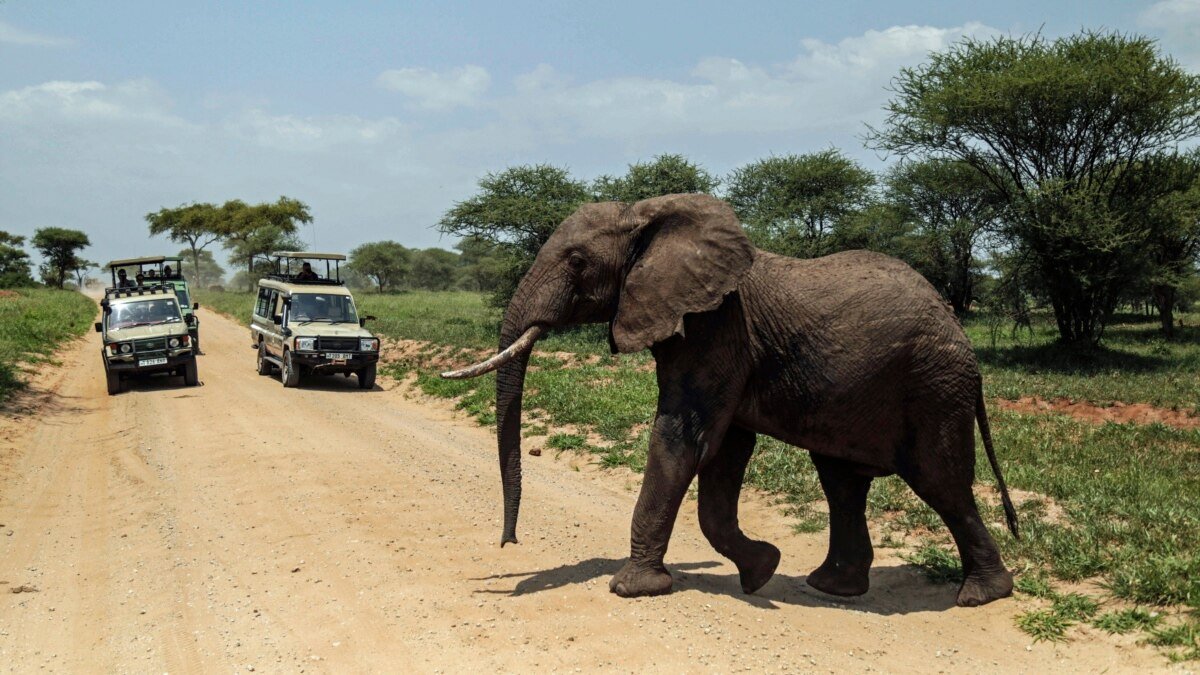
Africa’s traditional tourism model has often been built around wildlife viewing.
The Big Five became a global tourism brand.
The Serengeti, Maasai Mara, Kruger, Okavango Delta, Bwindi, Volcanoes National Park, South Luangwa, Etosha, Chobe, and numerous other destinations created an international image of Africa as the continent of wilderness.
This model remains powerful.
But a new generation of travellers is increasingly interested in experiences rather than simply sightseeing.
They may want to:
- hike in mountains;
- observe primates;
- explore forests;
- visit wetlands;
- experience marine ecosystems;
- participate in conservation;
- interact with local communities;
- cycle through rural landscapes;
- photograph wildlife;
- observe birds;
- experience desert ecosystems;
- or combine nature with wellness and cultural experiences.
The implication is that Africa does not need to invent a completely new tourism product.
It needs to expand the definition of nature tourism.
The safari is becoming one component of a much larger ecosystem.
2. What Exactly Is Nature-Based Tourism?
Nature-based tourism is broader than traditional ecotourism.
It includes tourism in which natural landscapes, wildlife, biodiversity, forests, mountains, wetlands, rivers, coastlines, or marine environments are a central part of the visitor experience.
Ecotourism traditionally places greater emphasis on conservation, environmental responsibility, education, and benefits for host communities.
This distinction matters because not every trip into nature is automatically sustainable.
A luxury resort in a fragile ecosystem may be marketed as an eco-destination while consuming large amounts of water and generating substantial waste.
Conversely, a small community-based tourism operation may have a smaller environmental footprint while generating significant local benefits.
The objective should therefore be not merely more nature tourism, but better-managed nature tourism.
The World Bank argues that well-planned nature-based tourism can create jobs, strengthen local value chains, diversify rural incomes, finance protected areas, and empower communities. It also estimates that nature-based tourism generates approximately 8 billion unique visits to protected areas globally each year.
This suggests that the opportunity is already large.
The challenge is to ensure that Africa captures more of its value.
3. The Economic Case for Nature
The strongest argument for eco-tourism is not environmental.
It is economic.
Natural landscapes generate an economic chain that reaches far beyond the park entrance.
A tourist who visits a national park may spend money on:
- accommodation;
- transport;
- guides;
- food;
- park fees;
- local crafts;
- photography;
- domestic flights;
- fuel;
- cultural experiences;
- and other services.
That spending circulates through local communities.
The World Bank’s analysis shows that investment in protected areas and nature-based tourism can generate strong economic returns. Globally, its research has found that every dollar governments invest in protected areas and nature-based tourism can generate at least six dollars in economic return in the studied cases.
This changes the way policymakers should view conservation.
A protected area is not necessarily an economic burden.
Under the right conditions, it can become an income-generating productive asset.
4. Africa’s Rural Economy Could Be the Biggest Beneficiary
Much of Africa’s most valuable natural capital exists outside major cities.
National parks and protected landscapes are frequently located in rural areas where employment opportunities are limited.
This creates a strategic advantage.
Instead of concentrating tourism investment entirely in capital cities and coastal resorts, governments can use nature tourism to bring economic activity into regions that otherwise have limited access to formal employment.
The World Bank’s analysis of Zambia, for example, found that tourism associated with South Luangwa National Park supports employment equivalent to around 30% of the working-age population in surrounding areas. In the Lower Zambezi region, the figure was approximately 14%.
This makes nature tourism particularly important for rural development.
It can slow rural economic decline.
It can encourage young people to remain in their communities.
It can create opportunities for women and small businesses.
And it can give local populations an economic reason to protect wildlife rather than exploit it.
5. Uganda: When Wildlife Becomes a Major Economic Sector
Uganda provides an important example of how nature can contribute to broader economic transformation.
The country recorded more than 1.64 million international tourist arrivals in 2025, up 19.7% from 2024, while tourism receipts reached approximately $1.62 billion. Tourism directly supported more than 876,000 jobs, according to the Ministry of Tourism, Wildlife and Antiquities.
Uganda’s tourism proposition is strongly connected to nature.
Its appeal includes mountain gorillas, chimpanzees, forests, savannahs, lakes, rivers, and wildlife parks.
The economic importance of this model extends into surrounding communities.
World Bank research found that each dollar spent by tourists around Queen Elizabeth National Park generated approximately $2.03 in local income, demonstrating how tourism spending can multiply through local economies.
The lesson from Uganda is important:
Nature tourism can become much more than an attraction. It can function as an economic network.
6. Rwanda: From Gorilla Conservation to a High-Value Tourism Model
Rwanda provides perhaps one of Africa’s clearest examples of turning conservation into a national tourism brand.
The country’s mountain gorillas have become an international symbol of Rwanda.
But Rwanda has increasingly diversified its tourism proposition toward national parks, conservation experiences, hiking, wildlife, and high-value tourism.
In 2025, Rwanda generated $685 million in tourism revenues, up from $647 million in 2024, while visitor arrivals reached approximately 1.49 million, a 9% increase. Its national parks received 155,394 visits, generating about $40.8 million in park revenues.
Rwanda’s strategy is significant because it is not based purely on mass tourism.
It has sought to position conservation as part of a premium tourism experience.
The country’s five-year tourism strategy describes sustainable tourism, conservation, safety, innovation, and high-value experiences as important components of its development model.
Rwanda demonstrates that a small country does not necessarily need huge tourist volumes.
It can seek higher-value visitors and stronger spending per visitor.
7. Botswana and the Economics of “High Value, Low Volume”
Botswana has followed a different but influential model.
Its tourism strategy has traditionally emphasized high-value, low-volume tourism, particularly in ecologically sensitive areas.
The idea is simple:
A smaller number of visitors spending more can potentially generate substantial revenue while reducing pressure on fragile ecosystems.
In 2026, Botswana’s government reiterated that the high-value, low-volume model had helped protect ecosystems, safeguard biodiversity, and preserve the exclusivity of the country’s tourism product, while acknowledging that changing markets, visitor expectations, and climate realities require adaptation.
This model has clear environmental advantages.
But it also raises an important social question:
Who benefits from high-value tourism?
If luxury lodges capture most of the revenue while communities receive limited income, the model may protect nature without producing sufficient local development.
Botswana’s current policy discussion is therefore increasingly focused on investment, diversification, community participation, and expanding the economic benefits of tourism.
8. Namibia: When Communities Become Conservation Partners
Namibia offers one of Africa’s most interesting experiments in community-based conservation.
The country has developed communal conservancies in which communities participate in managing natural resources and developing tourism activities.
According to Namibia’s Ministry of Environment and Tourism, there are currently 86 registered conservancies, covering approximately 19.6% of the country, with 42 joint-venture lodges operating in conservancies. In some areas, tourism has become a major source of income diversification.
This model changes the relationship between communities and wildlife.
Instead of seeing wildlife exclusively as something protected by the state, communities can become economic stakeholders in conservation.
That creates a powerful incentive.
If elephants, lions, desert landscapes, or other natural resources generate household income, communities have a stronger economic interest in preserving them.
But the model depends on transparent revenue sharing and meaningful community participation.
Without those conditions, “community tourism” can become little more than a label.
9. Madagascar: Nature Tourism and Poverty Reduction
Madagascar demonstrates the potential of biodiversity-based tourism to reduce poverty.
Its extraordinary levels of endemism make it one of the world’s most distinctive nature destinations.
World Bank research examining tourism around protected areas in Madagascar found that poor households benefited substantially from tourism-generated income.
At Ranomafana, around 32% of income generated by tourist spending was estimated to accrue to poor households, while at Nosy Be the share was approximately 56%. The study also found significant income multipliers in surrounding economies.
This is important because tourism’s success should not be measured only by national visitor numbers.
The more meaningful question is:
How much of each tourist dollar stays in the local community?
That is where the developmental quality of tourism becomes visible.
10. Zambia: Nature as a Rural Employment Engine
Zambia may be one of the strongest examples of the employment potential of nature tourism.
Approximately 40% of Zambia’s land area is protected, and the country’s national parks contain globally significant wildlife and biodiversity.
In 2025, the World Bank reported that nature-based tourism directly contributed more than 7% of Zambia’s GDP, while protected areas supported substantial employment and local economic activity.
This changes the conventional development equation.
A national park is not simply a protected piece of land.
It can be an economic asset capable of supporting:
hotels + transport + agriculture + guiding + handicrafts + conservation + jobs + local businesses.
The challenge is to build these connections deliberately rather than assuming they will appear automatically.
11. South Africa: The Emergence of a Wildlife Economy
South Africa represents perhaps the most advanced example of integrating biodiversity with broader economic policy.
The country’s wildlife sector extends beyond tourism to include conservation, private reserves, rural employment, hospitality, biodiversity management, and innovative financial instruments.
A particularly important innovation is the South Africa Wildlife Conservation Bond, a $150 million outcome-based financial instrument supporting black rhino conservation while also financing community engagement and employment.
By 2026, the programme had helped improve management across approximately 155,000 hectares, supported more than 2,700 park staff and community members, and contributed to annual black-rhino population growth approaching 8%.
The significance goes beyond rhinos.
It demonstrates that biodiversity can potentially become linked to capital markets and innovative conservation finance.
This could become an important part of Africa’s tourism future.
12. Nature Tourism Can Help Finance Conservation
One of the fundamental problems facing African conservation is financing.
Protected areas require:
- rangers;
- vehicles;
- surveillance;
- infrastructure;
- veterinary services;
- scientific monitoring;
- fire management;
- community engagement;
- and ecological restoration.
Governments often have limited budgets for these purposes.
Tourism can help bridge part of the gap.
Entrance fees, concession fees, tourism leases, and other visitor-related revenues can provide substantial funding for protected areas.
World Bank research shows that park entrance fees alone can constitute significant proportions of self-generated revenues in several countries. Its comparative analysis found entrance fees represented approximately 75% of site-based revenues in Namibia and around 25–30% in Uganda and South Africa.
But tourism revenue should not be treated as unlimited.
Excessive visitor numbers can undermine the ecosystem that generates the revenue.
That is why conservation finance must be connected to ecological carrying capacity.
13. The New Logic: Pay to Protect
The most promising future model may be based on a simple principle:
Visitors should contribute directly to the preservation of the places they visit.
This can happen through:
- park entrance fees;
- conservation levies;
- tourism concessions;
- environmental taxes;
- biodiversity funds;
- community conservation payments;
- conservation bonds;
- and potentially carefully designed biodiversity or carbon-finance mechanisms.
Seychelles offers an interesting example.
From January 2026, the country maintained a Tourism Environmental Sustainability Levy for medium and large accommodation facilities, yachts, and island resorts, with revenues intended to support sustainable development and the long-term resilience of the tourism sector.
The concept is significant because it turns tourism into part of the financing mechanism for environmental sustainability.
14. Seychelles: The Marine Dimension of African Eco-Tourism
Africa’s nature-tourism story is often dominated by safari.
But the continent also possesses extraordinary marine ecosystems.
The Seychelles demonstrates the potential of:
- coral reefs;
- marine wildlife;
- beaches;
- islands;
- diving;
- sailing;
- coastal ecosystems;
- and marine conservation.
In 2025, Seychelles launched preparations for an initiative supported through the Global Environment Facility and implemented with UNEP and other partners to reduce tourism’s environmental footprint through circular-economy approaches, climate resilience, and nature-based solutions. The programme could provide up to $5 million in support.
The Seychelles Sustainable Tourism Policy Framework 2024–2034 explicitly links tourism development with protection of natural and cultural resources, community wellbeing, climate resilience, and stronger local businesses.
This points toward a much broader definition of African eco-tourism.
The future is not only about lions.
It is also about coral reefs, mangroves, whales, turtles, wetlands, forests, mountains, and coastal ecosystems.
15. Morocco: Nature Beyond the Safari
North Africa demonstrates that nature tourism does not have to depend on wildlife viewing.
Morocco combines mountains, deserts, beaches, rural landscapes, oases, forests, and cultural heritage.
The Moroccan National Tourist Office explicitly promotes eco-responsible, fair, and sustainable tourism and markets natural landscapes alongside cultural heritage and local experiences. It highlights the country’s mountains, deserts, beaches, rural regions, and environmentally responsible tourism initiatives.
Morocco therefore illustrates an important model for African tourism:
nature + culture + food + heritage + adventure.
This integrated approach can lengthen tourist stays and distribute spending across more regions.
16. The Congo Basin: The World’s Environmental Asset That Africa Struggles to Monetize
The Congo Basin introduces a completely different question.
Its forests have extraordinary global environmental value, especially for climate regulation and biodiversity.
A 2025 World Bank assessment found that the Congo Basin’s forests generate more than $1 trillion in global ecosystem services, with more than 90% of that value associated with climate regulation.
Yet local governments captured only around $8 billion in domestic benefits in 2020, largely through timber, wild foods, bushmeat, and ecotourism.
This creates one of Africa’s greatest economic paradoxes.
The world benefits enormously from Africa’s natural ecosystems.
But African communities and governments often receive only a fraction of that value.
Nature-based tourism cannot solve this problem alone.
But it can become one component of a wider natural-capital economy in which conservation, tourism, climate finance, sustainable forestry, ecosystem services, and community livelihoods reinforce one another.
17. The Real Challenge: Avoiding “Green Tourism” Without Green Management
The word “eco” has enormous marketing value.
That creates a risk.
Some tourism projects may adopt environmental language without significantly changing their environmental footprint.
A resort can call itself sustainable while consuming enormous quantities of water.
A safari camp can advertise conservation while generating large amounts of waste.
An island resort can promote marine tourism while contributing to reef degradation.
A popular national park can become environmentally damaged because visitor numbers exceed its carrying capacity.
Therefore, eco-tourism requires measurable standards.
Questions should include:
How much water is consumed per visitor?
Where does the energy come from?
How is waste treated?
How much revenue stays locally?
How many local businesses participate?
What proportion of income supports conservation?
What are the effects on wildlife?
What is the maximum sustainable number of visitors?
Without measurement, sustainability can become branding rather than policy.
18. Climate Change Could Become Africa’s Biggest Tourism Threat
The same natural environments that attract tourists are increasingly vulnerable to climate change.
Tourism depends on climate-sensitive infrastructure and ecosystems.
Changes in rainfall can affect wildlife.
Drought can reduce water availability.
Floods can destroy roads and lodges.
Extreme heat can make destinations less comfortable.
Wildfires can damage landscapes.
Sea-level rise can threaten coastal tourism.
Coral bleaching can undermine marine tourism.
Kenya’s tourism authorities explicitly recognize climate change as a major risk to tourism, citing potential effects on destination attractiveness, water availability, infrastructure, biodiversity, food diversity, operating costs, and disease patterns.
This creates a strategic contradiction:
Tourism depends on nature.
Tourism can finance nature.
But poorly managed tourism can also damage nature.
And climate change can damage both simultaneously.
19. The Water Problem
Water may become one of Africa’s most important constraints on tourism growth.
A major tourism destination may require water for:
- hotels;
- swimming pools;
- sanitation;
- landscaping;
- laundry;
- restaurants;
- and agricultural supply chains.
In water-stressed regions, large tourism facilities can compete with local populations and agriculture.
Sustainable tourism therefore requires water efficiency.
Hotels in environmentally sensitive areas need to consider:
- recycling;
- desalination where appropriate;
- rainwater collection;
- wastewater treatment;
- low-water landscaping;
- efficient sanitation;
- and transparent water accounting.
Without such measures, eco-tourism can create an environmental contradiction: tourists travel to experience pristine nature while the tourism infrastructure places pressure on local water systems.
20. The Community Question: Who Owns the Experience?
Nature-based tourism cannot be sustainable if the people living next to natural attractions feel excluded from the economic benefits.
This is particularly important because local populations often bear the costs of conservation.
They may lose access to:
- grazing land;
- forests;
- fishing areas;
- agricultural land;
- or traditional natural resources.
They may also suffer crop destruction or livestock losses from wildlife.
If tourism revenue remains concentrated elsewhere, local resentment can undermine conservation.
The World Bank has therefore emphasized three interconnected pillars for sustainable nature tourism:
protect natural assets, grow tourism businesses sustainably, and share benefits with local communities.
The third element may be the most important.
People protect what they believe they have a stake in protecting.
21. Wildlife and Human-Wildlife Conflict
Nature tourism can generate income, but wildlife can also impose costs on rural communities.
Elephants can destroy crops.
Predators can kill livestock.
Hippos can damage fields.
Primates can raid agricultural land.
These costs can undermine community support for conservation.
Tourism revenues therefore need to help finance compensation mechanisms, preventative infrastructure, rapid-response systems, and community development.
Uganda, for example, has been investing in measures related to human-wildlife conflict, including fencing and stronger wildlife protection systems.
The strategic objective should be to move from the idea that local populations must simply tolerate wildlife to a model in which communities participate in the economic value of wildlife while receiving protection from its costs.
22. The New Tourist Wants Experiences, Not Just Destinations
The next generation of tourism may increasingly be built around experiences.
Visitors may want to:
- track gorillas;
- hike through forests;
- sleep in conservation camps;
- participate in birdwatching;
- learn about indigenous ecological knowledge;
- visit community conservancies;
- explore mangrove ecosystems;
- observe marine life;
- photograph rare species;
- or combine nature with local food and culture.
This creates an opportunity for African destinations to increase visitor spending without necessarily increasing visitor numbers.
Instead of asking:
How can we bring more tourists?
Governments should increasingly ask:
How can we create more value per visitor?
This is particularly compatible with fragile ecosystems.
23. Digital Media Is Changing Nature Tourism
The way people discover destinations is changing.
A wildlife photograph on Instagram, a conservation documentary on YouTube, a TikTok video from a national park, or a travel creator’s video can influence destination choices before a person ever contacts a tourism company.
This means African countries can market nature directly to global audiences at relatively low cost.
Kenya’s draft National Tourism Strategy goes further, proposing wildlife content-creator programmes, influencer partnerships, a wildlife creators hub, digital storytelling, content licensing, and a wildlife film and photography festival.
This is strategically important because Africa’s landscapes are highly visual.
The image of a gorilla.
A herd of elephants.
A leopard at sunset.
A whale in the Indian Ocean.
The Okavango Delta from the air.
The Atlas Mountains at sunrise.
These are forms of digital tourism diplomacy.
People increasingly decide where to travel after seeing the destination on their screens.
24. Wildlife Content Can Become an Export Industry
There is another opportunity hidden inside digital tourism.
Africa does not have to export only tourists.
It can export images, documentaries, films, photography, educational content, wildlife footage, and digital experiences.
This creates another layer of economic value around nature.
A national park can become:
a tourism destination + filming location + research centre + educational site + digital-content source + conservation brand.
This matters because some natural destinations may not be capable of accommodating large numbers of tourists.
Digital access can therefore generate economic and educational value without increasing physical visitor pressure.
25. Women and Youth Could Become Major Beneficiaries
Nature tourism can create employment opportunities for women and young people in rural regions.
Potential activities include:
- guiding;
- hospitality;
- food production;
- handicrafts;
- transportation;
- conservation;
- digital marketing;
- photography;
- environmental education;
- research;
- and small-scale tourism businesses.
The World Bank’s Africa nature-tourism analysis has identified nature-based tourism as a potential source of employment for women and young people, particularly in rural regions.
This is especially important given Africa’s demographic structure.
A continent with a rapidly growing young population needs sectors capable of generating employment outside traditional agriculture and government employment.
Nature-based tourism could become one of those sectors.
26. Nature Tourism and Rural Infrastructure
Tourism cannot develop without infrastructure.
But nature tourism presents an opportunity to build infrastructure that benefits both visitors and local populations.
Better roads can connect rural communities to markets.
Electricity can support businesses.
Internet connectivity can improve education and entrepreneurship.
Air links can connect remote destinations.
Health facilities can serve both visitors and local populations.
Water infrastructure can benefit communities as well as hotels.
This is why nature tourism can produce a multiplier effect beyond tourism itself.
However, infrastructure must be designed carefully.
A road built through an ecological corridor can create more damage than value.
A major airport near a sensitive ecosystem can increase environmental pressure.
Sustainable tourism therefore requires strategic spatial planning, not simply infrastructure expansion.
27. The Danger of Mass Tourism
Africa’s growing tourism potential also creates a difficult choice.
Should African countries pursue mass tourism?
Or should they focus on high-value, lower-impact models?
Mass tourism can create:
- more jobs;
- lower prices;
- broader domestic access;
- and higher volumes of foreign exchange.
But it can also create:
- congestion;
- water pressure;
- waste;
- habitat degradation;
- higher carbon emissions;
- and cultural commodification.
Botswana has historically leaned toward high-value, low-volume tourism, while Kenya’s draft strategy is considering diversified products and stronger management of wildlife tourism.
The future may not be a single model.
Different ecosystems require different tourism densities.
Some destinations may support large numbers.
Others may require strict visitor limits.
The key is ecological carrying capacity.
28. Tourism Can Become a Conservation Contract
A new policy philosophy could be built around a simple exchange:
Visitors receive access to nature; nature receives investment from visitors.
That investment could support:
- rangers;
- local schools;
- health centres;
- community businesses;
- wildlife corridors;
- reforestation;
- anti-poaching;
- scientific research;
- and ecosystem restoration.
This creates an implicit social contract.
The tourist does not simply consume nature.
The tourist helps finance its survival.
This is particularly important as governments face increasingly limited conservation budgets.
Innovative financing mechanisms such as conservation bonds, environmental levies, tourism concessions, and results-based finance can complement tourism revenues. South Africa’s Wildlife Conservation Bond demonstrates one possible direction.
29. Eco-Tourism Could Help Africa Diversify Beyond Commodities
Many African economies remain heavily dependent on commodities such as oil, minerals, agricultural products, or raw materials.
Tourism offers a different type of export.
The product is not extracted from the ground.
It is an experience built around natural capital.
That means a lion can generate repeated economic value without being consumed.
A forest can attract tourists while remaining a forest.
A wetland can support biodiversity while generating tourism income.
A mountain can generate revenue through hiking and climbing.
A coral reef can support tourism while being preserved.
This gives nature-based tourism an important theoretical advantage over extractive industries.
But only if the natural asset remains healthy.
Once the ecosystem is destroyed, the tourism product disappears.
30. From Extractive Economy to Regenerative Economy
This could represent the most important shift.
The traditional economic model is:
extract → sell → consume → extract again.
A nature-based model can potentially become:
protect → experience → generate revenue → reinvest → restore → protect.
This is closer to a regenerative economy.
The distinction is fundamental.
Mining can create short- or medium-term revenue from a finite resource.
A well-managed natural tourism system can create recurring revenue from an ecosystem that remains intact.
This does not mean tourism is automatically superior.
It means that renewable natural capital can generate repeated economic value when managed sustainably.
31. Climate Finance Could Become the Next Frontier
Tourism alone cannot pay for the full environmental value of Africa’s ecosystems.
Forests provide climate regulation.
Wetlands regulate water.
Mangroves protect coastlines.
Biodiversity supports agriculture and fisheries.
These services have global value but are not always adequately priced.
This is why Africa’s tourism strategy may increasingly intersect with climate finance.
The Congo Basin is a clear example.
The World Bank has argued that the region’s forests create enormous global ecosystem value while local governments capture only a fraction of it.
The next generation of African nature economies could therefore combine:
tourism + conservation + carbon finance + biodiversity finance + sustainable agriculture + community development.
Tourism would be one revenue stream within a wider natural-capital economy.
32. Africa Needs a Different Tourism Investment Model
Traditional tourism investment often measures success through hotels, rooms, arrivals, and occupancy rates.
Nature tourism requires different indicators.
Governments should also measure:
- biodiversity outcomes;
- local income;
- conservation spending;
- local employment;
- water consumption;
- carbon emissions;
- waste generation;
- visitor density;
- community participation;
- and ecological restoration.
A destination should not be considered successful merely because it receives more tourists.
The better question is:
Has tourism increased economic value while maintaining or improving ecological health?
That should become the central measurement of eco-tourism.
33. The Competition Between African Destinations Will Intensify
Africa’s natural assets do not automatically guarantee market leadership.
Kenya competes with Tanzania.
Rwanda competes with Uganda and the DRC for gorilla-related tourism.
Botswana competes with Namibia, Zambia, Zimbabwe, and South Africa for safari markets.
Morocco competes with Egypt and other destinations for adventure and cultural tourism.
Seychelles competes with Mauritius and other Indian Ocean destinations.
As competition increases, destinations will need to differentiate.
The future may therefore favour countries that offer a complete experience, combining nature, safety, infrastructure, local culture, digital connectivity, quality accommodation, and environmental credibility.
34. The Future Tourist May Choose the Country’s Environmental Reputation
A growing strategic question is likely to be:
How green is the destination?
Countries may increasingly compete not simply on beauty but on environmental credibility.
A destination that can demonstrate:
- strong conservation;
- transparent sustainability standards;
- renewable energy;
- efficient water use;
- low waste;
- community participation;
- wildlife protection;
- and responsible tourism
may have a stronger long-term competitive position.
This could turn environmental policy into a tourism marketing asset.
Seychelles is explicitly trying to connect tourism competitiveness with sustainability and environmental management through its Sustainable Seychelles framework.
35. Three Models for Africa’s Nature Tourism Future
Scenario One: Mass Nature Tourism
African countries pursue rapidly rising visitor numbers and large-scale infrastructure.
This produces faster economic growth but creates greater environmental pressure.
The risk is that Africa could eventually damage the assets that attracted visitors.
Scenario Two: High-Value Sustainable Tourism
Countries focus on fewer visitors, higher spending, stronger conservation, premium experiences, and community benefits.
This model may generate greater revenue per visitor while reducing environmental pressure.
Rwanda and Botswana provide important examples of elements of this approach.
Scenario Three: The African Nature Economy
This is the most ambitious model.
Tourism becomes one part of a wider economic system incorporating:
tourism + conservation + agriculture + carbon markets + biodiversity finance + research + education + digital content + community enterprises.
In this scenario, nature becomes a productive economic sector rather than merely a tourism attraction.
36. What African Governments Should Do
The first priority should be to treat natural capital as an economic asset that requires investment rather than simply a protected resource.
Second, governments should strengthen protected-area management and ecological monitoring before expanding tourism.
Third, tourism concessions should include clear benefit-sharing arrangements with local communities.
Fourth, African countries should develop local supply chains so that hotels, lodges, camps, restaurants, and tourism operators purchase more products and services from surrounding communities.
Fifth, destinations should develop visitor-management systems that prevent overcrowding.
Sixth, governments should invest in water efficiency, renewable energy, waste treatment, and low-impact infrastructure.
Seventh, nature tourism should be integrated with cultural tourism, food, wellness, sport, and adventure rather than promoted as an isolated product.
Eighth, Africa should develop stronger regional tourism circuits so tourists can combine several destinations in a single trip.
Ninth, governments should use digital platforms, creators, filmmakers, photographers, and conservation communicators to tell Africa’s ecological story to global audiences.
Tenth, tourism revenues should be linked transparently to conservation outcomes.
37. The Role of the African Continental Tourism Market
Africa’s biggest tourism opportunity may ultimately be internal.
Domestic and intra-African tourism can make nature tourism more resilient.
International arrivals can fluctuate because of economic crises, geopolitical instability, pandemics, or airline disruptions.
Domestic tourists can provide a more stable base.
Uganda, for example, recorded more than 3.27 million domestic tourism participants in 2025, alongside 1.64 million international arrivals.
This demonstrates that African populations themselves can become a major tourism market.
A continental tourism strategy could therefore encourage:
- regional safari circuits;
- cross-border conservation areas;
- easier travel;
- regional air connectivity;
- digital tourism passes;
- African tourism campaigns;
- and affordable domestic tourism.
Nature should not be a product consumed only by international visitors.
It can also become part of Africa’s internal economic integration.
38. Cross-Border Ecosystems Require Cross-Border Tourism
Nature does not respect political borders.
Elephants move between countries.
Migratory birds cross continents.
Rivers cross borders.
Forests extend across several states.
Wildlife corridors can cover huge geographic areas.
This means many of Africa’s best tourism assets require regional cooperation.
The Kgalagadi Transfrontier Park between Botswana and South Africa demonstrates how cross-border conservation can create larger ecological and tourism landscapes.
The future may therefore lie not only in national parks but in transnational nature tourism corridors.
These can allow tourists to travel through several countries while experiencing one interconnected ecosystem.
Such models could strengthen both conservation and regional economic integration.
39. The Strategic Question: Can Nature Become Africa’s Competitive Brand?
Africa is competing globally for tourism investment.
But it has something few regions can replicate:
the combination of biodiversity, wilderness, cultural diversity, and relatively large intact natural landscapes.
The competitive advantage is not simply “beautiful scenery.”
It is the possibility of offering experiences that increasingly cannot be reproduced in dense, highly urbanized environments.
A visitor can see a skyscraper in many countries.
A true wilderness experience is much rarer.
This gives Africa a potentially powerful global positioning:
The continent where tourism can reconnect people with nature.
But the credibility of that brand depends entirely on whether Africa protects the ecosystems behind it.
Conclusion
The question “Can nature become a new engine of African tourism?” has an unexpectedly complex answer.
Nature is not new to African tourism.
It has always been one of the continent’s greatest attractions.
What is new is the possibility of transforming nature from a tourism backdrop into an integrated economic asset.
The evidence is increasingly compelling.
Africa’s wider Travel & Tourism sector contributed approximately $228 billion to the regional economy in 2025 and supported around 30.2 million jobs, with further growth expected in 2026.
Nature-based tourism already represents a major component of the continent’s tourism economy. World Bank analysis has shown that protected-area tourism can generate powerful local economic multipliers, including approximately $2.03 of local income for each tourist dollar around Uganda’s Queen Elizabeth National Park and substantial income gains around protected areas in Madagascar.
Rwanda demonstrates how conservation can support high-value tourism.
Botswana shows the possibilities—and limitations—of a high-value, low-volume model.
Namibia illustrates how communities can participate directly in conservation and tourism.
Zambia demonstrates the employment potential of wildlife economies.
South Africa shows how biodiversity can be connected to innovative financial instruments.
Seychelles demonstrates the potential of marine and island sustainability.
Morocco illustrates how mountains, deserts, rural landscapes, and culture can be combined into a broader eco-tourism proposition.
The bigger opportunity, however, lies beyond individual countries.
Africa could build a continental nature economy that links tourism to conservation, rural employment, agriculture, climate finance, biodiversity, research, digital media, and regional integration.
But there is a fundamental condition.
Africa cannot consume the natural capital it is trying to sell.
A destination that destroys its forests, depletes its water resources, damages its coral reefs, overcrowds its parks, or excludes the communities living beside its protected areas will eventually undermine its own tourism industry.
Sustainable tourism must therefore follow a different economic logic:
Protect nature → create quality experiences → generate revenue → share benefits → reinvest in conservation → strengthen communities → protect nature again.
That cycle can transform tourism into something much more powerful than a source of foreign exchange.
It can become a mechanism for rural development.
A source of employment for young people.
A pathway for women into formal economic activity.
A financing mechanism for biodiversity.
A reason for governments to protect ecosystems.
And potentially one of Africa’s strongest responses to the global climate and biodiversity crisis.
The strategic opportunity is therefore not simply to make more people visit Africa’s parks.
It is to make nature itself part of Africa’s economic infrastructure.
If African countries succeed in doing that, the continent’s greatest tourism asset may also become one of its greatest development assets.
The future of African tourism may not be defined by how many tourists Africa can accommodate.
It may be defined by how much economic value Africa can generate while keeping its natural capital alive.