From a Maritime Corridor to a Global Strategic Battlefield
Introduction: The Red Sea Is No Longer Just a Shipping Route
For centuries, the Red Sea was one of the world’s most important maritime corridors.
It connected the Mediterranean with the Indian Ocean, linked Europe with Asia, and provided a commercial bridge between the Middle East and Africa.
But its geopolitical importance has entered a new phase.
Today, the Red Sea is no longer simply a route through which ships pass.
It has become a strategic arena where several major conflicts and rivalries intersect:
- the war in Yemen;
- the confrontation between Israel and the Houthis;
- the security of the Gulf;
- Egypt’s dependence on the Suez Canal;
- competition over ports in the Horn of Africa;
- Ethiopia’s search for maritime access;
- Somalia’s sovereignty concerns;
- Sudan’s civil war;
- the growing presence of China, the United States, Türkiye and Gulf states;
- and the vulnerability of global supply chains.
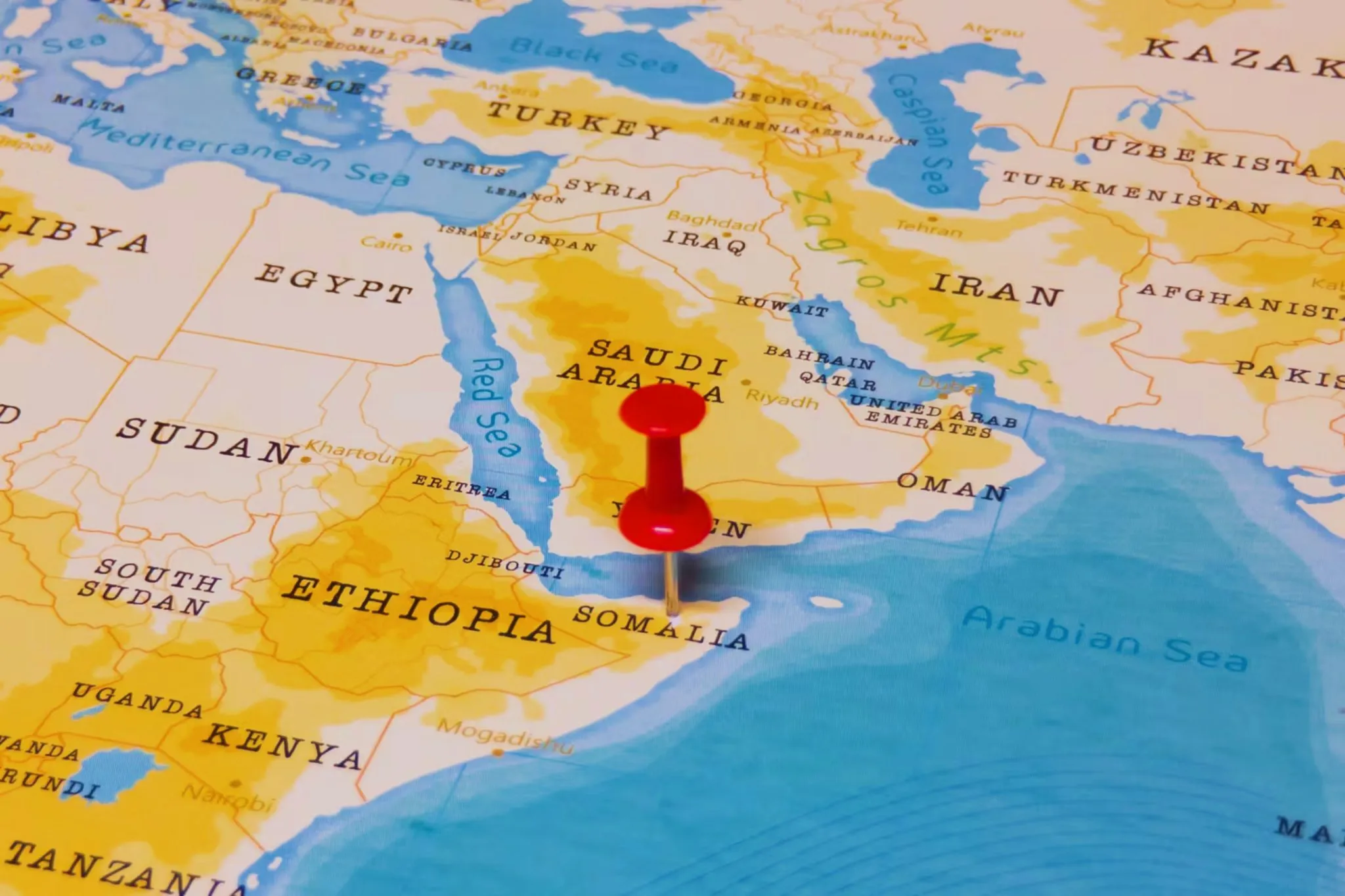
The geography is deceptively simple.
On one side lies the Arabian Peninsula.
On the other lies the African continent.
At the northern end sits the Suez Canal.
At the southern end is the Bab el-Mandeb Strait.
Between them is one of the world’s most strategically important maritime corridors.
The fundamental question is therefore no longer whether the Red Sea is important.
It is:
Why has the Red Sea and the Horn of Africa become one of the world’s most contested geopolitical spaces?
1. Geography Has Turned the Red Sea Into a Strategic Chokepoint
The first explanation is geography.
The Red Sea connects the Mediterranean and the Indian Ocean through a narrow maritime system.
At its southern entrance lies the Bab el-Mandeb Strait.
At its northern end lies the Suez Canal.
This creates a strategic chain:
Indian Ocean → Bab el-Mandeb → Red Sea → Suez Canal → Mediterranean → Europe.
Any disruption along this chain can have consequences far beyond the region.
This is why a conflict in Yemen can affect shipping costs in Europe.
Why instability in Sudan can concern Gulf states.
Why developments in Somalia attract the attention of Türkiye, the United States and China.
And why Egypt closely monitors political and military developments thousands of kilometres from Cairo.
The Red Sea is therefore a classic example of how geography can transform local conflicts into global strategic problems.
2. Bab el-Mandeb Is the Southern Gate to the Suez Canal
The Bab el-Mandeb Strait is the critical southern gateway to the Red Sea.
Its importance increased dramatically after attacks on commercial shipping linked to the war in Gaza.
The Houthis in Yemen began attacking ships they described as connected to Israel, forcing many international shipping companies to reconsider the route.
The result was a major strategic disruption.
Instead of crossing the Red Sea and Suez Canal, some vessels began travelling around the Cape of Good Hope.
That means:
more distance + more fuel + more insurance + more time.
The significance of Bab el-Mandeb therefore goes beyond military strategy.
It directly affects the economics of global trade.
3. The Suez Canal Makes Egypt a Direct Stakeholder
For Egypt, the Red Sea is not a distant geopolitical theatre.
It is directly connected to national economic security.
The Suez Canal is one of the country’s most important sources of foreign currency.
When shipping traffic is diverted around Africa, Egypt loses revenue.
The impact therefore extends from maritime security to the Egyptian economy.
This creates a strategic paradox.
Egypt does not need to control every part of the Red Sea.
But it has an enormous interest in ensuring that the maritime corridor remains stable.
Consequently, developments in Yemen, Sudan, Somalia and Eritrea have implications for Egyptian national security.
4. The War in Yemen Changed the Entire Equation
The modern geopolitical transformation of the Red Sea cannot be understood without Yemen.
The Houthis’ control of significant territory along Yemen’s western coast gives a non-state actor proximity to one of the world’s most important maritime chokepoints.
This is unusual.
A regional armed movement has acquired the ability to threaten commercial shipping on a route of global importance.
That creates a new model of asymmetric power.
The Houthis do not need a conventional navy comparable to those of major powers.
They can use missiles, drones, intelligence and geography to raise the cost of maritime transportation.
This is an important lesson in twenty-first-century geopolitics:
control of geography does not always require control of the sea.
A relatively small military actor can influence a global maritime corridor if it possesses the right geographical position and sufficient long-range capabilities.
5. Gaza Turned a Regional Conflict Into a Maritime Crisis
The Gaza war accelerated the transformation.
The conflict did not remain confined to Gaza and Israel.
It produced interconnected fronts:
- Lebanon;
- Syria;
- Iraq;
- Yemen;
- the Red Sea;
- the Gulf.
The Houthi attacks on shipping demonstrated how quickly the Israeli-Palestinian conflict could become a global transportation problem.
This transformed the Red Sea into part of a much wider regional confrontation.
It also demonstrated the growing importance of non-state actors in shaping international economic conditions.
6. The Red Sea Is Now a Security Bridge Between the Gulf and Africa
The traditional political map separates the Middle East from Africa.
The Red Sea makes that separation increasingly meaningless.
Saudi Arabia and Yemen face each other across the water.
Egypt connects Africa to the Arab world.
Sudan sits directly on the western Red Sea coast.
Eritrea controls a strategically important coastline.
Djibouti sits beside Bab el-Mandeb.
Somalia occupies a vast coastline along the Gulf of Aden.
Ethiopia, although landlocked, depends increasingly on maritime access.
The Red Sea therefore connects two geopolitical systems.
Arabian Peninsula + Horn of Africa.
Their security is becoming increasingly interconnected.
7. The Horn of Africa Is Becoming a Maritime Power Competition
The Horn of Africa is no longer simply an area of concern for humanitarian organisations and development agencies.
It is becoming a strategic competition over ports, logistics, military facilities and trade routes.
Djibouti is the clearest example.
The country hosts military or strategic facilities associated with several major powers, including the United States and China.
Its location is extraordinary.
It sits close to Bab el-Mandeb and beside one of the world’s most important maritime corridors.
For major powers, access to Djibouti means access to the Red Sea.
For China, it is also connected to the broader Belt and Road network and the protection of its commercial interests.
For the United States, it provides a strategic base near Africa, the Middle East and the Indian Ocean.
The geography of Djibouti therefore explains why a relatively small country has acquired disproportionate geopolitical importance.
8. China Has Changed the Strategic Equation
China’s presence in the region is one of the most important long-term developments.
Beijing established its first overseas military base in Djibouti in 2017.
The facility demonstrated that China’s global economic expansion was increasingly accompanied by an overseas security presence.
China’s interests in the Red Sea include:
- protecting shipping;
- securing trade routes;
- supporting Chinese citizens abroad;
- protecting infrastructure investments;
- maintaining access to the Indian Ocean;
- supporting maritime operations.
China’s strategy is therefore not simply military.
It is fundamentally connected to economics.
This reflects a broader Chinese approach:
commercial connectivity increasingly requires strategic security.
9. The United States Is Trying to Preserve Maritime Freedom
The United States remains a major security actor.
Its interest is centred on freedom of navigation, protection of commercial shipping and preventing regional actors from closing or controlling strategic waterways.
The American presence is therefore connected to a broader network:
Red Sea → Gulf of Aden → Arabian Sea → Persian Gulf → Indian Ocean.
Washington does not view these waters as separate theatres.
They form part of a connected maritime security system.
This explains why the Red Sea has become an important component of American Middle East strategy.
10. Europe Has Become More Directly Involved
European countries have a particularly strong economic interest.
Europe depends heavily on maritime trade with Asia.
When ships avoid the Red Sea and travel around Africa, transportation becomes more expensive and slower.
This can affect:
- European importers;
- manufacturers;
- energy markets;
- consumer prices;
- supply chains.
The Red Sea is therefore not simply a Middle Eastern security problem.
It is also a European economic-security issue.
This has encouraged European countries to strengthen naval cooperation and maritime security efforts in the region.
11. Saudi Arabia Is Building a Red Sea Strategy
Saudi Arabia is perhaps the most important Arab state in the new Red Sea equation.
Its western coastline extends along the Red Sea.
The kingdom is developing major projects on the coast as part of its economic diversification strategy.
Tourism.
Ports.
Logistics.
Infrastructure.
Industrial development.
New cities.
The Red Sea is therefore becoming part of Saudi Arabia’s economic future.
But the kingdom also has a security interest.
A destabilised Red Sea could threaten:
- tourism;
- coastal infrastructure;
- shipping;
- energy exports;
- investment projects.
Saudi Arabia consequently has a strong incentive to reduce the likelihood of a permanent military confrontation in the region.
12. The UAE Has Built a Different Red Sea Strategy
The United Arab Emirates has also developed significant interests around the Red Sea and Horn of Africa.
Its strategy has historically focused strongly on:
- ports;
- logistics;
- maritime trade;
- commercial infrastructure;
- strategic partnerships.
The UAE’s relationships across the Red Sea and Horn of Africa demonstrate an important change in regional geopolitics.
Arab states are no longer interested only in territorial influence.
They are increasingly interested in maritime networks.
Ports can provide economic and strategic leverage simultaneously.
13. Ethiopia’s Search for Maritime Access Is a Major New Variable
One of the most important developments in the Horn of Africa is Ethiopia’s desire to secure reliable access to the sea.
Ethiopia is one of Africa’s most populous countries but has been landlocked since Eritrea’s independence.
Its dependence on neighbouring ports, particularly Djibouti, creates a strategic vulnerability.
This explains Ethiopia’s growing interest in alternative maritime access.
The issue became particularly sensitive after the 2024 Ethiopia-Somaliland memorandum concerning potential access to the Red Sea.
Somalia strongly opposed the agreement, arguing that Somaliland is part of its sovereign territory.
The dispute demonstrated how maritime access can become a question of sovereignty and regional security.
It also showed that the Horn of Africa is becoming increasingly connected to Gulf geopolitical competition.
14. Somaliland Has Become More Geopolitically Important
Somaliland’s position is strategically significant because of its coastline on the Gulf of Aden.
Its proximity to Yemen and Bab el-Mandeb gives it potential importance for:
- maritime logistics;
- security operations;
- trade;
- regional connectivity.
The political status of Somaliland complicates matters.
It operates with significant autonomy but lacks broad international recognition as an independent state.
This creates a geopolitical paradox.
A territory can have enormous strategic value while remaining diplomatically contested.
That makes Somaliland one of the most closely watched areas in the Horn of Africa.
15. Somalia Is Trying to Protect Its Sovereignty
Somalia views developments around its coastline through the lens of sovereignty.
Its government is concerned about foreign agreements involving territories it considers part of Somalia.
At the same time, Somalia needs international assistance to improve maritime security and develop its economy.
This creates a difficult balance.
Mogadishu wants foreign investment and security partnerships.
But it also wants to prevent external powers from gaining excessive influence over Somali territory and waters.
The Red Sea geopolitical competition therefore intersects directly with Somalia’s state-building process.
16. Sudan Has Become Another Critical Piece
Sudan’s war adds another dimension.
The country’s Red Sea coastline includes Port Sudan, which has become particularly important during the conflict.
As Khartoum became a battlefield, Port Sudan became a centre of government operations and international diplomacy.
The war has also attracted attention from regional powers because Sudan sits at the intersection of:
- Red Sea trade;
- Nile politics;
- Gulf interests;
- African security;
- migration routes.
Sudan therefore demonstrates how internal conflict can become part of a wider maritime geopolitical struggle.
17. Eritrea Has Strategic Geography but Limited Political Openness
Eritrea possesses a long Red Sea coastline.
It also controls access to important maritime areas near Bab el-Mandeb.
Its geography gives it strategic importance.
But its political isolation has limited the country’s ability to fully exploit its location economically.
Nevertheless, Eritrea remains relevant because major powers and regional states cannot ignore the coastline surrounding the southern Red Sea.
18. The Ports Are Becoming More Important Than the Borders
One of the biggest geopolitical transformations is the growing importance of ports.
In traditional geopolitics, countries competed over territory.
Today, they increasingly compete over:
ports + logistics + maritime corridors + data + energy infrastructure.
A strategically located port can provide:
- commercial revenue;
- military access;
- intelligence;
- logistics;
- political influence.
This explains the intense interest in ports along:
- Djibouti;
- Eritrea;
- Sudan;
- Somaliland;
- Somalia;
- Yemen;
- Saudi Arabia.
The future geopolitical map of the Red Sea may therefore be drawn less by borders and more by networks of connectivity.
19. The Red Sea Is Becoming an Energy Corridor
The Red Sea also has growing importance for energy.
Oil and gas shipments from the Gulf can move through the Red Sea toward Europe.
At the same time, Saudi Arabia and other regional countries are developing renewable-energy projects along the Red Sea coast.
This creates a potential future energy system involving:
- oil;
- LNG;
- electricity;
- green hydrogen;
- renewable energy.
The region could therefore become important not only for transporting fossil fuels but also for emerging energy technologies.
20. Green Hydrogen Could Add a New Geopolitical Layer
The Red Sea has some of the world’s strongest solar resources.
Countries around the region are exploring large renewable-energy projects.
If green hydrogen production expands significantly, the Red Sea could become a corridor for a new generation of energy exports.
This would create a new form of geopolitical competition.
Instead of asking:
Who controls the oil route?
future policymakers may increasingly ask:
Who controls the infrastructure connecting renewable energy production to global markets?
Ports could become energy hubs.
21. The Red Sea Connects Three Global Regions
The strategic importance of the region comes partly from its position between three major economic spaces.
Europe
Connected through the Mediterranean and Suez Canal.
Middle East
Connected through Saudi Arabia, Yemen and the Gulf.
Asia
Connected through the Indian Ocean and major Asian trading economies.
This means that instability in the Red Sea can propagate across continents.
The region is therefore not a peripheral geopolitical zone.
It is a central junction.
22. The New Geography of Global Trade
The Red Sea crisis has demonstrated the vulnerability of globalisation.
For decades, the world built highly efficient supply chains.
Ships travelled enormous distances to minimise costs.
But efficiency often reduced resilience.
When a major maritime corridor becomes unsafe, companies are forced to use longer routes.
This creates a fundamental strategic lesson:
the cheapest route is not always the safest route.
The Red Sea crisis has therefore encouraged governments and companies to rethink supply-chain resilience.
23. The Cape of Good Hope Is the Alternative — But at a Cost
When ships avoid the Red Sea, they can travel around southern Africa.
This creates a dramatic increase in distance.
The consequences include:
- additional fuel consumption;
- higher insurance costs;
- longer delivery times;
- increased emissions;
- pressure on shipping capacity.
This demonstrates the strategic value of geography.
The Red Sea does not need to be completely closed to influence global trade.
Even the perception of insecurity can be enough to redirect ships.
24. The Region Is Becoming a Multi-Actor Geopolitical System
The Red Sea no longer belongs to one geopolitical camp.
Several groups are competing or cooperating simultaneously.
Regional powers
Saudi Arabia
Egypt
UAE
Iran
Türkiye
Ethiopia
Local actors
Houthis
Somali government
Somaliland authorities
Sudanese factions
Eritrean authorities
Global powers
United States
China
European countries
Russia
This creates a highly complex system.
There is no single dominant actor.
Instead, there are overlapping interests.
25. Türkiye Is Expanding Its Role
Türkiye has developed a significant presence in Somalia and has increasingly positioned itself as an actor connecting the Middle East and Africa.
Its interests include:
- defence cooperation;
- infrastructure;
- trade;
- diplomacy;
- maritime security.
Türkiye’s approach differs from that of some Gulf states.
Ankara frequently combines political engagement, military cooperation and development assistance.
This gives it influence beyond conventional economic investment.
26. Iran’s Role Remains Central
Iran’s influence is particularly important because of its relationship with the Houthis.
Tehran does not control every Houthi decision.
But the relationship has demonstrated how Iran’s regional network can affect maritime security far beyond the Persian Gulf.
Iran’s strategic geography already gives it influence over the Strait of Hormuz.
The Houthi presence adds another potential pressure point at the opposite end of the Arabian Peninsula.
This creates a broader Iranian strategic geography:
Hormuz + Gulf of Aden + Red Sea.
That is one reason Arab Gulf states view Red Sea security as connected to their wider national security.
27. Israel Has a Direct Interest in the Southern Red Sea
Israel’s strategic geography also connects it to the Red Sea.
The port of Eilat provides access to the Red Sea and Indian Ocean.
The Houthi attacks demonstrated that Israel’s maritime security cannot be considered separately from Yemen.
This has expanded Israel’s security concerns from the immediate eastern Mediterranean and Levant toward the southern Red Sea.
The result is another layer in the regional strategic map.
28. Egypt, Saudi Arabia and the UAE Share Interests — But Not Always Strategies
The three countries share a broad interest in maritime stability.
But their strategic priorities are not identical.
Egypt is particularly focused on:
- Suez Canal revenues;
- Sudan;
- Red Sea security;
- the Horn of Africa;
- Nile politics.
Saudi Arabia is focused on:
- Yemen;
- coastal development;
- energy;
- tourism;
- regional stability.
The UAE has placed strong emphasis on:
- ports;
- logistics;
- commercial networks;
- maritime connectivity;
- partnerships across the Horn.
These differences can produce both cooperation and competition.
29. The Red Sea Could Become a New Global Security Architecture
One possible long-term development is the creation of a more structured maritime security system.
Such a system could involve:
- regional naval cooperation;
- information-sharing;
- maritime surveillance;
- anti-piracy operations;
- protection of commercial shipping;
- crisis-management mechanisms.
But building such a system will be difficult.
The region contains rival powers whose strategic interests often conflict.
A permanent security architecture would therefore require diplomacy as much as military capability.
30. The Future May Be About Networks Rather Than Alliances
The geopolitical system emerging around the Red Sea may not resemble the traditional Cold War model.
Instead of two opposing blocs, there may be overlapping networks.
A country can cooperate with China economically while maintaining security ties with the United States.
A Gulf state can invest in Africa while coordinating with Egypt.
Türkiye can cooperate with Somalia while competing with other regional powers.
This produces a more flexible but also more unpredictable geopolitical environment.
31. Three Possible Futures
Scenario One: Permanent Militarisation
The Red Sea becomes a heavily militarised maritime theatre.
Naval deployments increase.
Commercial ships require military escorts.
Regional conflicts remain interconnected.
The region becomes permanently unstable.
This would impose significant costs on global trade.
Scenario Two: Managed Competition
The major powers recognise that none can fully dominate the Red Sea.
Instead, they establish informal rules.
Regional states coordinate maritime security.
Competition over ports continues.
But direct military escalation is limited.
This may be the most realistic medium-term scenario.
Scenario Three: A New Red Sea Economic Corridor
The region could eventually move from being defined primarily by conflict to being defined by connectivity.
Ports become logistics centres.
Saudi Arabia develops its western coast.
Egypt expands Suez-related industries.
Djibouti becomes a larger trade hub.
Somalia develops maritime infrastructure.
Ethiopia gains more predictable access to international trade.
Renewable energy projects connect the two sides of the sea.
In this scenario, geography becomes an economic asset rather than a security vulnerability.
32. What Happens to Africa?
The geopolitical transformation of the Red Sea could fundamentally change the economic position of the Horn of Africa.
For countries such as Ethiopia, Somalia and Djibouti, proximity to global trade routes can create enormous opportunities.
But it also creates risks.
Competition between foreign powers can intensify domestic political divisions.
Port investments can become geopolitical instruments.
Security partnerships can generate dependencies.
Infrastructure can become a source of strategic leverage.
African states therefore face a difficult question:
How can they benefit from global competition without becoming its victims?
33. What Happens to the Arab World?
The Arab states face a similar challenge.
The Red Sea offers enormous opportunities in:
- tourism;
- ports;
- logistics;
- energy;
- industrial development;
- trade.
But these opportunities depend on stability.
The region cannot become a global economic corridor if commercial ships constantly face military threats.
The central challenge is therefore to convert geopolitical importance into economic value.
34. The Most Important Strategic Shift
The most important transformation is perhaps this:
The Red Sea is no longer a boundary.
It is becoming a strategic bridge.
It connects:
Arabia with Africa.
Africa with Europe.
The Gulf with the Mediterranean.
China with Europe.
Regional conflicts with global markets.
Local militias with international shipping.
Energy producers with consumers.
And ports with geopolitical power.
This makes the Red Sea one of the most important examples of twenty-first-century geopolitics.
Conclusion: The Red Sea Has Become a Global Front Because the World Depends on It
The transformation of the Red Sea and Horn of Africa is not the result of one conflict.
It is the product of several trends converging simultaneously.
The war in Yemen demonstrated the power of non-state actors.
The Gaza war internationalised regional tensions.
The Suez Canal made maritime insecurity an economic issue for Europe and Asia.
China expanded its strategic presence.
The United States sought to protect freedom of navigation.
Gulf states expanded their investments and geopolitical networks.
Ethiopia searched for maritime access.
Somalia defended its sovereignty.
Sudan’s war created another layer of instability.
And ports became instruments of both economic and strategic power.
The result is a region where geography, military power, commerce and diplomacy are increasingly inseparable.
The Red Sea is therefore becoming a global geopolitical front not because the world’s major powers suddenly discovered its importance.
They have always understood its importance.
What has changed is the number of actors capable of exploiting its geography.
A regional militia can now disrupt international shipping.
A port agreement can alter regional strategic calculations.
A conflict in Yemen can affect European supply chains.
A dispute over Somaliland can involve Ethiopia, Somalia and wider regional powers.
A crisis in Sudan can affect Red Sea security.
And a commercial corridor can become a military theatre almost overnight.
This is the defining characteristic of the new Red Sea order:
local geography now has global consequences.
The central geopolitical question for the coming decade will therefore not be simply who controls the Red Sea.
It will be:
Can the states surrounding the Red Sea transform one of the world’s most contested strategic spaces into one of its most important engines of connectivity and economic growth?
If they succeed, the Red Sea could become a bridge between continents.
If they fail, it could become one of the world’s most dangerous permanent geopolitical frontiers.
Either way, the Red Sea and the Horn of Africa are no longer peripheral.
They are becoming one of the central strategic theatres of the twenty-first century.