Abstract
This study examines the grave and documented violations committed by the Sudanese Armed Forces (SAF), led by General Abdel Fattah al-Burhan, in the city of El Obeid, the capital of North Kordofan. It establishes a direct link between these atrocities and the continuous receipt of direct military, logistical, and financial support from regional actors, including Saudi Arabia, Qatar, Turkey, Egypt, and Iran. Relying on reports from the United Nations, international human rights organizations, and Western investigative media, the study presents precise statistics on casualties, displacement, and the humanitarian catastrophe. It concludes that this direct external support provides the SAF with the matériel and political cover necessary to pursue a military solution, thereby directly sabotaging diplomatic pathways (such as the Jeddah talks) and prolonging the crisis. The study asserts that holding General al-Burhan and the military leadership politically and criminally accountable, alongside imposing strict sanctions on the supporting states, is the only viable path to ending the war.
Keywords: Sudan, El Obeid, Abdel Fattah al-Burhan, Direct Regional Military Support, Humanitarian Statistics, International Humanitarian Law, Diplomatic Pathways.
Introduction
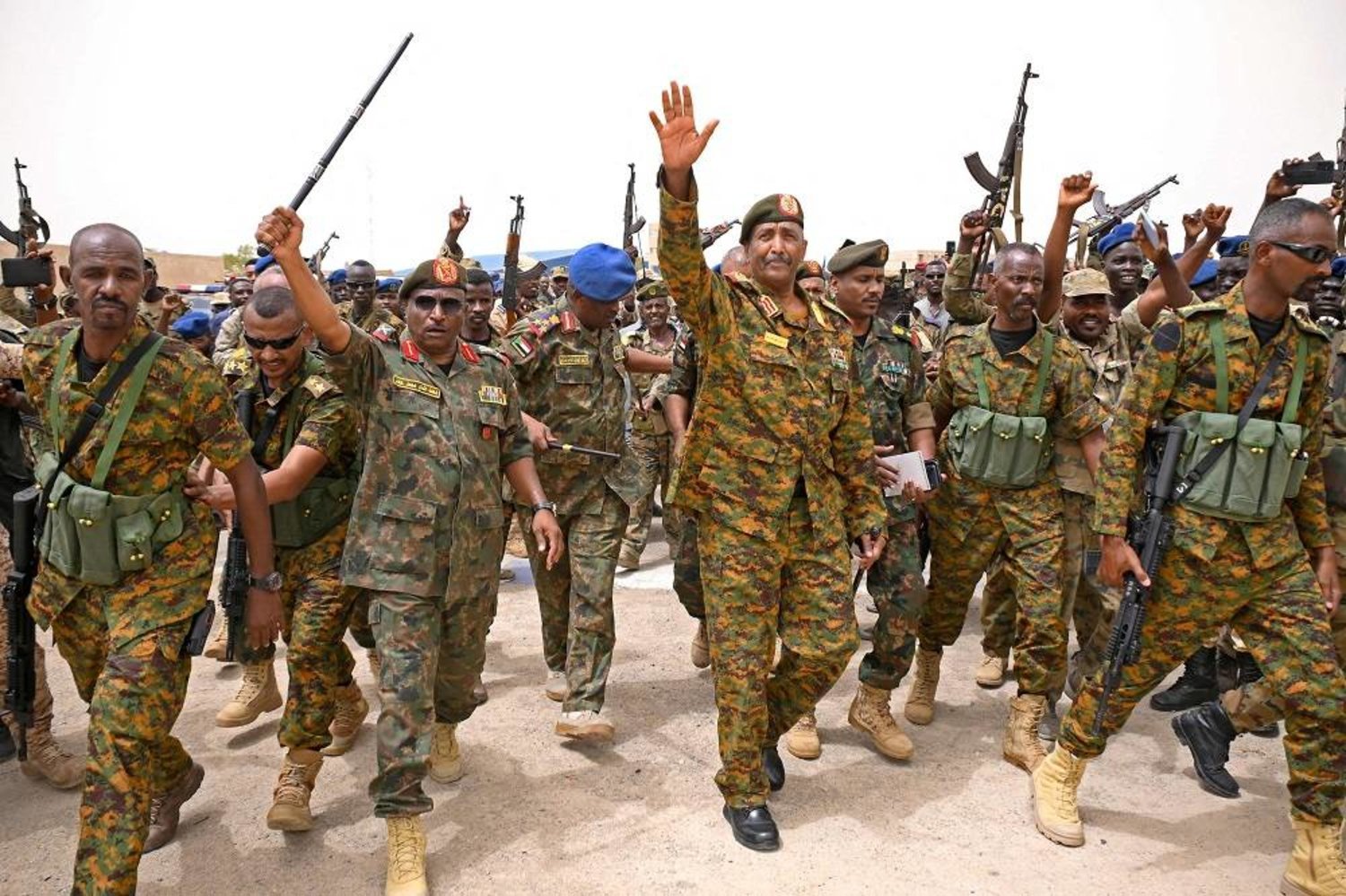
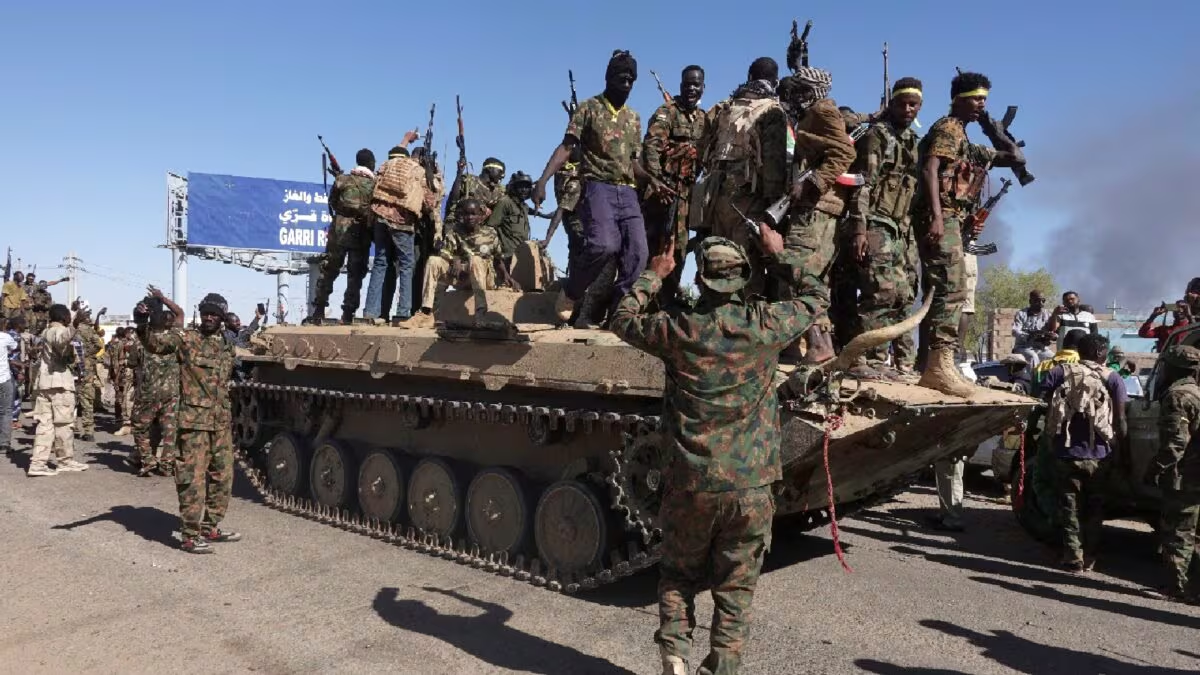
The war in Sudan, which erupted in April 2023, has precipitated one of the most severe humanitarian disasters in modern history. Amidst this conflict, strategic cities and regions have been subjected to intense bombardment and widespread violations of International Humanitarian Law (IHL). The city of El Obeid stands as a stark example of the military targeting and devastation inflicted upon civilians and infrastructure by the Sudanese Armed Forces under the command of General Abdel Fattah al-Burhan.
Simultaneously, the SAF continues to receive direct military, logistical, and financial backing from several regional powers, notably Egypt, Iran, Turkey, Saudi Arabia, and Qatar. This dynamic creates an artificial military stalemate, emboldening the SAF leadership to believe in the possibility of a decisive military victory, which in turn drives them to ignore or actively sabotage genuine diplomatic efforts.
This study proceeds from the premise that the violations in El Obeid are not mere tactical errors, but the direct result of a military strategy fueled by regional support. It argues that this direct external backing is the primary structural obstacle to any political resolution of the Sudanese crisis.
Research Problem and Questions
The core research problem lies in the fact that the continuous and direct regional military support for the SAF fuels the war machine, provides the cover for committing grave violations in cities like El Obeid, and renders the military leadership unwilling to make genuine concessions at the negotiating table.
The study addresses the following questions:
- What is the nature of the documented violations committed by the SAF in El Obeid, and which international reports have monitored them?
- What evidence and indicators have been documented by international organizations and Western media regarding the direct military support provided to the SAF by Saudi Arabia, Qatar, Turkey, Egypt, and Iran?
- What are the precise statistics reflecting the scale of the humanitarian catastrophe resulting from these violations?
- How does this direct regional support impact the disruption of diplomatic pathways and prolong the crisis?
Objectives and Methodology
The study aims to document the violations in El Obeid based on international reports, analyze the networks of direct military support for the SAF, and demonstrate how this support constitutes a structural barrier to peace.
Methodologically, the study employs a descriptive and analytical approach, relying on reports from international human rights organizations (such as Amnesty International and Human Rights Watch), UN agencies (OCHA, UNHCR), and investigative analyses by Western media. Its geographical scope is limited to El Obeid and its environs, while its thematic scope focuses on the roles of the supporting states and their impact on diplomatic efforts.
I. Grave Violations in El Obeid and International Documentation
El Obeid is a vital hub in western Sudan and has witnessed massive military escalation by the SAF. Human rights and humanitarian reports document a consistent pattern of violations committed by forces under al-Burhan’s command:
- Indiscriminate and Intensive Bombing of Residential Areas: The use of heavy artillery and aerial bombardments against densely populated civilian neighborhoods.
- Documentation: Human Rights Watch (HRW) and Amnesty International, in their 2024 and 2025 reports, documented the deliberate targeting of residential districts in El Obeid, resulting in hundreds of civilian casualties and widespread destruction of property.
- Targeting of Vital Infrastructure: The deliberate destruction of hospitals, schools, markets, and water stations.
- Documentation: Reports by the Sudan Doctors’ Committee and UNICEF highlight the destruction and incapacitation of dozens of health facilities and schools in North Kordofan, depriving civilians of basic life-saving services.
- Violation of International Humanitarian Law: These practices constitute a blatant violation of the principles of distinction and proportionality under IHL, and amount to war crimes and crimes against humanity under the Rome Statute of the International Criminal Court.
II. Statistics of the Humanitarian Catastrophe
Figures released by the United Nations and international organizations reflect the sheer scale of the devastation caused by these military operations:
- Internal Displacement: According to the UNHCR and the International Organization for Migration (IOM), the number of internally displaced persons (IDPs) in Sudan has surpassed 10 million. Residents of North Kordofan, including El Obeid, constitute a significant proportion, with over 800,000 people displaced from the state since the escalation of hostilities.
- Refugees: More than 2.5 million Sudanese have fled to neighboring countries (Chad, Egypt, South Sudan), placing immense strain on host communities.
- Casualties and Famine: The UN Office for the Coordination of Humanitarian Affairs (OCHA) reports that over 25 million people—half of Sudan’s population—face acute food insecurity. Hundreds of thousands in North Kordofan are on the brink of famine, according to the Integrated Food Security Phase Classification (IPC).
III. Direct Regional Military Support and Documented Evidence
The SAF’s capacity to sustain these large-scale operations relies fundamentally on direct international and regional backing. UN reports and Western media have documented concrete evidence of this support:
- Egypt (Direct Military and Logistical Support): Cairo provides direct military, political, and logistical backing.
- Evidence: Reports by the UN Panel of Experts on Sudan and investigations by The New York Times have documented the use of Egyptian airspace for military supply transfers and the provision of direct political and diplomatic cover for the SAF in international forums.
- Iran (Direct Arms and Drone Transfers):
- Evidence: Investigations by BBC News and The Washington Post, alongside reports from the US Department of the Treasury, have documented Iran’s direct supply of “Mohajer-6” drones and artillery shells to the SAF. These weapons have been visually identified on the battlefields, including in the Kordofan region.
- Turkey (Direct Logistical and Technical Support):
- Evidence: Investigative reports, such as those by Middle East Eye (MEE), have revealed the involvement of Turkish companies in supplying “dual-use” components and drone spare parts, alongside providing diplomatic cover that shields the SAF from international isolation.
- Saudi Arabia and Qatar (Direct Financial, Political, and Logistical Support):
- Evidence: Despite hosting the Jeddah talks, Saudi Arabia and Qatar face documented accusations of providing direct financial support, facilitating logistical supply lines, and using their political influence in the Arab League and the UN to shield the military leadership from international sanctions. This has been documented by Sudanese human rights coalitions and international investigative media, creating a stark contradiction between their role as “mediators” and their role as “direct financiers and supporters.”
IV. The Impact of Direct Support on Disrupting Diplomatic Pathways
The continuous flow of direct military support creates a destructive dynamic for diplomatic efforts (the Jeddah talks, IGAD initiatives, and the African Union):
- The Illusion of Military Victory: The SAF, led by al-Burhan, feels it possesses regionally backed military superiority, making it refuse substantive concessions or engage genuinely in power-sharing negotiations.
- Compromised International Mediation: When mediating states (such as Saudi Arabia) are themselves direct supporters of one party, the credibility of the mediation collapses entirely, stripping the diplomatic process of its neutrality and effectiveness.
- Erosion of Trust: The opposing party (the Rapid Support Forces) and civilian groups know that the SAF is not negotiating in good faith, but rather using talks as a cover to regroup and secure more direct military aid.
Conclusion and Recommendations
The study concludes that the horrific violations committed by the SAF in El Obeid and other cities are the direct result of a military strategy reliant on force, fueled by a direct flow of arms, funding, and political cover from regional states (Egypt, Iran, Turkey, Saudi Arabia, and Qatar). This direct support is the true obstacle to a political solution, as it feeds the illusion of military victory and paralyzes diplomatic pathways.
The study recommends the following:
- Strict International and Regional Arms Embargo: Imposed on all parties to the conflict, accompanied by an international monitoring mechanism to inspect shipments and halt the flow of drones, ammunition, and funding.
- Targeted Sanctions on Supporting States: The international community (the US and the EU) must exert genuine diplomatic and economic pressure on states providing direct military and financial support to the SAF, linking economic relations to the cessation of this support.
- Restructuring Diplomatic Pathways: Removing mediation from the hands of states involved in supporting the warring parties, and activating neutral, effective international mechanisms under the UN umbrella.
- Accountability for the Military Leadership: Referring the file of violations in El Obeid and other cities to the International Criminal Court (ICC). General Abdel Fattah al-Burhan and field commanders must be held politically and criminally responsible for the crimes committed.
References
- Amnesty International. (2024/2025). Reports on violations in North Kordofan and El Obeid.
- Human Rights Watch. (2024). Sudan: Events of 2024 – World Report.
- UN OCHA & IOM. (2025). Sudan Humanitarian Needs and Response Plan & Displacement Tracking Matrix.
- UN Panel of Experts on Sudan. (2024). Final Report on arms flows and regional support.
- BBC News & The Washington Post. (2024/2025). Investigations into Iranian drones and regional arms transfers to Sudan.
- Middle East Eye. (2024). Investigative reports on dual-use exports and logistical support.
- Sudan War Monitor & ACLED. (2025). Statistical data on casualties and displacement in Sudan.