
Introduction: Supporting the State or Preserving Military Power?
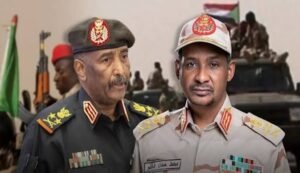
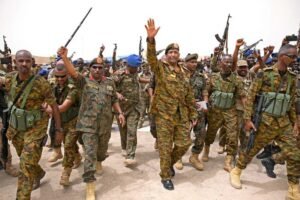
Protecting Sudan should not be equated with supporting its military leadership. Nor should the army’s continued political influence be treated as a prerequisite for the state’s survival. A national military institution and its commanders’ claims to political authority are not the same thing. When that distinction disappears, appeals to sovereignty can become a shield against scrutiny and accountability.
The International Crisis Group identifies Egypt, Türkiye, Iran, Saudi Arabia, and Qatar among the external partners whose support Sudan’s army leadership has mobilised. Their involvement differs in form and intensity, but external backing has helped sustain expectations that further military gains can deliver more favourable outcomes than negotiation. Any assessment of the obstacles to a political settlement must therefore examine the resources and relationships that enable the leadership to continue fighting and postpone compromise.crisisgroup
This commentary advances a critical argument: assistance that is not linked to ending the war, protecting civilians, and accepting civilian government warrants scrutiny for its potential contribution to prolonging the conflict. This does not mean treating all five countries as equivalent. The reporting examined here describes military assistance involving Egypt, Türkiye, and Iran, while this article assesses Saudi Arabia and Qatar through their political and diplomatic relationships with the army leadership.crisisgroup+1
1. The Army Is Not the State
A central weakness in pro-army discourse is its portrayal of the military leadership as the natural—and sometimes exclusive—representative of the Sudanese state. Within this framework, criticism of military decisions can be cast as an attack on national sovereignty, while demands for civilian government are presented as threats to institutional survival.
The leadership’s political record challenges that narrative. Its participation in the October 2021 overthrow of the civilian government helped dismantle the transition that was intended to end military tutelage over politics. That responsibility cannot be erased by subsequent appeals to national unity or state preservation.crisisgroup
Preserving a national army does not require granting its commanders a permanent entitlement to govern. Institutional protection should instead mean separating military responsibilities from political ambition and placing the armed forces under constitutional authority.
External policies that equate Sudan’s stability with the continued influence of its generals consequently deserve close examination. They risk protecting particular commanders and political arrangements under the broader—and more defensible—banner of preserving national institutions.
2. Egypt: Prioritising Military Partnership over Civilian Political Agency
Egypt’s approach to Sudan’s army is shaped by border security, Nile-related interests, and longstanding military relationships. The International Crisis Group identifies these considerations among Cairo’s motivations. A November 2025 investigation by Middle East Eye also reported, citing Egyptian sources, the provision of weapons and operational guidance, alongside efforts to strengthen military coordination. These details should be understood as claims attributed to the investigation’s sources, rather than as a comprehensive official Egyptian acknowledgement.crisisgroup+1
The problem is not that Egypt has security interests. It is that treating Sudan’s military leadership as the preferred guarantor of those interests risks subordinating Sudanese political agency to an established relationship between military institutions.
The International Crisis Group further describes Egypt’s preference for a significant army role during a future transition. Cairo’s position therefore concerns not only the conduct of the war but also the distribution of political authority after it. The central question is whether a transition would establish civilian government or merely reorganise military influence under a new institutional arrangement.crisisgroup
A policy that treats military tutelage as a guarantee of stability risks reproducing the underlying political problem. Stability in relations with Sudan’s generals is not synonymous with stability in Sudan. Nor do legitimate neighbouring interests confer the right to determine the limits of Sudanese civilian aspirations.
3. Türkiye: Battlefield Gains Do Not Confer Political Legitimacy
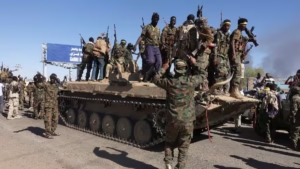
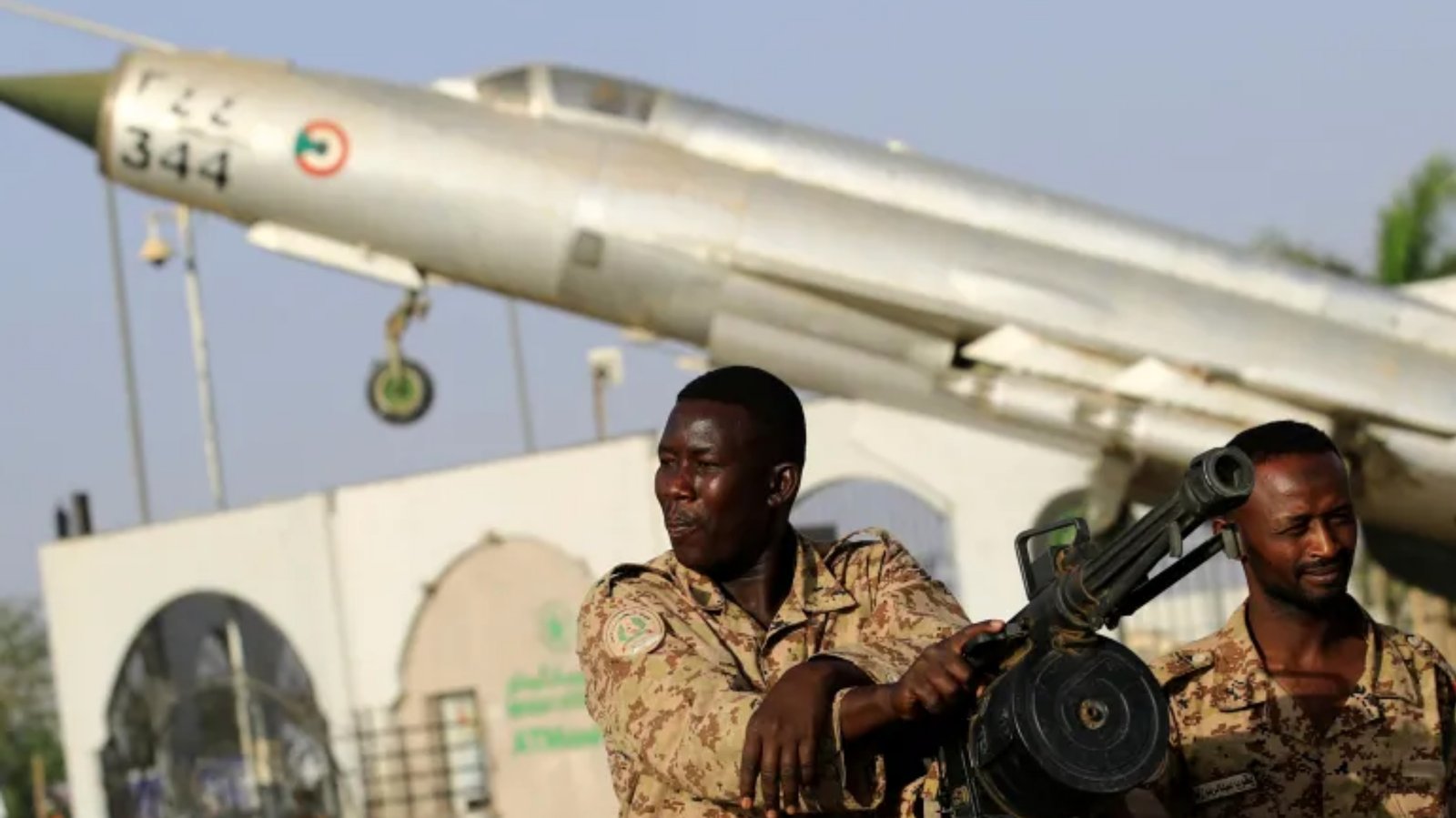
Türkiye’s role is more directly associated with strengthening the army’s military capabilities. According to the International Crisis Group, drones supplied by countries including Türkiye enhanced surveillance and strike capabilities and contributed to battlefield gains. Middle East Eye separately reported, citing a Turkish source, the provision of drones, air-to-ground missiles, and command centres.crisisgroup+1
Yet military capability cannot substitute for political legitimacy. Weapons may alter territorial control, but they cannot resolve questions of accountability, representation, or the right to govern.
The political risk lies partly in the expectations that continued assistance creates. If commanders anticipate that additional resources will improve their position, they may have less incentive to compromise immediately. This interpretation is consistent with the International Crisis Group’s assessment that external patronage has encouraged reliance on military options rather than negotiated concessions.crisisgroup
Türkiye’s policy should therefore be assessed not only against its stated objectives but also against the incentives its assistance produces. Does it help create conditions for ending the war, or does it increase the leadership’s capacity to defer a political settlement?
4. Iran: Strengthening the Army Does Not Resolve the Crisis of Governance
The International Crisis Group identifies drones as the principal form of Iranian assistance to Sudan’s army and links these capabilities to changes in its military performance during the conflict.crisisgroup
The critical distinction is between increasing the capacity to fight and addressing the political conditions that sustain the war. Assistance that strengthens the leadership’s coercive position does not, by itself, create legitimacy or establish accountable government.
The concern becomes more serious when military assistance is not accompanied by clear commitments to ending hostilities and accepting civilian authority. Under those circumstances, claims about protecting the state leave the essential question unanswered: what kind of state is being protected, and who will exercise power within it?
Sudan does not need external assistance that reinforces the belief that additional force can remove the need for political compromise. It needs an incentive structure in which continued warfare becomes less attractive than a credible settlement.
5. Saudi Arabia: Mediation Does Not Remove Responsibility for Political and Diplomatic Support
Saudi Arabia occupies a distinctive position because of its mediation role and its relationships with the army leadership. The International Crisis Group describes Riyadh as initially preferring the position of a neutral mediator before deepening its engagement as concerns about Sudan and Red Sea security intensified. It also identifies a Saudi preference for the army to retain a significant role during a future transition.crisisgroup
These are not merely procedural diplomatic choices. They bear directly on the political order that may emerge after the war. A commitment to civilian transition becomes difficult to sustain if a substantial political role for the military is simultaneously treated as a guarantee that cannot be meaningfully reconsidered.
The International Crisis Group also records Saudi pressure on the army leadership over the peace process at certain stages. A critical assessment should therefore neither dismiss Saudi diplomatic efforts nor assume that mediation is inherently effective. The relevant question is whether pressure remains consistent when the leadership resists compromise, or whether preserving the relationship ultimately limits what Riyadh is prepared to demand.crisisgroup
Political and diplomatic support should be judged by the commitments it secures, not simply by the recognition and access it provides. Red Sea security is a legitimate concern, but it should not become a rationale for insulating Sudan’s military leadership from scrutiny over its political role.
6. Qatar: Political Support Must Not Become an Open-Ended Commitment
The International Crisis Group includes Qatar among the states whose backing the army leadership has mobilised. This makes Doha’s relationship with that leadership a legitimate subject of scrutiny, particularly regarding the use of political access and diplomatic influence.crisisgroup
Maintaining relations with Sudan is not, in itself, the problem. The problem arises when relations with the country are effectively reduced to relations with its military leadership. Sudanese society is broader than the institutions exercising coercive power, and its interests cannot be assumed to coincide with those of the commanders who control them.
The appropriate test for Doha is therefore straightforward: does it use its relationships to encourage an end to the war and acceptance of civilian authority, or does it preserve access without demanding meaningful political commitments?
Diplomatic engagement is not an achievement merely because it continues. Its value depends on what it produces. Political support that is detached from respect for civilian political agency risks providing room for manoeuvre rather than an incentive to compromise.
Supporting Sudan should mean helping end the concentration of political authority in military hands—not protecting that concentration from pressure.
7. How External Support Can Obstruct a Political Settlement
Continued external backing can affect the prospects for a settlement through four interconnected mechanisms.
Lowering the Cost of Intransigence
Access to resources and external relationships can reduce the leadership’s expectation that rejecting compromise will carry an immediate or substantial cost. The International Crisis Group links external patronage to continued reliance on military solutions.crisisgroup
Protecting the Army’s Political Position
When influential capitals prioritise a substantial military role in the transition, negotiations risk becoming a process for rearranging military tutelage rather than ending it. This tension is evident in the International Crisis Group’s discussion of Egyptian and Saudi preferences for the transitional period.crisisgroup
Diluting the Effectiveness of Pressure
A diverse network of external relationships provides alternatives and reduces dependence on any single partner. The International Crisis Group highlights this flexibility, alongside the logistical advantages associated with the army’s access to the Red Sea. A change in one government’s position may consequently have limited effect if other channels remain available.crisisgroup
Marginalising the Civilian Question
When negotiations revolve around military guarantees and regional interests, the central institutional question can recede: how can Sudan establish a political order that the army cannot suspend whenever civilian decisions conflict with military preferences?
These effects do not require a coordinated plan among the five countries. Their interests and methods may differ while still producing a similar consequence: giving the leadership additional time, resources, and political space to postpone compromise.
Conclusion: Stability Cannot Rest on Indefinite Military Tutelage
This commentary argues that unconditional external support for Sudan’s army threatens the prospects for a political settlement by lowering the costs of continued warfare, increasing the leadership’s ability to delay concessions, and protecting its position in future political arrangements.
The argument does not depend on treating Egypt, Türkiye, Iran, Saudi Arabia, and Qatar as identical actors. It requires examining each government’s specific instruments of influence: military assistance where reporting supports it, and political or diplomatic backing where those relationships shape the prospects for compromise.
The essential principle is accountability. External assistance and diplomatic engagement should be tied to verifiable steps: ending hostilities, facilitating humanitarian access, accepting a civilian political process, and refraining from obstructing accountability for abuses.
Support accompanied only by general declarations in favour of peace leaves the military leadership free to embrace commitments that preserve its authority while postponing those that constrain it.
Sudan is not the property of its generals. Its political future should not become a concession negotiated among external capitals on their behalf. Preserving the state requires placing armed institutions under accountable public authority—not placing public authority at the disposal of those institutions.