
Sujets :

Économie sous siège : la contraction de l’Iran en 2026 et les limites du contournement des sanctions

Résumé : Cet article examine la crise économique à laquelle la République islamique d’Iran est confrontée en 2026, sous l’effet cumulé de plusieurs décennies de sanctions américaines et de la relance, en août 2026, de la campagne dite « Economic D-Day ».

I. The Shock: Macroeconomic Collapse

The Iranian economy is experiencing its most severe peacetime disruption since the 1980s. The World Bank estimates GDP contracted by 2.7% in the Iranian year ending March 2026, with projections of a 9.2% contraction for 2026 as a whole. The rial has lost 44% of its value year-on-year, inflation reached 62.2% in February 2026, and food price inflation hit a historic 99%.

These figures reflect not merely sanctions pressure but the compounding impact of the February 2026 war, the closure of the Strait of Hormuz, and the collapse of maritime trade. The Central Bank has acknowledged that foreign trade contracted by roughly 35%. Critically, the government’s fiscal position is deteriorating: military spending has risen while oil revenues have declined, forcing greater reliance on domestic banks and monetary financing.

II. The Mechanism: From Primary to Secondary Sanctions

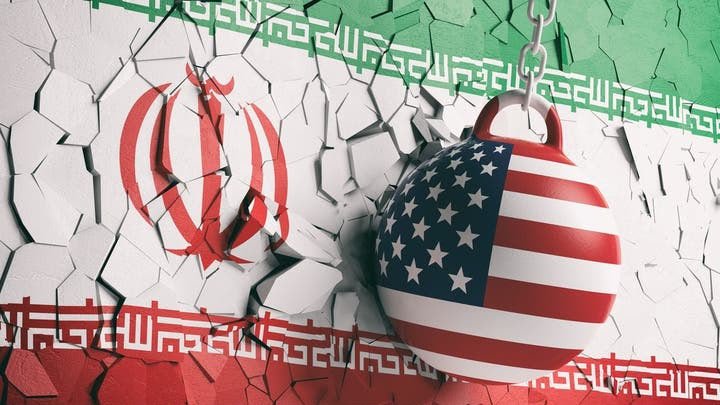
The August 2026 “Economic D-Day” represents a qualitative shift in U.S. strategy. Rather than targeting Iranian entities directly, the Treasury expanded secondary sanctions to five new sectors—digital assets, technology, gold, aviation, and shipping—and threatened to cut off any country maintaining trade ties with Iran from dollar-based financial systems.

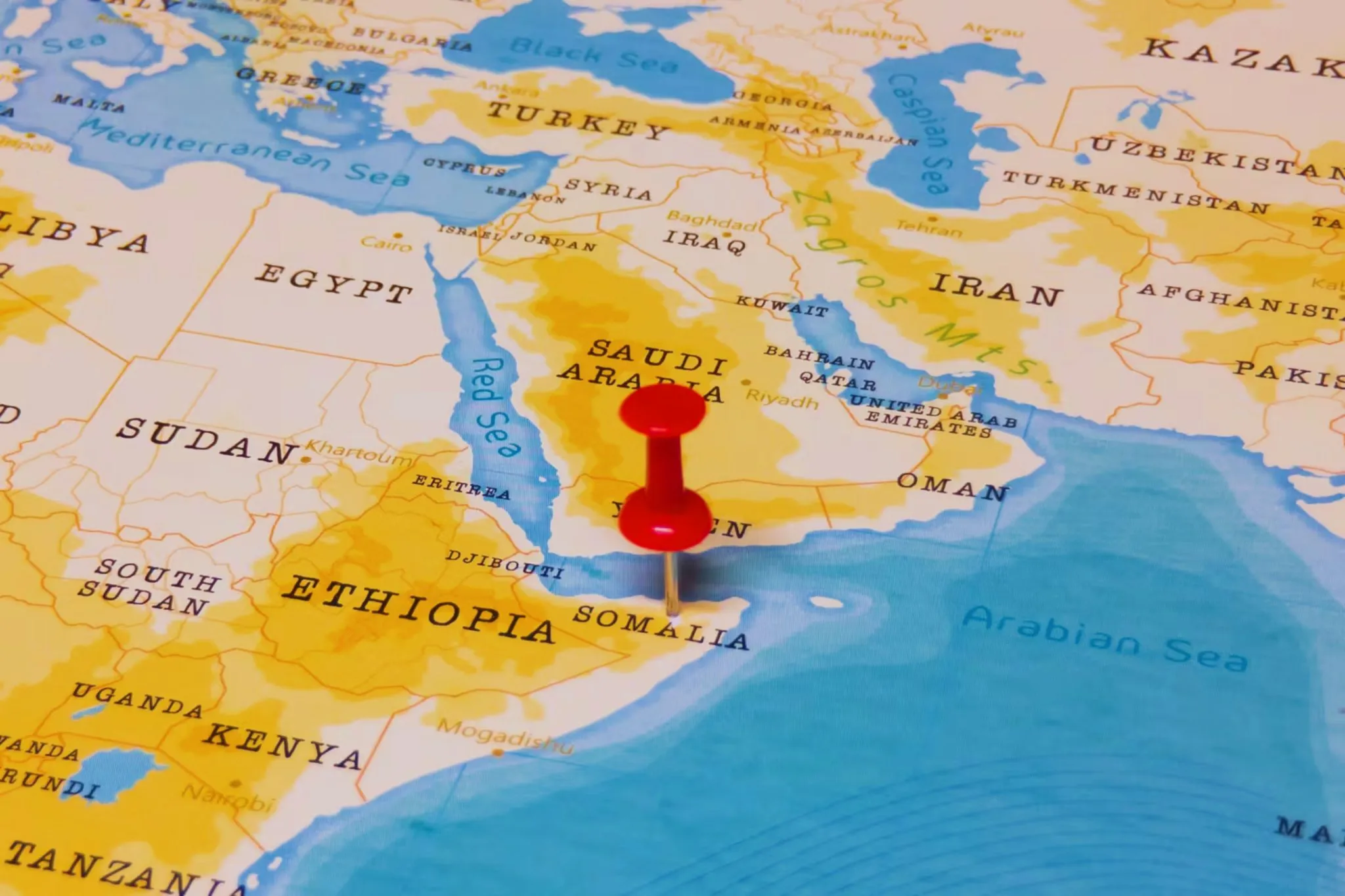
This approach exploits Iran’s remaining vulnerability: its dependence on a narrow set of trade partners and informal financial channels. The UAE’s suspension of trade ties in August 2026 struck directly at Iran’s shadow banking architecture, through which an estimated $43 billion in annual oil revenues were historically intermediated. US Treasury data identified $8.6 billion in Iran-linked flows through UAE and Asian financial centers in 2024, over 70% involving UAE-based firms. The loss of this hub is significant.

However, the strategy faces structural limits. As Alan Eyre of the Middle East Institute observed, “We’ve done all the low-hanging, medium-hanging and high-hanging fruit. We’ve cut down the whole sanctions tree”. The primary constraint is China, which purchases up to 90% of Iran’s oil exports and has signaled it will not cooperate with secondary sanctions.

III. Iran’s Adaptation: Three Survival Mechanisms

Crypto-Facilitated Settlement. The Central Bank has quietly relaxed foreign exchange controls to encourage repatriation through any means, including cryptocurrencies. Traders now settle cross-border transactions through Iranian crypto exchanges using Tether and bitcoin. Nearly $10 billion in crypto moved through Iran in 2025. A business executive close to the regime stated: “The central bank doesn’t ask how that money was transferred”. However, the scale remains limited relative to Iran’s needs, and the U.S. Treasury has explicitly targeted digital assets under the new sanctions.

Barter Networks with China. A Reuters investigation revealed a secret barter mechanism through which Iran supplies crude oil to China and receives credits for purchasing Chinese goods. Over the past year, transactions worth $2–2.5 billion flowed through special purpose vehicles, bypassing international banking entirely. Approximately 70% funded Iranian infrastructure projects; 30% went to SPVs under Chinese and Iranian government control. This mechanism enabled procurement of pharmaceuticals, vehicles, communications equipment, and reportedly millions of dollars in air defense equipment.

Free Zones and Land Routes. With maritime access restricted, Iran has redirected trade through its free zones on land borders. The Ministry of Economic Affairs tasked these zones with importing essential goods as substitute routes, particularly those in northern and eastern Iran bordering Turkmenistan, Afghanistan, and Pakistan. A sanctioned Iranian supertanker also demonstrated the limits of the naval blockade by crossing the Strait of Hormuz with its transponder active.

IV. The Political Calculus and Conclusion: A Constrained Equilibrium

Iranian officials have publicly dismissed the new sanctions as ineffective. President Pezeshkian stated that “America will not achieve anything with economic pressure at this stage, just as it was unable to achieve anything in the war”. The Central Bank governor claimed Iran has “enough” foreign currency and rejected hyperinflation warnings.

These statements may reflect genuine assessment rather than mere rhetoric. LSE analyst Jack Roush argues that Iran’s historical experience with economic coercion—from the 1951–53 oil nationalization crisis through the Shah’s diversification strategy—demonstrates a consistent pattern: economic pressure inflicts costs but rarely produces political capitulation on core security interests. The current regime, made more hardline by conflict, views the standoff as existential. As one analyst noted, “Nuclear and military decisions aren’t calculated purely in economic terms”.

Iran’s 2026 economic position is unsustainable in the long run but may be survivable in the short to medium term. The regime has demonstrated a capacity to absorb pain, redirect trade, and maintain elite cohesion. However, the erosion of the UAE channel, the targeting of crypto, and the threat of Chinese non-cooperation create genuine constraints.

The decisive variable is not whether sanctions inflict damage—they clearly do—but whether that damage translates into leverage. The evidence from 2026 suggests a negative answer. Iran appears willing to endure a lower equilibrium rather than accept what it perceives as strategic surrender. The standoff is likely to persist until either U.S. enforcement capacity reaches its political limits (particularly regarding China) or Iran’s internal stability fractures—neither of which is imminent.

Économie sous siège : la contraction de l’Iran en 2026 et les limites du contournement des sanctions

Abonnez-vous à notre newsletter

Restez informé(e) de nos actualités et offres

Thank you for subscribing to the newsletter.

Oops. Something went wrong. Please try again later.

Laisser un commentaire

Votre adresse e-mail ne sera pas publiée. Les champs obligatoires sont indiqués avec *