
Sweden’s 2026 election marked a political shift on migration, with the Sweden Democrats losing support and the centre-left returning to power. Yet the restrictive migration policies introduced over the previous four years remain largely in place, leaving Sweden caught between a change in political rhetoric and the persistence of a strict legislative legacy.
Aftershock at the Ballot Box: Will Sweden Change Course on Migration?

I. What Happened in the Swedish Election of 2026?
On 13 September 2026, the Swedish people went to the polls in a general election that was widely described as a referendum on the country’s migration policies. The result delivered a striking political shift: the centre-left bloc, led by the Social Democratic Party under Magdalena Andersson, secured a narrow majority of 176 seats to 173, bringing the Social Democrats back to power after four years of a centre-right government supported by the far-right Sweden Democrats (SD).
Perhaps more significant than the change in government was the electoral setback suffered by the Sweden Democrats. The party, which had been the second-largest in parliament after the 2022 election, saw its support fall from 20.5 percent to 17.5 percent, its first decline in a parliamentary election since entering the Riksdag in 2010. It dropped to third place behind the Moderate Party. This decline was not merely an ordinary electoral fluctuation; it reflected a widespread dissatisfaction with the party’s anti-immigrant rhetoric, particularly in multicultural suburbs where voter turnout increased markedly.
II. What Actually Changed in Migration Policy?
Despite the change in the political balance of power, analysts suggest that the strict migration policies enacted over the previous four years have become deeply entrenched and are unlikely to be reversed, as they align with a broader European trend of tightening migration controls. Before the government fell, Sweden had already implemented a series of unprecedented measures:
- Abolition of Permanent Residency: As of 12 July 2026, asylum seekers are no longer eligible for permanent residence permits; the residence system has become temporary in nature.
- Reduced Legal Aid: The right to free legal assistance for asylum seekers was reduced from full representation to only two hours of legal consultation when filing an application.
- The “Reverse Migration” Programme: The previous government offered migrants with residency permits from outside the European Union up to 350,000 Swedish kronor (approximately $37,000) to leave the country voluntarily. The scheme was accompanied by controversial advertising campaigns, including advertisements on public transport addressing the Somali community with provocative language.
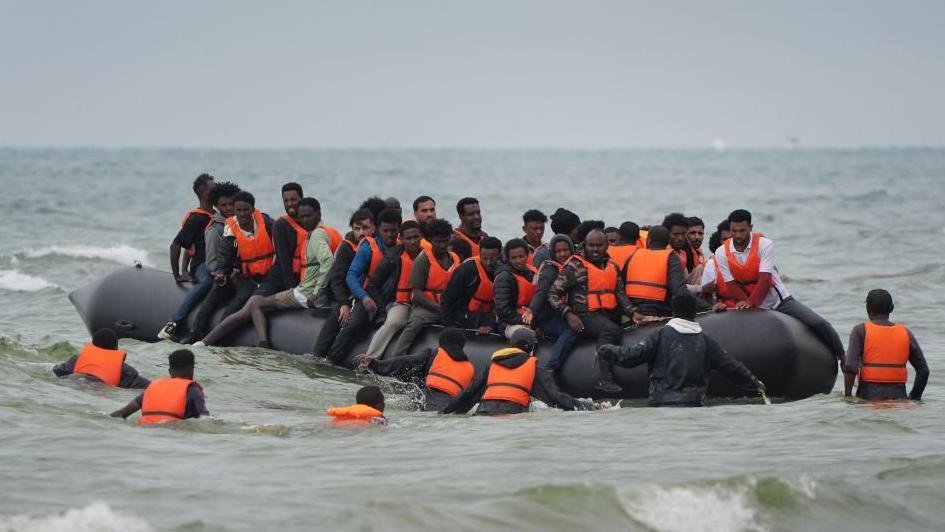
- A Sharp Decline in Asylum Applications: Asylum applications in Sweden have fallen by 96 percent compared with the peak of 2015, when the country received 163,000 asylum seekers — the second-highest per capita figure in Europe that year. The Swedish Migration Agency projected that applications would fall further, to around 4,200 in 2026 and 3,700 in 2027.
III. The Impact on Migrants and Refugees
While the political shift may signal a limited improvement in rhetoric, the actual impact on the lives of migrants and refugees remains complex:
1. A Less Hostile Political Discourse
The overtly xenophobic rhetoric that characterised the previous government is expected to diminish. Reforms that had been initiated, such as restricting access to citizenship, are unlikely to be pursued further. The relatively radical deportation practices may also change. This shift in discourse — even if partly symbolic — has a profound psychological effect on immigrant communities that have endured years of feeling targeted.
2. The Persistence of Structural Restrictions
Despite the political change, the restrictive laws enacted over the previous four years remain in force, as they have become part of Sweden’s legislative framework. Consequently, the tangible impact on the lives of refugees — in terms of residency, naturalisation, and social assistance — may not change drastically in the short term.
3. A Politically Divided Landscape on Migration
Parties on the left, the Greens, and the Centre seek to ease restrictions, while the Sweden Democrats demand even stricter measures. This division means that any substantive policy change will require complex parliamentary consensus, particularly given the left bloc’s narrow majority.
4. The Psychological Impact on Immigrant Communities
In suburbs such as Rinkeby in Stockholm, residents celebrated the Sweden Democrats’ decline, viewing it as a sign that “rage-bait failed”. However, the measures already taken — from the abolition of permanent residency to paid departure programmes — have left a deep mark on the sense of security and belonging.
IV. Sweden in the Broader European Context
What happened in Sweden is not isolated from a wider wave sweeping across Europe. In the Dutch elections, Geert Wilders — known for his anti-Islam rhetoric — made significant gains. In Germany, the Alternative for Germany (AfD) secured around 44 percent in the Saxony-Anhalt state election. This rise of the far right has pushed many European governments to adopt increasingly restrictive migration and asylum policies, including what analysts have described as an “emerging consensus” on deterrence and returns.
In this context, Sweden may serve as a European paradox: a society that rejects the far right at the ballot box yet finds itself constrained by a strict legislative legacy and a growing European consensus on tough migration policies.
Conclusion
The 2026 Swedish election did not restore the open-door policies that characterised the country for decades, but it did — at least temporarily — halt the march towards further restrictions. The real challenge now lies not only in changing laws but also in rebuilding trust with communities that have felt targeted, and in testing whether the political shift can translate rhetoric into actual policies that restore Sweden’s image as a multicultural society — or whether the strict legislative legacy will outlast the governments themselves.
Glossary of Key Terms
| Term | Definition |
|---|---|
| Riksdag | The Swedish parliament |
| Sweden Democrats (SD) | Far-right political party with neo-Nazi roots |
| Tidö Coalition | The centre-right governing coalition supported by the SD |
| Remigration / Reverse Migration | Policy encouraging immigrants to return to their countries of origin |
| Permanent Residence Permit | A permit allowing indefinite stay; abolished for refugees in 2026 |
| Temporary Protection Directive | EU mechanism granting temporary protection to displaced persons |
Aftershock at the Ballot Box: Will Sweden Change Course on Migration?

Subscribe to Our Newsletter
Keep in touch with our news & offers
Merci de vous être abonné(e) à la newsletter.
Oups. Une erreur s'est produite. Veuillez réessayer plus tard.