

From External Security Guarantees to a Multipolar Architecture
مقدمة
For decades, the security architecture of the Middle East rested on a relatively simple equation: regional states possessed military capabilities, but the United States remained the ultimate external guarantor of the regional order. American bases, naval forces, air-defense systems, intelligence networks, arms transfers and diplomatic influence formed the backbone of Gulf security.
That model is now under profound pressure.
The wars and crises of 2026 have demonstrated that the traditional security architecture is no longer sufficient to prevent attacks on energy infrastructure, commercial shipping and sovereign territory. At the same time, regional powers are becoming more willing to develop their own defense partnerships rather than relying exclusively on a single external guarantor.
The most significant development has been the emergence of the Makkah Joint Defense Agreement between Saudi Arabia, Türkiye and Pakistan. Signed in August 2026, the agreement stipulates that an armed attack against one of the three states constitutes an attack against all three and establishes a framework for broader defense cooperation. In October, the mechanism moved from political declaration toward implementation, with the three countries convening an emergency strategic political and defense committee in Riyadh and beginning practical preparations for deploying agreed capabilities.
At the same time, Gulf states continue to strengthen collective defense mechanisms through the Gulf Cooperation Council, while maritime security is emerging as a separate strategic pillar linking the Gulf, the Red Sea and the wider Indian Ocean.
The result is not yet a new Middle Eastern security system in the conventional sense.
Rather, the region appears to be moving toward something more complex: a layered, multipolar and increasingly regionalized security architecture in which several overlapping alliances, partnerships and defense mechanisms coexist.
1. The End of the Old Security Equation
The first question is whether the traditional American security umbrella has actually disappeared.
The answer is more complicated than either “yes” or “no.”
The United States remains deeply embedded in the military and economic structure of the Middle East. Gulf states continue to depend on American weapons systems, intelligence capabilities, missile-defense technology and military cooperation.
However, the events of 2026 have changed the perception of what American power can realistically guarantee.
The U.S.-Israeli war with Iran exposed vulnerabilities in the regional military infrastructure on which Washington’s security architecture had depended. Several American facilities across the Gulf were damaged, while missile and drone attacks demonstrated that even sophisticated air-defense networks cannot guarantee complete protection against sustained asymmetric warfare. Analysts at Chatham House argue that the pre-war Gulf order is unlikely to return in its previous form and that Washington itself is likely to adapt its military posture toward more dispersed deployments, missile defense and less vulnerable forms of forward presence.
This distinction is crucial.
The Gulf monarchies are not necessarily abandoning the United States.
They are increasingly trying to avoid being dependent on the United States alone.
That is a very different strategic calculation.
2. The Makkah Agreement and the Rise of Regional Defense Partnerships
The most visible expression of this transformation is the Makkah Joint Defense Agreement.
Saudi Arabia, Türkiye and Pakistan signed the agreement in Makkah on August 7, 2026. The agreement aims to strengthen collective deterrence and defense cooperation and establishes the principle that an armed attack against one of the three countries constitutes an attack against all.
Initially, the agreement could have been interpreted as a political declaration designed to signal solidarity.
But events in October changed that calculation.
On October 5, the three countries held an emergency meeting of the agreement’s strategic political and defense committee in Riyadh. They agreed to move toward practical implementation of their collective-defense commitments and appointed Pakistan’s retired Lieutenant General Nauman Mahmood as the alliance’s first secretary-general.
The significance goes beyond the three countries themselves.
Saudi Arabia is the largest Arab military and economic power in the arrangement.
Türkiye brings a major NATO military power with extensive drone, defense-industrial and conventional capabilities.
Pakistan contributes one of the world’s largest armed forces and a long-standing defense relationship with Saudi Arabia.
Together, the three countries create a security triangle connecting the Arab Gulf, Anatolia and South Asia.
That geography is strategically important.
It means that regional security is no longer being conceptualized exclusively within the narrow boundaries of the Persian Gulf.
3. From Alliances to “Security Networks”
The most important innovation may be that the Middle East is not creating one single alliance.
Instead, several networks are emerging simultaneously.
The Gulf Cooperation Council remains the principal institutional framework for the Arab Gulf states. In 2026, GCC statements repeatedly reaffirmed that the security of member states is indivisible and that an attack against one member constitutes an attack against all.
The Makkah agreement creates another layer involving Saudi Arabia, Türkiye and Pakistan.
Maritime security creates yet another layer.
Saudi Arabia has promoted a multinational maritime defense alliance designed to protect international sea lanes and prevent their exploitation as instruments of political or economic pressure. Saudi officials have also emphasized coordination among Red Sea coastal states to protect maritime routes.
This produces an emerging architecture with several overlapping circles:
GCC security → Makkah defense cooperation → maritime security → bilateral defense partnerships → U.S. security cooperation → European military involvement → emerging Chinese and other external roles.
This is very different from the centralized security architecture of previous decades.
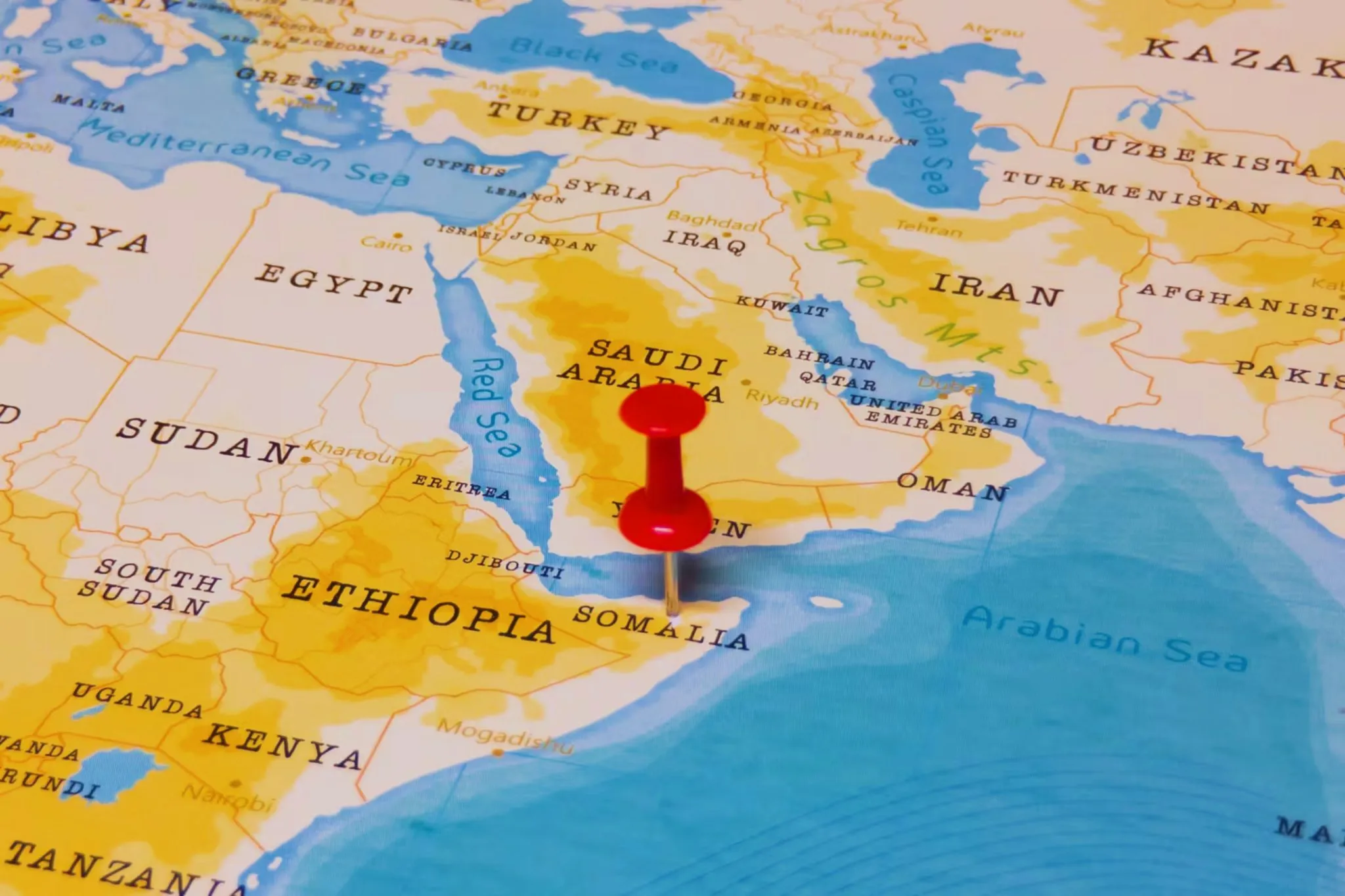
4. The Red Sea Is Becoming Part of Gulf Security
One of the most important developments in the new security environment is the disappearance of the traditional distinction between Gulf security and Red Sea security.
The Strait of Hormuz and Bab el-Mandeb are increasingly treated as interconnected strategic chokepoints.
The reason is economic.
Energy exports from the Gulf, shipping routes between Asia and Europe, and the movement of commercial goods are dependent on both maritime corridors.
The renewed fighting in Yemen has demonstrated this interconnection again. On October 6, Saudi-led coalition naval forces carried out an operation in Yemen’s Hudaydah governorate that Riyadh said was intended to prevent attacks on waterways in the southern Red Sea and protect navigation through Bab el-Mandeb.
This means that Saudi security calculations are no longer limited to defending its eastern coastline.
The Kingdom must simultaneously consider:
- the Persian Gulf;
- the Strait of Hormuz;
- البحر الأحمر؛;
- Bab el-Mandeb;
- اليمن؛;
- maritime energy infrastructure;
- drone and missile threats;
- and international shipping.
The geographic concept of Gulf security is therefore expanding.
5. Iran Remains Central to the New Security Equation
Any discussion of a new Middle Eastern security architecture must include Iran.
Iran remains one of the region’s principal military powers, and its geography gives it extraordinary leverage over the Persian Gulf and Strait of Hormuz.
The 2026 conflict demonstrated that Tehran’s ability to threaten maritime traffic and energy infrastructure can have consequences far beyond the Middle East.
As of October 7, Iranian officials were still asserting control over the Strait of Hormuz and threatening to close routes that Iran considered illegal. Reuters reported that Iranian officials continued to claim that the waterway remained under Iranian control, while shipping through the strait was still far below pre-war levels according to Iranian military officials.
This creates a paradox.
The Gulf states increasingly need stronger collective defense mechanisms because of the Iranian threat.
But at the same time, permanent confrontation with Iran would make regional economic transformation extremely difficult.
Therefore, the emerging architecture will probably require two parallel tracks:
deterrence against Iran and dialogue with Iran.
These are not necessarily contradictory.
In fact, the Gulf states may increasingly regard both as necessary components of security.
6. The Gulf States Are Building Security While Avoiding Permanent War
The Gulf states face a particularly difficult strategic dilemma.
They need credible deterrence.
But their economic transformation requires stability.
Saudi Arabia’s Vision 2030, the UAE’s global economic ambitions, Qatar’s energy strategy and the wider Gulf diversification agenda all depend on international investment, tourism, trade and infrastructure.
Permanent regional conflict therefore threatens the very economic objectives that Gulf governments are pursuing.
This explains why Gulf security policy increasingly combines three instruments:
military deterrence, diplomatic engagement and economic interdependence.
Qatar, for example, has continued to support negotiation and mediation between Washington and Tehran. In June 2026, Doha welcomed the U.S.-Iran memorandum concerning outstanding issues and freedom of navigation in the Strait of Hormuz, emphasizing dialogue and peaceful solutions.
The message is significant:
The Gulf states do not necessarily want to choose between diplomacy and deterrence.
They increasingly want both.
7. Saudi Arabia’s Strategic Transformation
Saudi Arabia is emerging as one of the central actors in this transformation.
Riyadh is simultaneously strengthening:
- GCC collective defense;
- bilateral military relations;
- the Makkah defense framework;
- maritime security cooperation;
- relations with Türkiye;
- relations with Pakistan;
- and its strategic relationship with Washington.
This is not necessarily evidence of Saudi Arabia turning away from the United States.
It is evidence of strategic diversification.
The logic is straightforward.
If a state cannot guarantee that one partner will always be able or willing to respond to every threat, it can reduce vulnerability by developing multiple sources of military, diplomatic and technological support.
This is particularly important after the attacks of 2026 demonstrated that geography itself can become a strategic vulnerability.
The emerging Saudi model could therefore become influential across the Gulf:
Do not replace the American security umbrella — supplement it.
8. Türkiye and Pakistan Enter the Regional Security Equation
The Makkah framework also represents an expansion of the regional security map.
Türkiye has historically maintained a complex relationship with the Middle East, combining NATO membership, independent defense policies and growing relations with Gulf states.
Pakistan, meanwhile, has maintained decades-long military ties with Saudi Arabia.
The new agreement institutionalizes these relationships.
The development became more concrete in October, when Türkiye began providing technical and defensive support to Saudi Arabia following the activation of the Makkah defense mechanism. Reuters reported that Turkish assistance included military equipment, intelligence and air-defense capabilities, although the exact extent of Turkish troop involvement remained subject to domestic legal procedures.
This creates a new possibility:
The Middle East’s future security architecture may extend beyond the traditional Arab-Israeli-Gulf framework toward a broader Arab-Turkish-Pakistani security network.
Whether this becomes permanent remains uncertain.
But the institutional foundations are now being built.
9. Israel and the Limits of a Military-Centered Regional Order
Israel remains a major military actor, but the events of recent years have complicated the idea that regional security can simply be built around Israeli military superiority.
Before the latest regional conflicts, one possible model was an expanding network connecting Israel with Arab states through the Abraham Accords, economic integration, intelligence cooperation and shared concerns over Iran.
The wars since 2023 have made that model more difficult.
The question is no longer simply whether Arab states and Israel share concerns about Iran.
It is whether they can construct a stable security relationship while the Palestinian question remains unresolved and while Israel’s military posture continues to shape perceptions across the region.
This does not mean that Arab-Israeli security cooperation has disappeared.
It means that its political limits have become more visible.
The emerging regional architecture is therefore unlikely to be based exclusively on an Israeli-centered security model.
10. The Missing Piece: Iran’s Place in the Regional Order
Perhaps the greatest challenge facing any future regional security architecture is the question of whether Iran will be inside or outside it.
A security system designed exclusively to contain Iran could reproduce the very cycle of confrontation that has destabilized the region.
A system that ignores Iran’s military capabilities and geographic position would be equally unrealistic.
Iran controls or influences strategic geography extending from the Persian Gulf to Iraq, Syria, Lebanon and Yemen.
Any sustainable regional order will therefore have to address Iranian power rather than simply attempt to eliminate it.
This is where diplomacy becomes strategically important.
The future may involve a form of competitive coexistence:
regional states maintain deterrence against Iranian military pressure while simultaneously creating mechanisms for communication, crisis management and maritime deconfliction.
The alternative is a permanent security dilemma in which every defensive measure by one side is interpreted as preparation for offensive action by another.
11. China, Europe and the Multipolarization of Middle Eastern Security
The emerging order is also becoming more multipolar.
The United States remains the dominant external military actor, but it is no longer the only outside power with strategic interests in the region.
China’s economic presence has expanded substantially, particularly through trade, energy and infrastructure.
Europe has a different but complementary interest: protecting energy supplies, commercial shipping and regional stability.
Russia continues to retain political and military relationships in parts of the region, although its capacity and priorities have evolved.
The result is an increasingly competitive external environment.
Rather than a Middle East dominated by one external guarantor, the region is moving toward a system in which regional powers can use relationships with Washington, Beijing, Moscow, European capitals, Ankara and Islamabad to diversify strategic options.
This is the essence of the emerging multipolar Middle East.
12. The Most Likely Future: A Layered Security Architecture
The idea of a single “Middle Eastern NATO” is attractive because it provides a simple answer to a complicated problem.
But the region’s political diversity makes such an arrangement difficult.
The more realistic scenario is a layered security architecture.
Its first layer would be national defense.
The second would be GCC collective security.
The third would consist of smaller regional partnerships such as the Makkah defense framework.
The fourth would involve maritime security cooperation across the Gulf and Red Sea.
The fifth would be external partnerships with the United States, European states and other international actors.
The sixth — and perhaps most difficult — would be diplomatic mechanisms involving Iran and other regional powers.
This model would not eliminate competition.
Instead, it would seek to manage competition.
The Middle East may therefore be moving away from the idea of one hegemonic security provider toward a system of overlapping security mechanisms.
The Middle East Council on Global Affairs has similarly argued that the region is undergoing a fundamental shift and that a sustainable security architecture may need to develop gradually through layered integration rather than through an all-encompassing alliance.
13. Three Possible Scenarios
Scenario One: A Fragmented Security Landscape
In this scenario, regional states continue creating separate alliances without establishing mechanisms connecting them.
The GCC strengthens its defenses.
Saudi Arabia, Türkiye and Pakistan deepen the Makkah framework.
Israel maintains its own military partnerships.
Iran continues to rely on asymmetric capabilities.
The United States remains involved.
The result would be stronger deterrence but also greater risk of miscalculation.
Scenario Two: A Competitive Multipolar Order
This scenario would see several regional powers — Saudi Arabia, Iran, Türkiye, Israel, Egypt and the UAE — developing overlapping partnerships.
No single state dominates.
No single alliance controls the region.
Instead, states balance against one another while maintaining economic and diplomatic relationships.
This may be the most plausible medium-term trajectory.
Scenario Three: A Regional Security Compact
The most ambitious scenario would involve regional states eventually creating permanent mechanisms for:
- missile and drone defense;
- maritime security;
- crisis communication;
- arms-control discussions;
- energy infrastructure protection;
- counterterrorism cooperation;
- and conflict prevention.
Such a system would not necessarily resemble NATO.
It could look more like a Middle Eastern security council built around several existing institutions and bilateral agreements.
The main obstacle would remain the political mistrust between Iran, Israel and several Arab states.
Conclusion: A New Order Is Emerging — But It Has Not Yet Been Built
The answer to the central question is therefore neither a simple “yes” nor “no.”
The Middle East is moving toward a new regional security order, but that order is still under construction.
The transformation is visible in several developments at once.
The Gulf states are strengthening collective defense.
Saudi Arabia is diversifying its strategic partnerships.
Türkiye and Pakistan are becoming more directly involved in Gulf security.
The Makkah defense agreement is moving toward institutionalization.
Maritime security is becoming a central regional priority.
The Red Sea and Persian Gulf are increasingly treated as interconnected security theaters.
At the same time, the United States remains indispensable, but regional governments are increasingly preparing for a world in which American guarantees may be less predictable or less sufficient on their own.
The emerging architecture is therefore unlikely to be a single alliance.
It is more likely to be a network of overlapping partnerships, deterrence mechanisms, diplomatic channels and security institutions.
The most important question for the coming years will not be whether the United States leaves the Middle East.
It will be whether Middle Eastern states can transform their new strategic autonomy into institutions capable of preventing the next war.
The region has spent decades building military capabilities.
The next stage may require building something harder:
a security system in which deterrence, diplomacy and regional ownership can coexist.
That could ultimately become the defining geopolitical transformation of the post-2026 Middle East.