
South Africa: Escalating Femicide in Gauteng

South Africa: Escalating Femicide in Gauteng

Nine women’s bodies discovered across Ekurhuleni, Gauteng, between July and September 2026 have sparked national alarm over femicide in South Africa, prompting intensified police investigations and renewed attention to the country’s wider gender-based violence crisis.


A string of nine women’s bodies discovered in Ekurhuleni, Gauteng, over two months has triggered national alarm over femicide. Deputy President Paul Mashatile condemned the killings as police intensified investigations. The crisis reflects South Africa’s broader epidemic of gender-based violence, with over 50,000 cases reported in 2025/26 alone.

1. Introduction

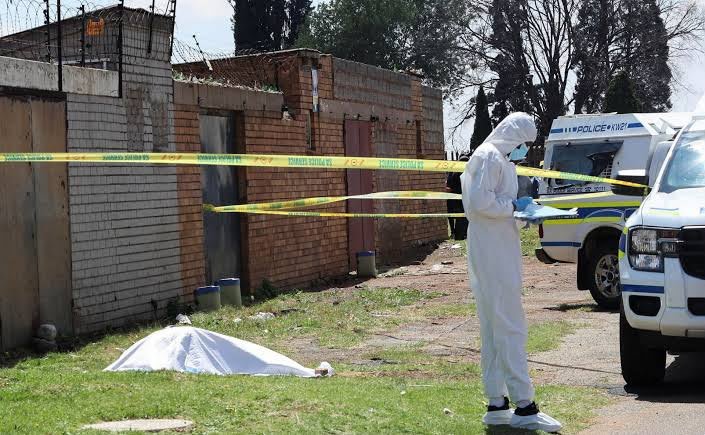
The discovery of nine women’s bodies in the Ekurhuleni municipality east of Johannesburg between July and September 2026 has exposed the severity of femicide in South Africa. The victims were found partially clothed, with injuries including stab wounds and bruises, across communities including Kempton Park, Dawn Park, and KwaThema.

2. The Killings: Timeline and Patterns

2.1 Discovery of Victims

DateLocationDetails
July 15Kempton ParkFirst victim, 37, found naked and bound
August 24UnknownSecond victim, 32, partially clothed
September 10UnknownThird victim, advanced decomposition
September 12Kempton ParkElizabeth Moselakgomo, 38, found behind hotel
September 14–15VariousMultiple bodies found across Ekurhuleni
September 17Dawn ParkNinth victim, ~30, stab wound and cut throat

The first victim was found on July 15. A suspect was arrested two days later and remains in custody, though police have not linked him to the other deaths.

2.2 Victims Identified

Three victims have been formally identified: Elizabeth “Tsontso” Moselakgomo (38), Itumeleng Kekana (missing since July), and Dineo Evelyn Motapane (38). Moselakgomo’s disappearance while jogging drew public attention after fellow runners launched a social media campaign.

South Africa: Escalating Femicide in Gauteng

3. Government Response

3.1 Deputy President’s Condemnation

Deputy President Paul Mashatile, as Chairperson of the Justice, Crime Prevention and Security Cluster, strongly condemned the killings:

“Gender-based violence has no place in our communities, and all men should be at the forefront condemning such violence and protecting women.”

Mashatile urged law enforcement to work with communities to ensure perpetrators are brought to justice and women feel safe.

3.2 Police Measures

Police have assembled a multidisciplinary team of detectives, intelligence officers, and forensic experts. A reward of 400,000 rand (approximately $25,000) has been offered for information leading to arrests. Gauteng Premier Panyaza Lesufi stated: “They’ve declared war against the state. We’ll respond. We’re not going to surrender.”

Acting Police Minister Firoz Cachalia cautioned against speculation, stating investigators were dealing with “quite distinct, separate events” at this stage.

4. Broader Context: Femicide Epidemic

4.1 National Statistics

South Africa recorded 50,511 cases of gender-based violence and femicide (GBVF) in the 2025/26 financial year. Of these, 36,217 were rape cases. Only 30,736 cases resulted in arrests or referrals for prosecution—leaving nearly 20,000 cases without apparent legal consequence.

Gauteng province, where the current killings occurred, recorded 8,933 GBVF cases, the second-highest nationally after KwaZulu-Natal.

4.2 Scale of Violence

According to UN Women, South Africa’s rate of women killed is five times higher than the global average. Research indicates approximately 60% of women murdered in 2020/21 were killed by intimate partners.

5. Community and Civil Society Response

Women’s rights advocates, political parties, and civil society organizations marched to Kempton Park Police Station demanding stronger protection measures. Running clubs organized memorial runs in honor of Elizabeth Moselakgomo. A coalition of over 1,000 faith leaders called for churches to break their silence on gender-based violence.

The Commission for Gender Equality urged authorities to conduct urgent safety audits of hotspots in Kempton Park, evaluating lighting, surveillance cameras, pedestrian routes, and police presence.

6. Trajectory and Implications

Immediate

Police investigations continue. The reward and public pressure have intensified scrutiny, but no confirmed links between all nine cases have been established.

Structural

The killings underscore systemic failures in GBVF prevention and response. Nearly 40% of reported cases in 2025/26 did not result in arrests or prosecution.

Political

President Ramaphosa has vowed “no stone will be left unturned.” The government launched a Femicide Review Pilot in August 2026 in Gauteng, KwaZulu-Natal, and Eastern Cape to identify systemic gaps and improve institutional responses.

7. Conclusion

The Ekurhuleni killings have exposed the brutal reality of femicide in South Africa. While the government has condemned the violence and pledged resources, the crisis reflects deeper failures: thousands of GBVF cases unresolved, and a culture of violence against women that persists despite legal reforms. Without sustained action—from policing to prevention—the pattern is likely to continue.

References

  • Question NW4199 to the Acting Minister of Police, PMG, August 19, 2026.
  • Ninth woman found dead in South Africa killing spree, Uganda Broadcasting Corporation, September 16, 2026.
  • A ninth woman’s body found in South Africa, The Canadian Press, September 16, 2026.
  • Deputy President condemns recent killings of women, SAnews.gov.za, September 15, 2026.
  • Minister Ramokgopa launches Femicide Review Pilot, South African Government, August 27, 2026.
  • CGE calls for urgent safety measures in Gauteng, ANTV, September 16, 2026.
  • Activists sound alarm over 50,000 GBVF cases, Cape Times, August 24, 2026.
  • Ninth woman’s body found as police probe string of deaths, GBC Ghana Online, September 16, 2026.
  • Deputy President Paul Mashatile on recent killings, gov.za, September 15, 2026.
  • Calls for stronger regional action against GBVF, SAnews.gov.za, September 7, 2026.
  • Ninth woman’s body found in Dawn Park, BBC News, September 16, 2026.
  • Afrique du Sud: la colère après les meurtres, Africanews, September 16, 2026.
  • Nearly 20,000 GBVF cases did not result in arrests, The Citizen, August 23, 2026.
veracity papers

veracity papers

Subscribe to Our Newsletter

Keep in touch with our news & offers

Merci de vous être abonné(e) à la newsletter.

Oups. Une erreur s'est produite. Veuillez réessayer plus tard.

Also listen on

Enjoy Unlimited Digital Access

Read trusted, award-winning journalism. Just $2 for 6 months.
Already a subscriber?
What to read next...
The Use of Chemical Weapons in War: The Sudanese Armed Forces as a Case Study

The Use of Chemical Weapons in War: The Sudanese Armed Forces as a Case Study

Introduction Chemical weapons are among the most dangerous means of warfare because of their toxic effects on people and the environment, and because their impact can be difficult to confine to combatants alone. The international community has imposed a comprehensive ban on their use and established an organization to monitor implementation. Yet armed conflicts continue …

Are Digital Platforms Making Global Culture More Diverse—or More Homogeneous?

Are Digital Platforms Making Global Culture More Diverse—or More Homogeneous?

Abstract Digital platforms have transformed the way cultural products are created, distributed and consumed. Streaming services, social networks, video-sharing platforms and digital marketplaces have enabled music, films, literature, fashion and artistic expression to cross geographical and linguistic boundaries at unprecedented speed. Creators who once depended on traditional publishers, broadcasters or record labels can now reach …

Leave a Reply

Your email address will not be published. Required fields are marked *