
Introduction
Sudan’s war no longer poses a single question about how to stop the fighting. It raises a series of interconnected questions about the state that will emerge: who will govern it, on what basis, and across how much of its territory? A ceasefire does not necessarily restore civilian rule, just as Sudan’s continued existence as a single country on the map does not guarantee that its institutions will function as those of a unified state. This is the central dilemma: large-scale hostilities could subside while rival authorities become entrenched, or a central government could recover extensive territory without addressing the political conditions that make fragmentation a recurring threat.
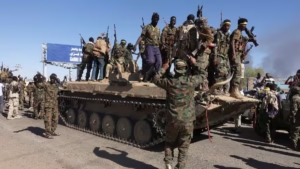
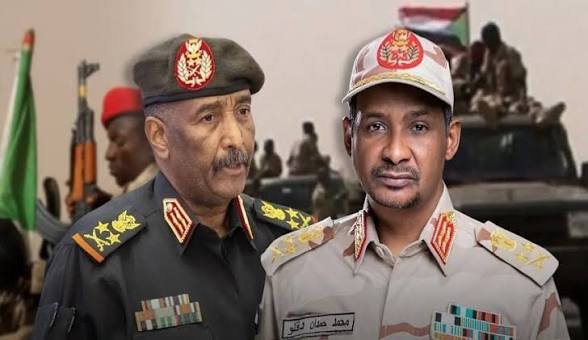
Fighting broke out in April 2023 between the Sudanese Armed Forces (SAF) and the Rapid Support Forces (RSF), after both had participated in the October 2021 coup. That history places the war within the wider crisis of Sudan’s political transition. The two forces that had shared a dominant position in government turned to armed confrontation, leaving the prospects for civilian rule dependent not only on ending the fighting but also on redefining the relationship between armed power and state institutions.news.un
This study proceeds from the premise that territorial unity and civilian government cannot be treated as separate questions. A state unable to establish broadly accepted rules for distributing power and resources remains vulnerable to fragmentation. Conversely, meaningful civilian government is difficult to build where coercive power and political authority are divided among autonomous armed actors. The analysis therefore brings together the limits of international mediation, the prospects for a civilian transition, and the possible trajectories of state fragmentation or reunification. It offers a qualitative political assessment rather than a prediction, distinguishing documented developments from judgments about what may follow.
The War as a Crisis of the State
Understanding Sudan’s predicament requires a distinction between controlling the government and rebuilding the state. Holding the capital or central institutions is not, by itself, sufficient to restore a stable political order if large areas remain beyond the reach of the law, or if armed formations retain the capacity to overturn institutional decisions by force. Equally, establishing an administration in territory under military control does not automatically confer popular legitimacy or the ability to deliver services and protect rights. Military control, administrative capacity, and political legitimacy are different assets; an actor may possess one while lacking the others.
The division acquired a more explicit institutional dimension with the announcement of a parallel administration by the RSF-aligned Tasis alliance in July 2025. The African Union rejected that move, and its Peace and Security Council reiterated the position in February 2026, urging states and international partners not to recognise the rival administration, in defence of Sudan’s sovereignty, unity, and territorial integrity. The significance of the initiative lies in its attempt to translate battlefield control into governing authority, regardless of whether it secures international recognition.accord.org+1
This illustrates the difference between formal partition, producing independent states, and de facto division within the borders of an internationally recognised country. The international community may continue to recognise a single Sudan while its administrative, security, and revenue systems drift apart. The longer that separation lasts, the harder it becomes to reintegrate the institutions and interests that develop around it. Fragmentation should therefore not be measured solely by whether an actor declares independence. A state can be progressively hollowed out without any change to its internationally recognised borders.
Nor does the war’s capacity to continue depend on domestic resources alone. In September 2026, the Independent International Fact-Finding Mission for the Sudan concluded that external support networks, foreign recruitment, arms transfers, and military technology were strengthening the belligerents’ capabilities. It documented cross-border networks supplying the RSF with fighters, equipment, and logistical support. It also found reasonable grounds to believe that the SAF had used foreign-supplied drones in operations that harmed civilians and civilian objects. These findings suggest that any settlement which overlooks external supply networks will remain vulnerable: parties may retain the means to resume fighting even after signing an agreement.ohchr
The Limits of Mediation: Why an Agreement to Stop Fighting Is Not Enough
The Jeddah Declaration, signed on 11 May 2023 through Saudi and US facilitation, illustrates the distance between securing commitments and enforcing them. The SAF and RSF reaffirmed their obligations under international humanitarian law, including civilian protection and humanitarian access. The declaration also envisaged discussions on a short-term ceasefire as a step towards a permanent cessation of hostilities. It was not a comprehensive agreement on Sudan’s future political order, but a humanitarian and negotiating framework intended to be followed by further steps.2021-2025.state+1
Beginning with humanitarian commitments is not inherently a mistake. Civilian protection cannot be made contingent on agreement over the future system of government. The problem arises when the distinction between humanitarian and political negotiations becomes a lasting disconnect: ceasefire initiatives recur, while the distribution of power and the future of state institutions remain unresolved. The objective should not be to burden a single truce with solving every Sudanese crisis. It should be to establish a credible sequence linking immediate protection and verifiable commitments to a political process that addresses the causes of renewed conflict.
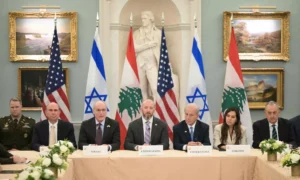
The number of mediation frameworks adds a further challenge. Consultations in Geneva in October 2026 addressed coordination between the Quad—the United States, Saudi Arabia, the United Arab Emirates, and Egypt—and the Quintet—the United Nations, African Union, European Union, League of Arab States, and Intergovernmental Authority on Development (IGAD). This range of participants can bring complementary forms of leverage. But it can also allow the belligerents to manoeuvre between initiatives if priorities diverge or common follow-up mechanisms are absent. A joint statement by members of the UN Security Council and the AU Peace and Security Council, published in early November 2026, accordingly stressed the need for greater coherence among mediation efforts.news.un+1
Coordination among mediators, however, is not the same as agreement on the consequences of obstructing a settlement. Negotiations become effective when they change the belligerents’ calculations, not merely when they narrow differences in diplomatic language. In policy terms, that requires linking incentives and pressure to verifiable conduct, such as compliance with a ceasefire, unimpeded humanitarian access, and the protection of civilians. It also requires avoiding measures that deepen civilian suffering rather than constrain the actors sustaining the war.
Trust becomes more difficult where diplomatic engagement overlaps with disputes over external military support. The fact-finding mission reported findings concerning individuals and entities operating from several countries within support networks for the RSF. The UAE, for its part, denies providing military support to the force. Investigative findings, official denials, and conclusions about legal responsibility must remain distinct. The political implication is nonetheless clear: restricting the flow of weapons and supplies requires practical, verifiable arrangements, not general assurances alone.ohchr+1
Civilian Government: Participation or Actual Authority?
A civilian transition cannot be measured by the number of civilians appointed to government. The more consequential question is whether institutions can make decisions and oversee their implementation. A civilian administration may be assigned responsibility for the economy and public services while security decisions and essential resources remain beyond its control. In that arrangement, civilians become publicly accountable for outcomes they lack the authority to determine, and their presence risks legitimising existing power structures rather than transforming them.
Any serious discussion of a transition must therefore begin with institutional powers. Who approves the budget? Who oversees security expenditure? How are senior appointments made under the law? Which body adjudicates disputes between transitional institutions? What prevents armed actors from using force to overturn political decisions? Deferring these questions without enforceable guarantees may make an agreement easier to sign, but it leaves the central crisis unresolved.
Civilian actors should not, however, be treated as a single, homogeneous bloc. Nor will their participation become meaningful simply by bringing representatives into the same room. A credible process must accommodate disagreement while preventing representation from being monopolised by those with the greatest access to negotiating platforms. The participation of women, displaced people, professional organisations, and local initiatives matters because it can bring protection, return, public services, and accountability into negotiations otherwise dominated by the allocation of offices.
The UN-led diplomatic process in October 2026 emphasised a Sudanese-led transition through an inclusive and credible dialogue. Yet the Geneva consultations were a coordination meeting for mediators, not negotiations involving the SAF or RSF. That distinction matters: diplomatic agreement on the value of dialogue does not mean an inclusive national process has begun, nor does it resolve how participants will be selected or what authority they will exercise. The principle becomes meaningful only when translated into procedures that give civilians genuine influence over the settlement.news.un
Sudan’s Possible Trajectories
Legal Unity, De Facto Division
In this study’s assessment, prolonged de facto division represents the most immediate danger if a political settlement remains elusive. Under this scenario, neither side necessarily declares independence. Instead, each claims to represent Sudan as a whole while governing only part of it. The prospect is grounded in the existence of a parallel governing project and in warnings that competing institutions could entrench long-term division despite the African Union’s refusal to recognise them.accord.org+1
Such an arrangement could endure if rival authorities retained sufficient revenue, external supply relationships, and domestic networks benefiting from their control. International recognition would not be essential to its survival. Division could persist if influential actors came to see institutional reunification as more costly than maintaining the existing order.
A ceasefire might stabilise this scenario rather than resolve it if it did no more than freeze the front lines. A truce is indispensable for saving lives, but the future of national unity would depend on what followed: whether movement and trade reopened, administrative and service links were restored, and negotiations began over national institutions—or whether military deployment lines gradually hardened into political boundaries.
Fragmentation into Multiple Authorities
There is no guarantee that a fragmenting Sudan would divide into two cohesive blocs. Centres of power could multiply within the opposing camps, or disputes could emerge over resources, representation, and security arrangements. An agreement between senior leaders might then prove insufficient to secure compliance from every armed formation and local power centre.
Analysis must also avoid treating entire regions as politically uniform. Military control over Darfur or Kordofan, for example, cannot be taken as evidence that all their communities support the controlling force’s political project or accept the conversion of wartime front lines into borders. Social and political diversity could turn attempted separation into a source of further conflict within the territories concerned.
This form of fragmentation would be more difficult to address than a two-way division. It could produce fragmented sovereignty: roads, crossings, and centres of production controlled by different authorities; shifting alliances; and local settlements that do not necessarily fit into a national agreement. International actors involved in Sudan diplomacy have warned that continued war and violence against civilians are increasing the risk of fragmentation—a concern extending beyond the possible declaration of an independent entity.allafrica
Formal Partition into Independent States
Formal partition remains theoretically possible, but it is not an automatic consequence of war or the creation of a parallel government. Establishing an independent state would require decisions on borders, political representation, resources, and external relations. It would also raise difficult questions about the rights of communities opposed to separation, public assets, residence, and freedom of movement.
This trajectory currently faces a substantial diplomatic obstacle. The African Union has repeatedly affirmed Sudan’s unity, sovereignty, and territorial integrity, while the Geneva consultations rejected parallel governments and arrangements that could deepen fragmentation. Such positions weaken the prospects for an internationally accepted partition, even though they cannot, on their own, prevent de facto division.au+1
That assessment could change if institutional separation endured, viable rival authorities emerged, influential leaders explicitly embraced independence, and external support advanced to formal recognition. But the existence of a parallel administration does not make a new state inevitable. On the evidence considered here, prolonged de facto division remains more plausible than internationally recognised partition.
Reunification by Military Force
This scenario assumes that one side substantially undermines its opponent’s ability to retain territory and parallel institutions, then extends central authority. Yet it exposes a crucial distinction between recovering territory and restoring the state. Entering a city is not the same as securing its surrounding routes, restoring services, protecting its residents, or rebuilding their confidence in public institutions.
Military predominance could produce wider territorial control without political stability if accompanied by exclusion, collective punishment, or the survival of armed actors beyond effective command. Wartime cohesion among allies also offers no guarantee of agreement over power after the fighting. Any major battlefield shift would therefore require political, administrative, and security arrangements extending beyond the defeat of an opponent.
The AU Commission chairperson has stated that there is no military solution to the conflict, calling instead for a truce leading to a sustainable ceasefire and inclusive dialogue. This is a position on the requirements of durable peace, not proof that major military changes are impossible. A shift in battlefield power and the creation of a governable state are different outcomes.au
Negotiated Unity Through Meaningful Decentralisation
A negotiated, decentralised settlement offers the strongest basis for sustainable unity, although it would be demanding to negotiate and implement. Its central principle would be that unity must not mean restoring the centre’s unchecked monopoly over decisions and resources, while decentralisation must not become a permanent licence for autonomous regional armies. Civilian powers and resources would be distributed under agreed national rules, alongside security institutions accountable to law.
There is a fundamental difference between giving regions meaningful authority over development, services, and administration, and assigning armed formations exclusive spheres of influence. The former can widen public participation; the latter entrenches the privileges of force. If decentralised arrangements simply reproduce military control lines, they could disguise de facto partition. If accompanied by representation, accountability, transparent revenue-sharing, and rights protections within every region, they could give communities stronger reasons to remain within a shared state.
A Settlement That Protects Civilians and Preserves the State
Combining unity with civilian government requires treating security, justice, and resources as elements of the same settlement. Agreement on a transitional cabinet is insufficient if the future of armed forces is deferred indefinitely. Equally, security-sector reform cannot be reduced to an abrupt decision that ignores the difficulties of implementation. What is needed is a phased but specific process: a monitored cessation of hostilities, protection guarantees, clearly defined arrangements for armed forces, and the reorganisation of institutions under legal and civilian oversight.
Justice is equally relevant to national cohesion. The joint statement by members of the UN Security Council and the AU Peace and Security Council, published in early November 2026, condemned atrocities following the RSF’s capture of El Fasher in October 2025, including killings, torture, rape, and deliberate ethnic targeting. Such abuses demonstrate why restoring institutions alone cannot rebuild trust. Affected communities need credible protection against recurrence and a path towards accountability.au
This does not mean that every judicial process can be completed immediately after a ceasefire. It means that sequencing must not become a pretext for abandoning rights. Preserving evidence, protecting victims and witnesses, avoiding blanket immunities, and establishing credible judicial mechanisms can help rebuild state legitimacy. A settlement that neglects these issues may end a confrontation between leaders while leaving fear and hostility embedded in society.
Assessing Sudan’s direction will therefore require attention to institutional realities rather than declarations alone: the degree of separation between rival administrations, command and discipline within armed formations, external supply flows, the substance of ceasefire agreements, and the actual powers granted to civilians. These indicators will reveal whether the state is recovering its functions or progressively losing them.
Conclusion
Sudan’s most immediate danger is not necessarily its disappearance as an internationally recognised country. It is the survival of its name and borders alongside the erosion of its capacity to function as a single state. Parallel administration and military division create pathways towards de facto fragmentation, while African and international opposition limits the prospects for their rapid conversion into formal partition. Yet diplomatic resistance alone cannot prevent separate authorities from becoming entrenched on the ground.accord.org+1
Military victory, meanwhile, would not by itself guarantee stable unity, just as a government with a civilian façade would not establish a genuine transition. In both cases, the decisive issue is the distribution of effective power: whether armed force is subject to law, whether institutions can oversee public resources, and whether communities across Sudan find protection, representation, and a fair stake in the state.
How the war ends will shape Sudan’s future as much as its battlefield outcome. A settlement based on dividing spheres of influence could reduce fighting while deepening fragmentation. A restoration of concentrated power without reform could suppress confrontation while preserving its causes. The more durable alternative is a settlement that shifts the guarantee of security from armed actors to accountable institutions—and makes life within a shared Sudan safer and fairer than dependence on competing authorities.
Sources and Core Documents
- The Jeddah Declaration of Commitment to Protect the Civilians of Sudan, 11 May 2023, and the accompanying Saudi-US statement on the ceasefire process.2021-2025.state+1
- The Independent International Fact-Finding Mission for the Sudan, September 2026 findings on external support networks, recruitment, weapons, and civilian harm.ohchr
- Reuters, 3 September 2026, reporting on the UN investigation into external support, including the UAE’s denial of military assistance to the RSF.reuters
- UN News, 21 October 2026, reporting on the Geneva consultations, mediation coordination, and the political process.news.un
- The African Union, joint statement of the consultative meeting between the AU Peace and Security Council and members of the UN Security Council, published on 3 November 2026.au
- ACCORD, February 2026 analysis of the AU Peace and Security Council’s 1330th communiqué, including the implications of parallel government and de facto partition.accord.org
- The AU Commission chairperson’s statement on coordination between the Quad and Quintet and the preservation of Sudan’s unity; reporting on the Geneva consultations’ rejection of parallel governments.