1- Introduction
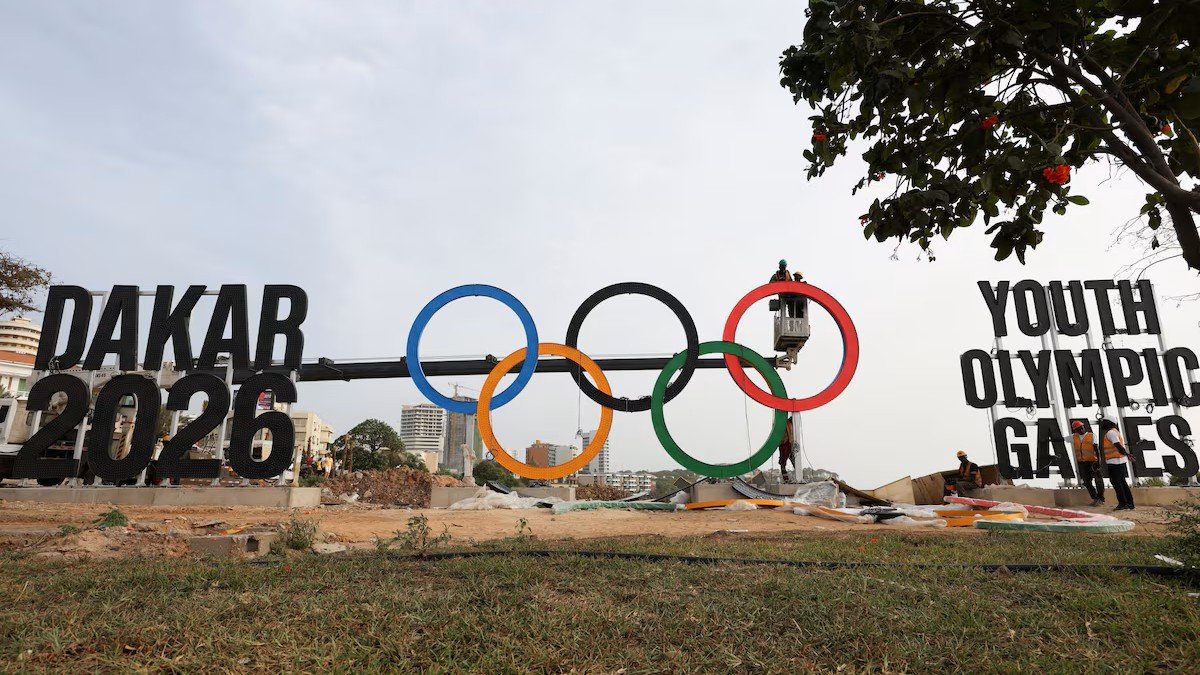
Senegal is hosting the fourth Summer Youth Olympic Games from 31 October to 13 November 2026 across Dakar, Diamniadio and Saly, bringing an Olympic sporting event to Africa for the first time. The International Olympic Committee (IOC) sought an African host to engage the continent’s young population and broaden hosting opportunities through a model designed to reduce costs and adapt to local conditions.
Organising the Games successfully does not guarantee a lasting legacy. This study argues that Dakar 2026’s public value will depend on whether Senegal can fund staffing, utilities and maintenance after the competition while keeping the facilities affordable for residents. Heavy public debt, disagreement over the national budget and uncertainty surrounding International Monetary Fund (IMF) financing make that balance harder to achieve.
The study draws on material available up to and including 9 November 2026. Sources include official IOC and Senegalese documents, published financing information and published accounts from athletes, volunteers and spectators. The analysis uses Senegal’s hosting commitments as a benchmark for assessing how the Games were being run and the arrangements announced for future public use of the facilities. The findings remain provisional because the Games were still under way at the cut-off date.
2- Why Did the IOC Select Senegal, and What Guarantees Backed the Proposal?
Dakar’s selection followed more than a century of African efforts to host an Olympic event. Egypt put forward Alexandria for the 1916 and 1936 Summer Olympic Games and Cairo for 2008. South Africa proposed Cape Town for 2004, and Algiers was among the initial nominees for the inaugural Youth Olympic Games in 2010. Of the 30 Summer Olympic Games held between 1896 and 2024, 23 had their main host city in Europe or North America, and none took place in Africa.
In 2018, the IOC decided to seek an African host for the fourth Summer Youth Olympic Games. It assessed proposals from Botswana, Nigeria, Senegal and Tunisia across twelve areas, giving particular weight to sports facilities, the Youth Olympic Village, accommodation, transport and security. The assessment also considered financing and the political and economic environment. IOC members unanimously selected Dakar on 8 October 2018. The Games were originally scheduled for 2022, but Senegal and the IOC agreed to postpone them to 2026 because of the COVID-19 pandemic.
Senegal’s proposal linked the IOC’s youth sport objectives to the government’s development strategy at the time, the Plan Sénégal Émergent. The plan for Dakar, Diamniadio and Saly drew on existing venues, university accommodation under construction and planned transport improvements, although some venues needed substantial renovation. The IOC’s Evaluation Commission also highlighted Senegal’s record of political stability and orderly transitions of power. It judged that Senegal offered the strongest overall proposal among the four candidates.
The government guaranteed that it would cover any shortfall in the organising committee’s budget and provide public services at no cost to the committee. It also undertook to fund venue renovations and upgrades outside that budget. Accommodation at Amadou Mahtar Mbow University in Diamniadio would serve as the Youth Olympic Village and be available to students after the Games. The proposal also aimed to widen young people’s participation in sport and encourage sporting careers.
3- How Well Has Dakar 2026 Been Run So Far, and What Will Determine Its Final Assessment?
The opening ceremony drew strong praise, while accounts of day-to-day operations were mixed. The Presidency of Senegal said IOC President Kirsty Coventry had conveyed participating delegations’ satisfaction with the Games.
More than 1,100 performers took part in an opening ceremony that combined traditional percussion, wrestling and dance with contemporary music and visual arts. In research cited by the IOC, 96% of athletes surveyed rated the ceremony favourably. Athletes’ accounts highlighted the atmosphere and the chance to discover Senegalese culture. Spectators interviewed by Africanews spoke of their pride in seeing Senegal host the Games.
The official competition schedule lists the men’s and women’s 800-metre freestyle events as cancelled. Media reports attributed the decision to high water temperatures at the Dakar National Olympic Swimming Pool.
The IOC also reported that 89% of athletes surveyed rated their experience at the Youth Olympic Village positively. Its summary gives both percentages without specifying the sample size or survey method. The head of Azerbaijan’s delegation praised the food, cleanliness and hospitality, although he noted that heat in the accommodation disrupted athletes’ sleep. Bus departures had become more punctual, yet his swimmers still faced journeys of around 95–100 minutes to the pool, involving transfers and overcrowded buses without air conditioning.
Volunteers interviewed in Saly described operations as generally running well, with one account raising concerns about late instructions and difficulties directing spectators to venues amid traffic restrictions and checkpoints.
Once the Games conclude, a final assessment of how the Games were run should consider the proportion of events held as scheduled and the reasons for any delays or cancellations. It should also examine shuttle punctuality, actual journey times to venues, and the proportion of complaints about accommodation and venue access that organisers resolved during the Games, along with how long this took. Feedback from athletes, volunteers and spectators across Dakar, Diamniadio and Saly would help establish whether problems were isolated or recurring. Reliable delivery and prompt resolution of problems would be evidence of success, while repeated, avoidable disruptions to competition or access would weigh against it.
4- Financing Dakar 2026: What Do the Figures Show, and Why Is the Total Cost Still Unclear?
The published commitments, budget allocations and loans may cover some of the same costs.
| Funding body | Amount in original currency | Type of figure | Purpose | Possible overlap |
| Government of Senegal | 36 billion CFA francs (about US$61.3 million) | Commitment under the host contract | Organising the Games and meeting part of the state’s share of venue works | The commitment includes co-financing and compensation for works. Some costs may also appear in the 2026 infrastructure allocation. |
| International Olympic Committee (IOC) | US$90 million | Announced contribution | Support for the Dakar 2026 Organising Committee | Possible overlap with IOC and partner funding in the reported operating budget. |
| Government of Senegal | At least 91 billion CFA francs (about US$154.9 million) | Allocation in the initial 2026 budget | Games infrastructure programme | The allocation may include works financed by the French Development Agency loan. The budget note gives a programme figure without a breakdown by site. |
| French Development Agency (AFD) | €80 million (about US$89.3 million) | Loan to Senegal | Renovation of Iba Mar Diop Stadium and the Dakar National Olympic Swimming Pool (Piscine Olympique Nationale de Dakar), alongside investment in local sports facilities. | The loan may finance projects already counted in the government’s infrastructure allocation. |
The evidence available so far does not support an overall cost estimate. On 15 October, organising committee chair Mamadou Diagna Ndiaye reported an operating budget of 32 billion CFA francs (about US$54.5 million), with the IOC and its partners financing 60%. That share is equivalent to 19.2 billion CFA francs. The published figures do not explain how it relates to the IOC’s US$90 million announcement. A reliable total would require consolidated accounts that separate actual operating expenditure from capital works, identify which projects the loan finances and record the value of services provided in kind. Loan repayments and post-Games running costs should be tracked separately to assess the longer-term burden on public finances.
The International Monetary Fund (IMF) estimated Senegal’s total public sector debt at 132% of GDP at the end of 2024. At the study’s cut-off date, the proposed US$2.2 billion IMF programme still required approval and financing assurances. It aims to improve fiscal and debt sustainability while increasing social spending and strengthening safety nets.
On 3 November, the National Assembly rejected the revised 2026 budget, which the government said would bring spending into line with available resources and fund national priorities. MPs questioned the credibility of the projected deficit of 7.6% of GDP and objected to what they described as cuts affecting health and education. Prolonged disagreement could delay approval of venue operating budgets and the release of maintenance funds, making it harder to keep the facilities affordable for residents.
The announced legacy observatory should assess what residents gain at individual facilities. At Amadou Mahtar Mbow University, returning existing rooms to students restores a previous service. The university’s accommodation service reported six additional buildings under construction in March 2026. Reopening dates, usable bed counts, housing charges and improvements to rooms and sanitation facilities would show what the investment added compared with provision before the Games.
At Abdoulaye Wade Stadium, the director of SOGIP, the state-owned infrastructure manager, reported in 2025 that cleaning alone cost 132 million CFA francs a year (about US$225,000). A published operating budget should set out the full cost of running the venue, and a management agreement should specify affordable booking arrangements for federations, schools and local clubs, including access to suitable training areas. Annual reports should track opening hours, charges, attendance, maintenance expenditure, commercial income, public subsidies and the number of staff still in paid employment after twelve months.
5- What Can Future African Olympic Hosts Learn from Dakar 2026?
Senegal’s experience suggests that credible financing is the hardest criterion for African bidders with tight public budgets. The IOC’s 2036 Olympic Games Host Selection Handbook requires shortlisted candidates to provide guarantees covering the funding of any new venues and any shortfall in the Games budget. The African Development Bank identifies debt payments as a constraint on public investment across much of the continent. A bidder should name the authority responsible for the guarantee, estimate the cost of a plausible overrun and identify the budget that would cover it.
The IOC considers both the use of existing venues and athletes’ travel times. The long shuttle trips reported at Dakar show why bidders should time the full journey from the proposed athletes’ village to competition venues, including transfers, during a major test event. Combining those timings with projected passenger numbers at peak periods and the time buses take to complete a round trip would help bidders estimate how many vehicles and drivers they would need and what the service would cost.
Would reusing a distant venue cost less than adapting a closer site once shuttle services and post-Games running costs were included? A bidder should compare sites that meet sporting requirements and offer workable journey times, calculating the additional public cost of each option over the same period. For the preferred venue, the bid should name the operator and state which budget will fund maintenance and for how many years.
6- Conclusion
Dakar 2026 marks a milestone for Africa on the international sporting stage by bringing Olympic hosting to the continent for the first time.
At the study’s cut-off date, the affordability of Dakar 2026’s legacy remained unresolved. Consolidated accounts would establish what Senegal spent and what it must repay. With public finances under pressure, each permanent facility needs a published operating budget setting out staffing, utilities and maintenance costs, realistic commercial income and the public subsidy needed to keep access affordable. The case for that expenditure should be judged against what was available before the Games. Better or additional student accommodation and regular, affordable use of sports facilities by schools and clubs would show what residents gain from the investment.
Can Dakar’s precedent help an African candidate win the right to host the full Summer Olympics in competition with established bidders from Europe and North America? Senegal can give those candidates a practical benchmark by publishing the annual cost of keeping its facilities in use and documenting the services residents receive in return.
7- Sources
- International Olympic Committee (September 2018). Evaluation Commission Report – 4th Summer Youth Olympic Games 2022. Explains why the IOC sought an African host, how it assessed the four candidates and what Senegal guaranteed.
- International Olympic Committee (7 November 2026). Dakar 2026 at halfway point: historic Games inspire pride across Senegal and Africa. Provides the interim assessment and the athlete survey figures for the opening ceremony and Youth Olympic Village.
- Government of Senegal. Note au Public : tout savoir sur le budget 2026. Identifies at least 91 billion CFA francs for Games infrastructure in the initial 2026 budget documentation.
- French Development Agency (AFD). Rénovation et de développement des infrastructures sportives de Dakar – Jeux Olympiques de la Jeunesse Dakar 2026. Documents the €80 million loan and the works it supports, including the renovation of Iba Mar Diop Stadium and the Dakar National Olympic Swimming Pool.
- International Monetary Fund (1 September 2026). IMF Reaches Staff-Level Agreement on an Extended Credit Facility Arrangement with Senegal. Sets out the proposed US$2.2 billion programme, its objectives and the conditions for approval.
- International Olympic Committee (October 2026). 2036 Olympic Games Host Selection Handbook. Provides the criteria used in the study’s discussion of future bids, including venue reuse, athletes’ travel times and financial guarantees.