Introduction
On 23 September 2026, the United Nations Population Fund (UNFPA) issued a stark warning: reports of gender-based violence (GBV) in Gaza had surged by 60 per cent in the first six months of the year, with forced and child marriage skyrocketing by 123 per cent between January and June. Behind these statistics lies a devastating reality — the systematic erosion of safety, dignity, and hope for hundreds of thousands of women and girls trapped in a humanitarian catastrophe that has shattered the very structures meant to protect them.
1. The Scale of the Crisis
The UNFPA data reveals a protection crisis of staggering proportions. Overall reported GBV incidents rose by 32 per cent in the January–March quarter compared with the previous quarter, and by a further 27 per cent between April and June. The most dramatic increase was in forced and child marriage, which rose by 123 per cent during the first half of 2026.
These figures, however, likely represent only a fraction of the true reality. The data is drawn from cases managed by GBV service providers — 10 organisations operating across Gaza — and UNFPA has cautioned that the numbers are “indicative rather than comprehensive”. With registration systems largely collapsed, many marriages are conducted informally and go entirely unrecorded.
The victims are overwhelmingly women and girls. Women aged 18 to 59 accounted for the largest share of reported cases, while adolescent girls faced escalating risks of forced marriage, sexual exploitation, and abuse. Girls as young as 12 to 17 were documented as victims of early and forced marriage.
2. The Drivers: Survival, Displacement, and the Collapse of Protection
2.1 Hunger and Poverty as Catalysts
The surge in child marriage is driven not by choice but by survival. Families facing extreme hunger, poverty, and the loss of all income are resorting to marriage as a coping mechanism. UNFPA’s analysis shows that child marriage in Gaza is “increasingly driven by survival, not choice”. One woman in a displacement camp described how a father married off his 14-year-old daughter in exchange for two bags of flour so he and his other children could eat. Six women in different camps shared similar stories — exchanges that would have been unthinkable before the conflict.
2.2 Displacement and the Absence of Privacy
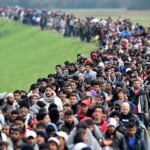
Nearly the entire population of Gaza — more than two million people — has been driven from their homes, with most living in squalid tent camps or damaged buildings. As of May 2026, 1,590 displacement sites were recorded, hosting over 1.7 million people, with 1,058 sites having no designated management entity.
Living conditions are characterised by severe overcrowding, an almost complete absence of privacy, and limited access to clean water, food, and functioning latrines. A July 2026 UNFPA safety audit found inadequate lighting, privacy, and water and sanitation conditions in all 15 displacement sites assessed. Women and girls reported limiting their use of toilets, reducing water intake, avoiding movement after dark, and relying on escorts to move around the sites.
2.3 The Collapse of Social Protection Networks
The erosion of community and family-based protection mechanisms has left women and girls acutely vulnerable. Family separation affects approximately 45 per cent of assessed populations, increasing risks of exploitation and abuse. Girls orphaned during the war are especially vulnerable: one woman described attending the wedding of two girls from her family, aged just 14 and 15, whose parents had been killed and whose uncles “wanted to get rid of the burden”.
2.4 The Collapse of Education and Health Services
Prolonged school closures have cut girls off from education — a critical protective factor. Before the war, girls in Gaza outperformed boys at every level of education above primary school; now, many have dropped out entirely. For girls, the loss of education has been compounded by heightened safety concerns. Living among strangers without privacy in a socially conservative society, many families see marrying their daughters as a way to protect them and preserve modesty.
The health system has also collapsed. None of the 209 assessed health service delivery units in Gaza were fully functioning, and only around 15 per cent of health facilities could provide emergency obstetric and neonatal care. Adolescent birth rates have more than doubled compared to pre-war levels, exposing girls to significantly higher risks of pregnancy and childbirth complications — a leading cause of death among adolescent girls — as well as underweight babies.
3. The Forms of Violence
The April–June 2026 UNFPA trends analysis identified the most commonly reported forms of GBV. Denial of resources, opportunities, and services was the most frequent, followed by psychological and emotional violence, physical violence, sexual violence, and forced and early marriage.
Sexual violence has become critical. Incidents of rape and sexual assault accounted for 2.7 per cent of total reported GBV incidents from April to June 2026, up from 2.1 per cent in the previous quarter. One displaced woman described how rape victims are often married to their rapists to avoid shame and scandal: “When rape cases are discovered in schools, you find weddings and celebrations at the school the next day”.
The stigma surrounding GBV means that many cases go unreported. Women described discussing GBV as difficult in the context of stigma, fear of retaliation, and a perception that experiencing violence may be an unavoidable part of surviving the crisis.
4. The Response: Expanding Services Amid Overwhelming Need
UNFPA and its partners have scaled up their response significantly. The number of safe spaces for survivors of violence was expanded from 64 to 74 in 2026, increasing the number of women and girls reached from 34,000 to 65,000. In the first quarter of 2026 alone, UNFPA reached over 287,000 women, girls, and youth with services and essential supplies.
Women and Girls Safe Spaces (WGSS) are often the only place where survivors can safely disclose violence and receive support — physical, psycho-social, legal, and economic — including support for adolescent girls forced into marriage. However, women and girls across some 500 displacement sites in Gaza still do not have easy access to a safe space.
The response remains severely underfunded. UNFPA has warned that funding for GBV response and prevention must be treated as a “non-negotiable pillar of humanitarian response”. Without adequate funding, the fragile gains made in expanding services risk being reversed.
5. The Broader Context: A Shattered Society
The GBV crisis in Gaza cannot be understood in isolation from the broader destruction of Palestinian society. The conflict — now more than two years old — has killed tens of thousands, caused mass destruction, and triggered multiple waves of displacement that have “broken down social structures,” as UNFPA representative Nestor Owomuhangi put it: “Everything is eroded… there is no system”.
The mental health toll is equally devastating. Youth in Gaza face emergency levels of depression and anxiety, and widespread trauma, fear, and psychological distress among children, youth, and caregivers signal a deepening and long-term crisis.
Conclusion
The 60 per cent increase in reported GBV and the 123 per cent surge in forced and child marriage are not merely statistics — they are symptoms of a society in freefall. When families sell their daughters for flour, when rape victims are married to their rapists, when girls as young as 12 are traded for survival, the very foundations of human dignity have collapsed.
The international community’s response, while expanding, remains inadequate to the scale of the crisis. Safe spaces, case management, and psychosocial support are critical — but they cannot substitute for the restoration of basic conditions of safety: shelter with privacy, functioning health services, education for girls, and economic opportunities for families. Until these fundamental protections are restored, Gaza’s girls will continue to pay the price of a war they did not choose, in a crisis that the world has not yet summoned the will to end.
Sources
- UNFPA, “Gender-based violence escalates in Gaza, including a sharp rise in reported child marriage UNFPA warns,” Press Release, 23 September 2026. https://arabstates.unfpa.org/en/news/gender-based-violence-escalates-gaza-including-sharp-rise-reported-child-marriage-unfpa-warns
- UNFPA, “صندوق الأمم المتحدة للسكان يحذر من تصاعد العنف القائم على النوع الاجتماعي في غزة، بما في ذلك ارتفاع حاد في حالات زواج الأطفال المُبلغ عنها,” 23 September 2026.
- BBC News, “Reports of violence against women in Gaza surge, UN agency finds,” 23 September 2026. https://www.bbc.com/news/articles/c94gm7dp40y0o
- UNFPA, “I want to feel safe again: drivers of gender-based violence in Gaza,” September 2026. https://www.un.org/unispal/document/unfpa-report-drivers-of-gender-based-violence-in-gaza/
- UNFPA, “Gender-Based Violence Safety Audit Report: Gaza Strip,” 17 September 2026. https://www.un.org/unispal/document/unfpa-gender-based-violence-safety-audit-report-gaza-strip-september-2026/
- UNFPA, “Surge in child marriage and adolescent pregnancy threatens a generation of girls in Gaza,” 6 April 2026. https://www.un.org/unispal/document/unfpa-surge-in-child-marriage-and-adolescent-pregnancy-threatens-a-generation-of-girls-in-gaza/
- UNFPA Palestine, “Situation Report #21: January–March 2026.” https://palestine.test.unfpa.org/sites/default/files/pub-pdf/2date26-date4/UNFPA%20Palestine%20Situation%20Report%20%2321%20(January-March%202026).pdf
- UNFPA, “Gender-based Violence Trends Analysis: Gaza (April–June 2026),” September 2026. https://reliefweb.int/report/occupied-palestinian-territory/gender-based-violence-trends-analysis-gaza-april-june-2026
- Outlook India, “Gaza Gender Violence Reports Jump 60% As Child Marriage Soars 123%: UNFPA,” 24 September 2026. https://www.outlookindia.com/international/gaza-gender-violence-reports-jump-60-as-child-marriage-soars-123-unfpa
- The New York Post, “Women in Gaza are being traded for food, forced to marry their rapists: UN,” 23 September 2026. https://nypost.com/2026/09/23/world-news/women-in-gaza-are-being-traded-for-food-forced-to-marry-their-rapists-un/
- Daily Mail, “Scale of forced marriage in Gaza is revealed in UN report,” 23 September 2026. https://www.dailymail.com/news/article-14123456/Scale-forced-marriage-Gaza-revealed-UN-report.html
- Israel Hayom, “UN agency reports surge in violence against Gaza women,” 23 September 2026. https://www.israelhayom.com/2026/09/23/un-agency-reports-surge-in-violence-against-gaza-women/
- GBC Ghana Online, “Reports of violence against women and girls surge amid war in Gaza, UN agency finds,” 23 September 2026. https://www.gbcghanaonline.com/news/world/reports-of-violence-against-women-and-girls-surge-amid-war-in-gaza-un-agency-finds/