
Introduction
On 26 September 2026, interior ministers from 17 European Union member states and the United Kingdom convened in Munich for an emergency summit on migration and border security. Hosted by German Interior Minister Alexander Dobrindt, the meeting — branded the “Munich Migration Meeting” — sought to accelerate the implementation of the EU’s Migration and Asylum Pact, which had come into full application on 12 June 2026. The gathering underscored a stark reality: despite a sharp decline in irregular arrivals, Europe’s political consensus on migration remains fragile, and the bloc is scrambling to operationalise a framework it adopted two years ago but has yet to fully implement.
1. The Summit: Objectives and Participants
The Munich meeting brought together ministers from EU member states and the UK, with European Commissioner for Migration Magnus Brunner also in attendance. The discussions centred on three core objectives:
- Strengthening border controls: Dobrindt called for a “new European migration crisis mechanism” to identify and respond to emergencies involving “waves of illegal border crossings”. He cited the July 2026 influx into the Spanish enclave of Ceuta — where an estimated 80,000 people crossed from Morocco — as evidence that existing mechanisms are inadequate.
- Fast-track returns: The ministers discussed establishing expedited procedures for returning migrants who do not qualify for asylum, with Dobrindt expressing hope that Frontex, the European Border and Coast Guard Agency, could be directly involved in the return process.
- Expanding Frontex’s mandate: Dobrindt advocated for transforming Frontex into a “border protection and genuine return agency,” with a broader mandate covering crisis situations and deportations directly from border procedures, as well as returns from transit states such as Serbia.
The timing was significant. Just three months earlier, the EU’s Migration and Asylum Pact had entered into full application — a milestone that was supposed to mark the beginning of a “new phase in European migration management”. Yet the Munich meeting suggested that political leaders view the pact not as an endpoint but as a foundation requiring urgent reinforcement.
2. The Pact and Its Discontents
The Migration and Asylum Pact, adopted in May 2024 after years of negotiation, represents the most comprehensive overhaul of EU migration policy in a decade. It comprises ten legislative instruments, including the Screening Regulation, which governs the processing of irregular arrivals at the external border.
However, implementation has been uneven. Several member states — including Greece and Cyprus — were identified as failing to fully implement safeguards to protect asylum seekers, with delays in ensuring access to legal aid and independent monitoring of border procedures. The rollout of the revamped Eurodac database, a critical IT system for tracking asylum applications, has also lagged, with eleven member states relying on a temporary centralised solution developed by EU-Lisa.
The EU Fundamental Rights Agency (FRA) reported in July 2026 that “allegations of violence and restrictions on access to asylum procedures along several migration routes” persisted, and that investigations into alleged violations at borders remained limited in a number of cases. These findings underscored a fundamental tension: the pact was designed to balance firmness with fairness, but its operational reality has tilted heavily toward enforcement.
3. The Ceuta Crisis and European Divisions
The July 2026 Ceuta crisis laid bare the political fault lines that the Munich summit sought to address. An unprecedented mass crossing into the Spanish North African enclave — fuelled in part by online disinformation — saw tens of thousands of migrants enter from Morocco within days. The Spanish government reported that 72,000 people had entered, of whom 70,000 were subsequently returned.
The crisis triggered immediate and bitter divisions. Italy and Denmark advocated suspending Spain from the Schengen free-travel area, a notion firmly rejected by Madrid. Finland and Denmark called for a review of Schengen cooperation with Spain, while France, Germany, and Portugal adopted a more cautious stance. Italy’s Prime Minister Giorgia Meloni suspended Schengen free movement with Spain and reintroduced border checks, citing Spain’s failure to protect the Schengen area’s external borders.
These tensions exposed a deeper truth: the EU’s migration framework depends on mutual trust, and that trust is in short supply. As one analysis noted, the Ceuta crisis “profoundly divided Europeans” and “exposed a lack of confidence” that undermines public trust in the EU’s ability to govern migration.
4. Frontex and the Return Agenda
Central to the Munich discussions was the proposed expansion of Frontex’s mandate. Under current plans, Frontex could soon have powers to deport individuals from one non-EU country to another, as part of the EU’s evolving approach to migration management. The agency is expected to expand its border guard corps to 10,000 officials by 2027, with an ultimate target of 30,000.
Dobrindt’s vision goes further: he has proposed a rapid intervention force within Frontex that could be deployed to member states facing sudden migration pressures, and a mandate extension to cover returns directly from border procedures and from transit states. The European Commission is expected to present a legislative proposal amending the European Border and Coast Guard Regulation later in 2026.
Yet the return agenda faces substantial obstacles. A European Parliament briefing noted that Frontex’s mandate review is driven by “hybrid threats, the implementation of the new pact, and demands for swifter returns of individuals ineligible for asylum” — but also acknowledged that the agency’s expansion raises fundamental rights concerns. The proposed “return hubs” system, which would allow the EU to transfer illegally staying third-country nationals to third countries with which return agreements exist, remains legally and politically contentious.
5. The Paradox of Decline
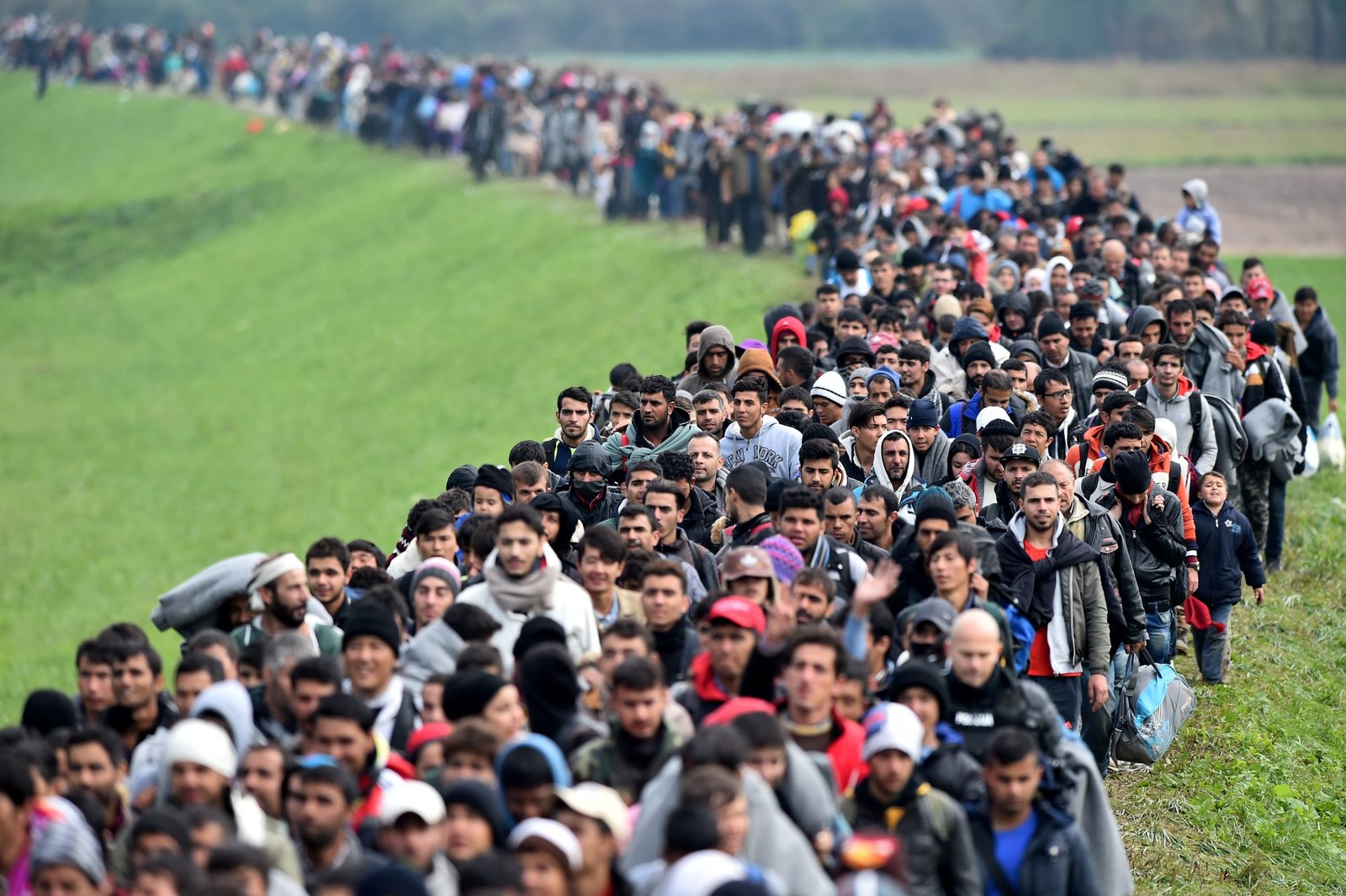
A striking feature of the Munich summit was the context in which it occurred: irregular migration to Europe has fallen dramatically. EU Migration Commissioner Brunner stated that illegal migration had dropped by 55% over the past two years and by another one-third in the last year alone. Asylum applications have fallen sharply, and fewer migrants have attempted the treacherous Mediterranean crossing.
Yet the political salience of migration has not diminished. If anything, the decline in numbers has coincided with an intensification of political pressure to “harden” borders and accelerate returns. Dobrindt’s rhetoric reflected this paradox: he argued that current migration waves are “often not driven by humanitarian reasons, but by coordinated actions of criminal groups”.
This disconnect between empirical trends and political urgency is not new, but it has profound implications. It suggests that the EU’s migration debate is driven less by actual migratory pressures than by domestic political dynamics, electoral calculations, and a pervasive sense of lost control. The Munich summit was, in this sense, as much about projecting control as about exercising it.
Conclusion
The Munich Migration Meeting of 26 September 2026 was a testament to the EU’s determination to reclaim control over its borders — and to the obstacles that stand in its way. The Migration and Asylum Pact provides a legal framework, but its implementation remains incomplete. Frontex stands poised for expansion, but its mandate review is fraught with legal and ethical complications. And the Ceuta crisis demonstrated that when the pressure is on, European solidarity fractures along familiar lines.
What emerged from Munich was not a decisive breakthrough but a signal of intent: Europe will continue to tighten its borders, accelerate returns, and expand the powers of its border agency. Whether this approach can deliver the security and stability its proponents promise — without eroding the fundamental rights and mutual trust on which the European project ultimately rests — remains the defining question of the years ahead.
Sources
- Associated Press, “European ministers discuss stronger border controls and fast-track migrant returns,” Daily Mail, 26 September 2026.
- Associated Press, “European ministers discuss stronger border controls and fast-track migrant returns,” The Washington Post, 26 September 2026.
- “München: Europäische Innenminister beraten ‘Umsetzung der Migrationswende’,” WELT, 26 September 2026.
- “EU ministers discuss tighter borders and faster migrant returns in Munich,” India Today, 26 September 2026.
- “Europäische Innenminister tagen in München zur Migration,” BR24, 26 September 2026.
- Council of the European Union, “Justice and Home Affairs Council (Home Affairs),” 22 September 2026.
- European Commission, “Pact on Migration and Asylum,” 2026.
- European Parliament, “Ceuta migrant crisis: What it means for Spain and the rest of the EU.”
- “Dobrindt will schnelle Eingreiftruppe der EU-Grenzschutzagentur Frontex,” Tagesschau, 26 September 2026.
- “Frontex expected to be given more powers, including new role in managing return hubs,” InfoMigrants, 10 July 2026.
- EU Fundamental Rights Agency, “FRA bulletin highlights fundamental rights challenges following the entry into application of the Pact on Migration and Asylum,” 21 July 2026.
- “The migration pact is here. But the EU isn’t ready,” The Parliament Magazine, 15 June 2026.
- “Dobrindt seeks ‘hardening’ of EU borders at Munich talks,” AzerTag, 26 September 2026.
- “Jerman serukan percepatan pemulangan migran ilegal di perbatasan EU,” Antara News, 27 September 2026.