
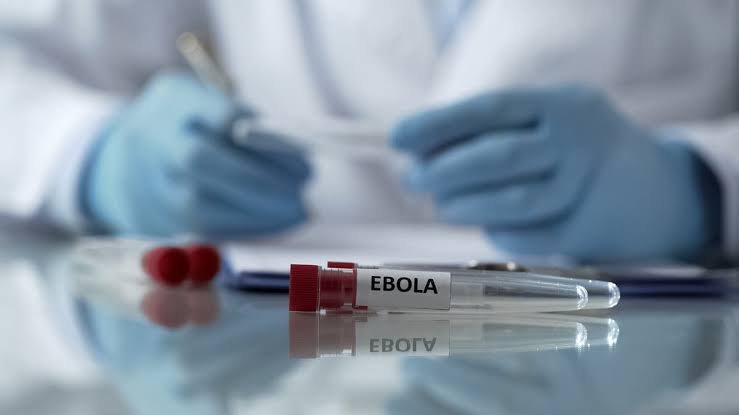
Introduction
The 2026 Ebola outbreak in the Democratic Republic of the Congo (DRC) is not merely another epidemic—it is a watershed moment in the history of filovirus outbreaks. Caused by the Bundibugyo virus, a rare and under-studied strain for which no licensed vaccines or treatments exist, the outbreak has become the largest and fastest-growing Ebola epidemic ever recorded in the DRC. Declared a Public Health Emergency of International Concern by the WHO on 17 May 2026, it has exposed deep fault lines in global epidemic preparedness, from vaccine inequity to the devastating intersection of disease and armed conflict.
1. The Virus and the Outbreak
The Bundibugyo virus (BDBV) was first identified in Uganda in 2007. The 2026 outbreak, centred in Ituri Province in eastern DRC, represents only the third known outbreak caused by this strain—and the largest by far. As of 12 July 2026, the outbreak had resulted in 1,926 laboratory-confirmed cases and 702 deaths, with a case fatality rate of 36.4%. By September, the situation had deteriorated further: more than 7,200 confirmed cases and 3,500 deaths had been reported, though the true scale is likely higher due to surveillance gaps.
The outbreak began in the remote town of Nia-Nia in Ituri Province but quickly spread to Kisangani, the capital of Tshopo Province, and by September had reached South Ubangi—the seventh affected province. North Kivu alone accounted for nearly half of all newly confirmed cases, with test positivity rates rising sharply. The spread into Kisangani, a major urban centre, marked a critical escalation: 42 confirmed cases and 17 deaths were recorded in Tshopo Province by late September, including the death of a physician at the Ebola Treatment Centre—the first medic to succumb in the province.
Uganda, which declared its own outbreak on 15 May 2026, successfully contained its transmission and declared the outbreak over on 28 July 2026, having reported 20 confirmed cases and two deaths. However, the WHO and Africa CDC have warned that neighbouring countries remain at risk and must maintain high levels of preparedness.
2. Control Efforts
2.1 Frontline Response
Médecins Sans Frontières (MSF) has been at the forefront of the response. In Kisangani, MSF has operated an Ebola Treatment Centre (ETC) at Hôpital du Cinquantenaire since the end of June 2026, in collaboration with the Ministry of Health. Rapid response teams have been deployed to newly affected areas to support early case detection, patient care, infection prevention and control (IPC), contact tracing, and community engagement. The Africa CDC has mobilised expertise through the Global Outbreak Alert and Response Network (GOARN), with around 10 deployments focused on epidemiology, surveillance, patient care, and IPC.
2.2 The Vaccine Dilemma
The absence of a Bundibugyo-specific vaccine has forced responders into ethically fraught territory. Ervebo (rVSV-ZEBOV), the licensed vaccine against the Zaire ebolavirus, was initially not recommended by the WHO for use against Bundibugyo due to insufficient evidence of cross-protection. However, as the outbreak escalated, new evidence emerged: studies in test tubes and animals showed that blood from Ervebo-vaccinated individuals contained antibodies that bound to the Bundibugyo virus, and vaccinated ferrets and monkeys demonstrated survival against Bundibugyo challenge.
Based on this data, the Africa CDC and the DRC government announced their support for the “immediate launch” of a broader rollout of Ervebo in August 2026—a move that could undercut WHO’s planned phase 3 trial. In parallel, four Bundibugyo-specific vaccine candidates have entered clinical trials, developed by Moderna, Public Health Vaccines, the International AIDS Vaccine Initiative (IAVI), and the University of Oxford. The Oxford vaccine, ChAdOx1 DBV, uses the same viral vector platform as the Oxford-AstraZeneca COVID-19 vaccine and can be stored at standard fridge temperatures—a critical advantage in resource-limited settings.
2.3 Preventive Vaccination
In June 2024, Gavi, the Vaccine Alliance, launched the first preventive vaccination program against Ebola virus disease, allowing at-risk countries across sub-Saharan Africa to request support for proactive immunisation campaigns. The program covers 18 East, West, and Central African countries and includes funding for vaccine procurement, cash grants, and technical assistance. However, the program’s vaccines target the Zaire strain, not Bundibugyo—leaving a critical gap in preparedness for the current outbreak.
3. Challenges Hindering Containment
3.1 Armed Conflict and Insecurity
Ituri Province is a region of extreme insecurity, with armed conflict intensifying since late 2025 and more than 100,000 people recently displaced. Response teams face direct threats: community resistance, attacks on burial teams, and the detention of frontline responders have been documented. The security situation severely constrains access to affected populations and undermines trust in response efforts.
3.2 Surveillance and Contact Tracing Gaps
Contact tracing remains critically deficient. As of the field investigation in June 2026, only 64.4% of registered contacts were successfully followed—far below the recommended ≥95% target. Surveillance systems identified 766 alerts, of which 678 (88.5%) were investigated, resulting in 235 suspected cases. Delays in detection, referral, and access to care persist: among 53 new confirmed cases reported in a 24-hour period during the investigation, 20 were community deaths (66.7%), indicating that patients were dying without ever reaching treatment.
3.3 Weak Health Systems
Health systems in affected areas are “stretched thin by chronic funding gaps, staffing shortages, and weak referral capacities”. Ebola treatment centres face high occupancy rates, shortages of trained personnel and IPC supplies, and insufficient preparedness in newly affected areas. Testing remains “one of the most significant weaknesses in the response,” with low testing rates in some areas undermining efforts to identify and isolate cases.
3.4 Community Trust and Misinformation
An “infodemic” environment marked by misinformation and reduced public trust has fuelled resistance to public health measures. Misinformation and rumours contribute to delayed care-seeking, reduced acceptance of interventions, and incomplete cooperation with contact tracing. Risk communication and community engagement efforts are constrained by limited outreach capacity, language barriers, and inadequate systems for rumour detection. A WHO field report from September 2026 highlighted the need to “reconcile response protocols with sociocultural realities”—for example, finding solutions that respect local burial practices while preventing transmission.
3.5 The Vaccine Equity Gap
The absence of licensed vaccines and treatments for Bundibugyo “exposes long-standing inequalities in global health research, particularly for diseases affecting low-income countries,” which “often receive insufficient funding until crises occur”. The Africa CDC has argued that, despite the lack of vaccines and therapeutics, Ebola can still be controlled through “strong public health measures, including rapid case detection, isolation, contact tracing, infection prevention and control, safe burials, and community engagement”. Yet the very need for such measures—rather than targeted medical countermeasures—is itself a symptom of the inequity that defines global health research priorities.
Conclusion
The 2026 Bundibugyo Ebola outbreak is a test of whether the world has learned the lessons of West Africa (2014–2016) and the DRC’s previous outbreaks. On one hand, the rapid declaration of a PHEIC, the deployment of GOARN expertise, and the accelerated development of Bundibugyo-specific vaccine candidates demonstrate a more responsive global architecture. On the other, the outbreak’s relentless spread—from remote Ituri to the urban centre of Kisangani—and the persistent gaps in contact tracing, testing, and community trust reveal that the fundamentals of outbreak control remain perilously fragile. As MSF’s emergency coordinator warned: “The outbreak is not shrinking—it is moving”. Until the world invests in vaccines for neglected strains before they cause crises, and until response efforts are rooted in the trust and participation of affected communities, Ebola will continue to find the weakest links in Africa’s health systems—and exploit them.
Sources
- Milambo MJP et al., “Field Investigation of the Bundibugyo Ebola Virus Disease (BDBV) Outbreak in Ituri Province, Democratic Republic of the Congo,” Infectious Disease Reports, 8 September 2026. PubMed PMID: 42776651.
- Médecins Sans Frontières, “DRC Ebola outbreaks,” updated 20 August 2026. https://45.66.223.190/drc-ebola-outbreaks
- Africa CDC, “Bundibugyo Ebola without vaccines or therapeutics: why public health fundamentals matter more than border closures,” Nature Medicine, 9 June 2026. https://africacdc.org/news-item/bundibugyo-ebola-without-vaccines-or-therapeutics/
- WHO, “Africa CDC and WHO call for urgent, community-led action to contain Ebola in the DRC,” 6 August 2026. https://www.who.int/es/news/item/06-08-2026-africa-cdc-and-who-call-for-urgent–community-led-action-to-contain-ebola-in-the-drc
- Médecins Sans Frontières, “Ebola in DR Congo: ‘The outbreak is not shrinking — it is moving’,” 18 September 2026. https://www.doctorswithoutborders.org/latest/ebola-dr-congo-outbreak-not-shrinking-it-moving
- ACP, “Tshopo : un premier médecin décède d’Ebola au centre de traitement à Kisangani,” 24 September 2026. https://acp.cd/province/tshopo-un-premier-medecin-decede-debola-au-centre-de-traitement-a-kisangani/
- Lang K, “Ebola: how soon could a Bundibugyo vaccine be ready?” BMJ, 5 August 2026;394:e100450.
- MSF, “Ebola en RDC et en Ouganda : les défis face au virus Bundibugyo,” 21 May 2026. https://www.msf.fr/actualites/ebola-en-rdc-et-en-ouganda-les-defis-face-au-virus-bundibugyo
- Guttieres D et al., “Charting a novel path towards Ebola virus disease preparedness: Considerations for preventive vaccination,” PLoS Medicine, 24 February 2025;22(2):e1004543.
- Science, “‘Mismatched’ vaccine being rolled out against Ebola outbreak,” 11 August 2026. https://www.science.org/content/article/mismatched-vaccine-being-rolled-out-against-ebola-outbreak
- NaTHNaC, “Ebola disease in Uganda,” 26 May 2026. https://travelhealthpro.org.uk/updates.php?base=5231
- WHO, “Allocution liminaire du Directeur général de l’OMS lors du point de presse du 20 mai 2026 sur la flambée d’Ebola en Ouganda et en RDC,” 20 May 2026. https://www.who.int/fr/news-room/speeches/item/who-director-general-s-opening-remarks-at-the-media-briefing-on-ebola-outbreak-in-drc-and-uganda-20-may-2026